Noise Barricades: A Professional Buyer's Guide to Durable, Compliant Acoustic Solutions
By Marcus Thorne, Industrial Acoustics & Site Safety Specialist | Last Updated:

Executive Summary for Procurement Professionals
For import managers, brand owners, and sourcing agents, selecting the right noise barricades involves balancing acoustic performance, structural durability, regulatory compliance (like CE marking), and logistical efficiency. This guide cuts through the complexity, detailing how a supplier's manufacturing capability, quality control processes, and design flexibility (OEM/ODM) directly impact your project's budget, timeline, and compliance risk. Key decision factors include core material density, weather resistance certifications, and the supplier's ability to handle complex logistics for bulk shipments.
Common Procurement Challenges & Engineered Solutions
B2B buyers often face specific, costly pain points when sourcing acoustic barriers.
1. Premature Failure & High Replacement Costs
Pain Point: Barriers that warp, fade, or degrade within a few seasons, leading to unplanned capital expenditure and site downtime.
Engineered Solution: Barriers constructed from pre-galvanized steel frames and UV-stabilized acoustic infill panels (e.g., mineral wool or foam cores). A focus on corrosion-resistant coatings and robust welding at stress points extends service life in harsh environments.
2. Non-Compliance with Local Regulations
Pain Point: Shipments rejected at port or projects fined due to missing or invalid certifications for noise reduction (Sound Transmission Class - STC ratings) and material safety.
Engineered Solution: Partnering with a factory that integrates compliance into production. This includes CE marking for the EU market, material testing reports (e.g., RoHS), and providing documented test results for acoustic performance.
3. Inflexible Supply & Long Lead Times
Pain Point: Standard sizes that don't fit project specs, or minimum order quantities (MOQ) that are too high, coupled with 60+ day deliveries that delay project starts.
noise control barrier noise dampeners noise barriers for construction sites
Engineered Solution: A supplier with in-house OEM/ODM design support can customize dimensions, branding, and mounting systems. A vertically integrated factory with a 5000 m² facility often has better control over raw material flow and production scheduling, enabling more reliable high-speed delivery timelines.
Technical Specifications & Application Scenarios
Effective noise barricades are defined by their construction and performance data.
| Component | Standard Specification | Typical Application |
|---|---|---|
| Frame | Galvanized Steel Square Tube, 40mm x 40mm, 1.5mm thickness | Provides structural integrity for highway and permanent construction barriers. |
| Acoustic Core | High-Density Mineral Wool (80-100 kg/m³) or Polyurethane Foam | Determines the Sound Absorption Coefficient (NRC) and STC rating. Mineral wool offers superior fire resistance. |
| Facing Panel | Perforated Aluminum or Galvanized Sheet (0.7-1.0mm), powder-coated | Protects the core, allows sound penetration for absorption, and provides a finished appearance. |
| Sealing & Edge Detail | PVC or Rubber Gaskets, Anti-Corrosion Edge Caps | Prevents water ingress and "sound flanking," crucial for long-term performance. |
Disclaimer: Specifications are for reference. Final technical parameters, performance ratings, and certifications must be confirmed in the official product datasheet and order confirmation.
Primary Use Cases for Sourcing Agents
- Urban Construction & Demolition: Temporary barriers with easy-install foundations to mitigate noise for adjacent residences and businesses. Look for modular designs for quick reconfiguration.
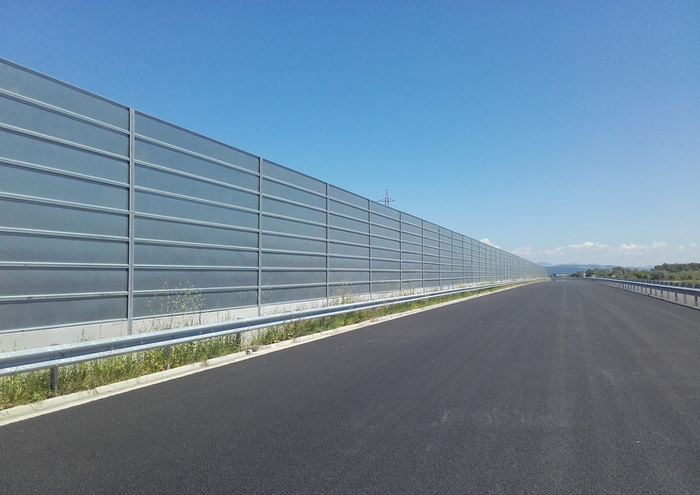
- Highway & Transportation Corridors: Permanent, high-barrier walls requiring extreme weather durability and often specific aesthetic guidelines from transportation departments.
- Industrial Facilities (Power Plants, Manufacturing): Barriers need to handle specific noise frequencies. OEM/ODM capability is key here for custom sizes and additional access panels or viewing windows.
- Commercial & Event Spaces: Often require a balance of acoustic performance and visual appeal, with options for custom colors and finishes.
Why Manufacturing Depth Matters: The Jinzehong Wire Mesh Profile
In global sourcing, a supplier's infrastructure is a direct indicator of reliability, quality control, and scalability.
Jinzehong Wire Mesh Products Co., Ltd., founded in 2000 and based in Anping, China's wire mesh hub, operates from a 5000 m² production facility. This scale allows for vertical integration in metal processing—from raw material sourcing to fabrication, welding, and finishing. For you, the buyer, this translates to:
- Consistent Quality Assurance: In-process inspections at each manufacturing stage (material cutting, welding, panel assembly) reduce defect rates before final QC.
- Design Flexibility (OEM/ODM): In-house engineering teams can work from sketches or CAD files to develop prototypes for custom noise barricades, including unique mounting systems or integrated branding.
- Supply Chain Efficiency: Control over production scheduling and raw material inventory contributes to more predictable lead times, often ranging from 15-30 days for standard items, depending on order volume.
- Cost Structure: Integrated manufacturing reduces reliance on sub-contractors, offering more competitive FOB pricing while maintaining margin for quality materials.
Trust Signals: Compliance, Capacity & Client Feedback
Compliance & Certifications
Professional buyers require verifiable compliance. Suppliers should be able to provide documentation for:
- CE Marking (for EU): Indicating the product meets EU health, safety, and environmental requirements.
- Material Test Reports: Such as RoHS (Restriction of Hazardous Substances) compliance.
- Quality Management: Factories operating under ISO 9001 guidelines demonstrate a systematic approach to quality control.
- Acoustic Performance Data: Third-party or in-house lab test reports for STC (Sound Transmission Class) and NRC (Noise Reduction Coefficient) ratings.
Note: Always request current, valid certificates specific to the product line you are purchasing.
Commercial Terms for International Buyers
- MOQ (Minimum Order Quantity): Typically starts at one 20-foot or 40-foot container load. This allows for cost-effective shipping and quality consistency within a production batch.
- Lead Time: Approximately 15-30 days for standard items after deposit confirmation. Custom OEM projects may require 30-45 days for tooling and sample approval.
- Payment Terms: Common in B2B: 30% T/T deposit, 70% balance against copy of Bill of Lading; or confirmed Irrevocable L/C at sight.
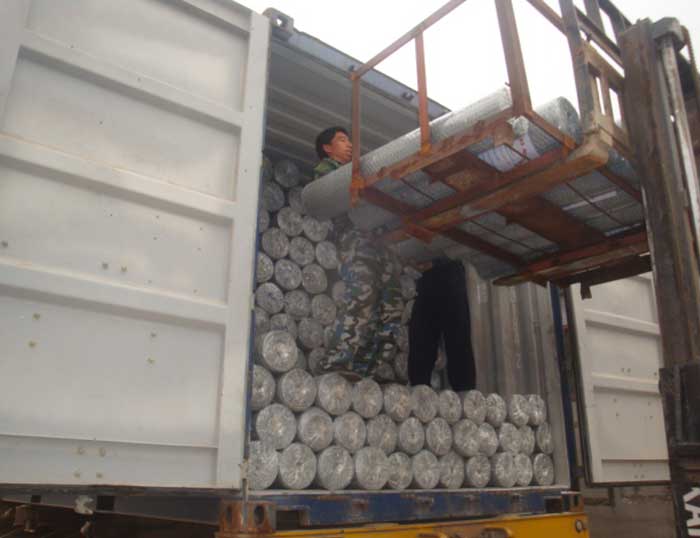
- Packaging & Logistics: Standard export packaging includes wooden crates or pallets with waterproof wrapping. The supplier typically handles FOB terms to the designated Chinese port, with support for CIF/DAP requests.
- After-Sales: Includes provision of product manuals, technical data sheets, and support for installation guidance. Warranty periods (e.g., 5 years on frames) should be clearly stated in the contract.
Voices from the Field: Client Reviews
David K., Project Manager (Civil Engineering Firm, Texas): "We needed custom-height barriers for a downtown hospital expansion with strict decibel limits. Jinzehong's team engineered a solution with integrated access doors. The CE documentation was flawless for our client's review. Delivery was on schedule, which is rare these days."
Sophie L., Import Manager (Building Materials Wholesaler, Germany): "Our brand requires consistent quality across thousands of panels. We've been sourcing our private-label noise barriers from Jinzehong for three years. Their QC is rigorous—we have a very low claim rate. Their understanding of European compliance is a major advantage."
Michael R., Sourcing Agent (Infrastructure Projects, Australia): "I was tasked with finding a cost-effective but durable barrier for a coastal highway project. The salt spray resistance was a concern. The samples they provided with their enhanced powder-coating passed our salt fog tests. The project came in under budget."
Ready to Specify Your Noise Barricade Solution?
Move beyond generic quotes. Provide your project's specific requirements for a targeted proposal.
Next-Step Action: Download our Technical Specification Checklist and share it with your project team. Use it to compile details on dimensions, acoustic ratings, environmental conditions, and required certifications. Then, contact us with this checklist for a comprehensive, apples-to-apples quotation.
Contact Jinzehong Wire Mesh Products Co., Ltd.
Tel: +86 15383785666 | Email: ada@jinzehongwiremesh.com
Add: South Road, 500 meters North of Houzhangzhuang, Anping County, Hengshui City, Hebei Province, China
Visit Contact Page
Frequently Asked Questions (FAQ) for Noise Barrier Procurement
Q1: What is the typical MOQ for custom-designed noise barricades?
A: For custom OEM/ODM projects, the standard Minimum Order Quantity is typically one 40-foot container. This allows for efficient production setup and quality control. Smaller trial orders may be negotiable for established specifications.
Q2: Can you provide barriers with specific fire resistance ratings (e.g., Class A)?
A: Yes. By utilizing specific core materials like high-density mineral wool and non-combustible facing panels, barriers can be engineered to meet various international fire rating standards. You must specify the required standard (e.g., ASTM E84, EN 13501) during the quoting process.
Q3: What documentation do you provide for customs clearance in the EU or USA?
A: Standard export documentation includes a Commercial Invoice, Packing List, Bill of Lading, and Certificate of Origin. For regulated markets, we provide applicable certifications such as CE Declarations of Conformity or material test reports (RoHS). Always verify specific import requirements with your customs broker.
Q4: How are the barriers packaged for ocean freight to prevent damage?
A: Panels are typically stacked on wooden pallets, securely strapped, and wrapped in heavy-duty waterproof plastic film. For delicate finishes, corner protectors and cardboard interleaving are used. The entire pallet is often crated in a wooden frame for maximum protection.
Q5: What is the standard warranty on your noise barrier systems?
A: Warranty terms are finalized in the sales contract. A typical industry-standard warranty for the structural frame and welds might be 5 years, while warranties on powder coatings and acoustic performance may vary (e.g., 2-3 years). Specifics depend on material specifications and the project environment.
SEO & Image Alt Text Suggestions
Suggested Image Alt Text (for product/images):
- industrial-noise-barricade-construction-site
- galvanized-steel-frame-noise-barrier
- highway-sound-wall-acoustic-panel
- custom-odm-noise-barricade-design
- mineral-wool-core-acoustic-barrier
JSON-LD Schema Hint (for web developer): Implement structured data for this page using FAQPage and Product schema types. Include properties for `manufacturer`, `productionDate` (company founding year), `offers` (including `priceCurrency`, `availability`), and `aggregateRating` based on client reviews.