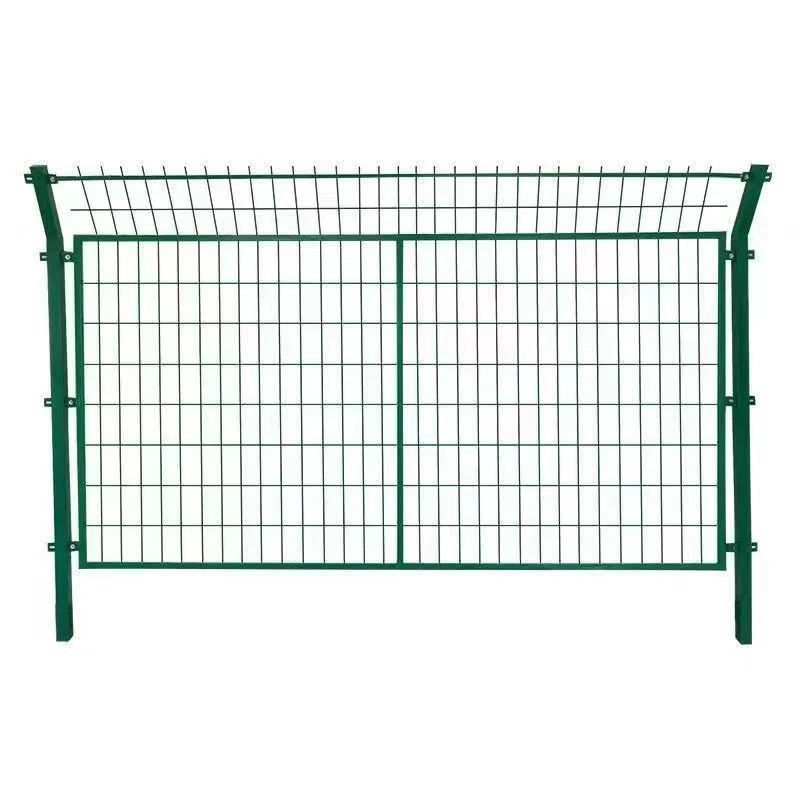
Product Description
Product Specification
Material | Low carbon steel wire (Q195/Q235), cold drawn wire, galvanized steel wire |
Wire diameter | 3.5 mm-6.0 mm |
Mesh size | Mainly rectangular holes: 50×150 mm, 60×120 mm, 75×150 mm, 80×160 mm, 90×170 mm, 50×200 mm |
Grid size | Height: 1.2m, 1.5m, 1.8m, 2.0m, 2.4m (customizable)<br>- Length: 2 m, 3 m (standard), up to 6 m |
Column specifications | Material: round steel tube (diameter 48mm, 60mm) or square tube (50×50mm)<br>- Wall thickness: 1.0 mm–2.5 mm<br>- Height: 1.5m–3.0m (matching with mesh) |
Surface treatment | Plastic dipping (thickness 0.8-1.2mm), plastic spraying, hot-dip galvanizing (zinc layer ≥ 60μm), cold-dip galvanizing |
color | Grass green, dark green, white, yellow, black, blue, etc. (plastic dipping/spraying optional) |
tensile strength | ≥350MPa (low carbon steel wire) |
Anti-corrosion level | Hot-dip galvanizing + plastic dipping can reach a service life of 8-15 years |
Impact resistance | Can withstand general external impact (such as collisions with pedestrians and small vehicles). The specific load-bearing capacity depends on the wire diameter and column configuration. |
Whether to support customization | support |
Installation matching specifications
Connection method | Snap-on connection (quick installation) or anti-theft bolt fixing |
Column spacing | Standard spacing 2.5m-3m (adjusted according to mesh length) |
rain hat | Galvanized/plastic-coated steel caps to prevent water accumulation in the columns |
Flange | Used for installation on bridges and cement floors, thickness ≥ 4mm (bottom of fixed column) |
Recommended specifications for applicable scenarios
road/rail | Wire diameter ≥5.0mm, mesh size ≤80×160mm, column 60mm×2.5mm, hot dip galvanizing + plastic dipping |
Farm/Orchard | Wire diameter 4.0-4.5mm, mesh 50×150mm, column 48mm×1.5mm, green plastic dip |
greening | Wire diameter 3.5-4.0mm, mesh size 60×120mm, white/dark green plastic spray |
stadium | Net height 2.0-2.4m, wire diameter 5.0mm, anti-climbing net installed |
Product Features

Product package

Our stock
A reliable highway fence helps define road boundaries, separate restricted areas, and control access along transportation corridors. For highway construction contractors, fencing distributors, and infrastructure project buyers, the right fencing system should balance structural strength, visibility, corrosion resistance, and installation efficiency.
Jinzehong supplies steel wire mesh fencing for roadside boundaries, highway projects, and other infrastructure applications. The panels can be configured with different wire diameters, mesh openings, heights, and post arrangements to suit project requirements. Galvanized and coated finishes are available for outdoor installations where exposure to rain, humidity, and changing temperatures must be considered.
When selecting highway fencing, buyers should assess the required protection level, ground conditions, panel dimensions, and local project specifications before confirming an order. Our team can review your drawings and technical requirements to help identify a suitable fence configuration for your project.
A properly specified railway fence helps establish clear boundaries around railway tracks, maintenance areas, and other restricted railway facilities. It can reduce unauthorized access and provide a visible separation between railway property and surrounding public areas.
Jinzehong manufactures wire mesh fencing for railway perimeter and infrastructure projects. Depending on the site conditions, buyers can specify panel height, mesh opening, wire diameter, steel posts, and surface treatment. These details affect the fence's rigidity, visibility, installation requirements, and resistance to outdoor exposure.
For railway fencing projects, the selection process should start with the required security level and the applicable project drawings or technical standards. Contractors and distributors should also confirm post spacing, ground fixing methods, connection hardware, and coating requirements before production.
Share your required dimensions, project location, and estimated quantity with Jinzehong to discuss a suitable railway perimeter fence configuration.
Choosing the right wire mesh fence panels starts with the mesh opening, wire diameter, panel dimensions, and support post design. These specifications determine how the fence fits the site, how the panels connect to the posts, and whether the selected configuration meets the project's requirements.
Jinzehong's highway and railway fencing range includes wire diameters of approximately 3.5–6.0 mm and mesh openings such as 50 × 150 mm, 60 × 120 mm, 75 × 150 mm, and 80 × 160 mm. Standard panel lengths include 2 m and 3 m, while other dimensions may be available subject to confirmation.
Fence height, panel width, post spacing, and fixing methods should be considered together rather than selected independently. For large projects, buyers should provide a layout drawing or a schedule of required quantities so that panel dimensions and post positions can be checked before manufacturing.
Contact Jinzehong for current specifications and a quotation based on your required wire mesh fence panel sizes.
When sourcing a highway fence manufacturer or railway fence supplier, buyers need more than a product photo. Consistent dimensions, clearly defined material specifications, suitable surface treatments, and reliable order coordination are all important for infrastructure procurement.
Jinzehong supports customized wire mesh fencing based on project requirements. Depending on the product configuration, buyers can discuss wire diameter, mesh opening, panel height and length, post dimensions, coating options, and connection methods before production. Technical drawings and specification confirmation can help reduce discrepancies between the quotation, manufactured panels, and installation plan.
For distributors, contractors, and bulk purchasers, it is helpful to provide the destination market, required standards, estimated quantity, and expected delivery schedule at the quotation stage. These details allow the supplier to evaluate the requested configuration and clarify production and shipping arrangements.
Contact Jinzehong with your bill of quantities or project drawings to discuss highway and railway fencing for your next infrastructure order.
The cost of highway fencing or railway fencing depends on more than the price of an individual panel. Material grade, wire diameter, mesh opening, panel height, post specifications, surface treatment, and total order quantity can all affect the final quotation.
Heavier wire and larger posts may increase material costs but can be necessary to meet a project's technical requirements. Galvanizing and additional coating processes can also change the unit price, depending on the specified coating system. Custom dimensions, special connectors, site-specific fixing methods, packaging, and delivery arrangements should be included when comparing supplier quotations.
To compare wire mesh fence prices accurately, buyers should request quotations based on the same technical specifications. Check whether each offer includes posts, fasteners, accessories, packaging, and freight, and confirm the applicable quality requirements before making a purchasing decision.
Jinzehong can review your required dimensions, finish, quantity, and delivery destination to prepare a project-specific quotation for highway and railway fencing.
Structure and Finish

From wire thickness, mesh aperture, fence height to coating color and post style, every Highway and Railway Fence can be tailored for specific environments and regulatory requirements. Simply provide your project specs or design ideas—our technical team will evaluate and respond quickly with tailored solutions. We offer CAD support and prototypes to ensure the design is both compliant and functional for high-traffic or high-risk zones.

Safety and reliability are at the core of every Highway and Railway Fence we produce. Using heavy-duty materials, advanced welding, and corrosion-resistant treatments, we manufacture fences that withstand harsh climates and external impacts. Whether it’s for highway medians, railway perimeters, or pedestrian barriers, our fencing delivers high visibility, low maintenance, and consistent protection where it’s needed most.
Hit enter to search or ESC to close