Product Description
Product Features

Product Application
Food baking
Fruit and vegetable drying
Medicinal material drying
Meat air drying


Product package

Product package
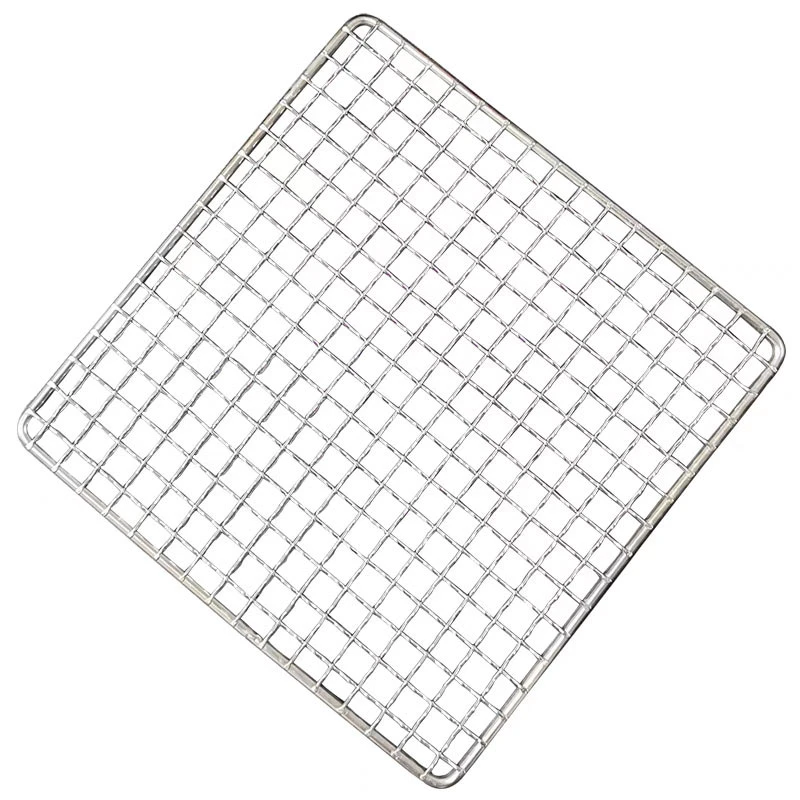
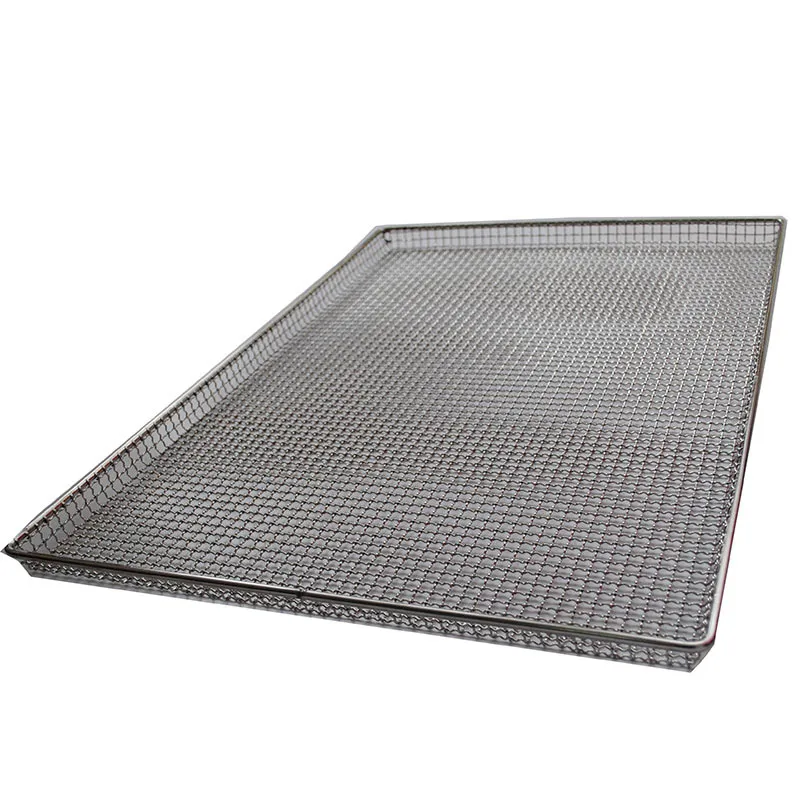
A well-designed baking mesh tray does more than hold products during processing. Its open structure allows hot air to circulate around the material, helping heat reach exposed surfaces and allowing moisture to escape more freely. This makes mesh trays a practical option for commercial baking, food dehydration, cooling, and other processes where airflow affects the final result.
Compared with a solid tray, a mesh design can improve air contact on the underside of products. This is particularly useful when processing items that need consistent drying or cooling, such as sliced fruit, vegetables, herbs, biscuits, and selected bakery products. The actual performance depends on the oven or dryer configuration, product thickness, loading density, and air velocity.
Selecting the right mesh opening is equally important. Openings that are too large may allow small pieces to fall through, while openings that are too small can restrict airflow and retain more residue. The tray should provide enough support for the product without unnecessarily blocking air movement.
Jinzehong offers customized wire mesh trays with adjustable dimensions and mesh openings to suit different processing requirements. Tray geometry, edge construction, wire diameter, and loading capacity can be specified according to the intended application and equipment layout.
Whether you operate a commercial bakery or an industrial drying line, choosing the right mesh structure can help improve process consistency and make better use of available equipment space. Share your product dimensions, operating conditions, and required tray size with Jinzehong to discuss a suitable solution.
Material selection plays an important role in the service life, maintenance requirements, and suitability of a stainless steel wire mesh tray. Stainless steel grades 304 and 316 are both widely used in equipment and components exposed to demanding working conditions, but they are not interchangeable in every application.
Grade 304 is a practical choice for many general food-processing and bakery environments. It offers good corrosion resistance under ordinary operating conditions and is often suitable for repeated heating, cooling, washing, and routine handling. For applications involving common food products and standard cleaning procedures, a 304 stainless steel mesh tray may provide a sensible balance between durability and cost.
Grade 316 contains molybdenum, which improves resistance to certain forms of corrosion, particularly in chloride-containing environments. It may be worth considering when trays are exposed to more aggressive cleaning chemicals, salt-containing materials, or other conditions that place greater demands on corrosion resistance. However, the actual choice should account for chemical concentration, temperature, exposure time, and cleaning procedures.
Besides material grade, buyers should evaluate wire diameter, mesh opening, frame strength, surface finish, and edge quality. A suitable alloy cannot compensate for a tray that is poorly matched to its load or operating environment.
Jinzehong provides customized mesh tray solutions using stainless steel 304, 316, and 316L, depending on project requirements. When requesting a quotation, specify the processed material, working temperature, cleaning method, and expected load. These details help identify an appropriate material and construction rather than selecting a grade based on price alone.
For food-contact applications, confirm the applicable regulatory requirements and request supporting material documentation where necessary.
Choosing between a metal mesh tray and a solid tray depends on what your production process needs the tray to do. Although both designs support products during handling and processing, their different surface structures affect airflow, drainage, product retention, and cleaning.
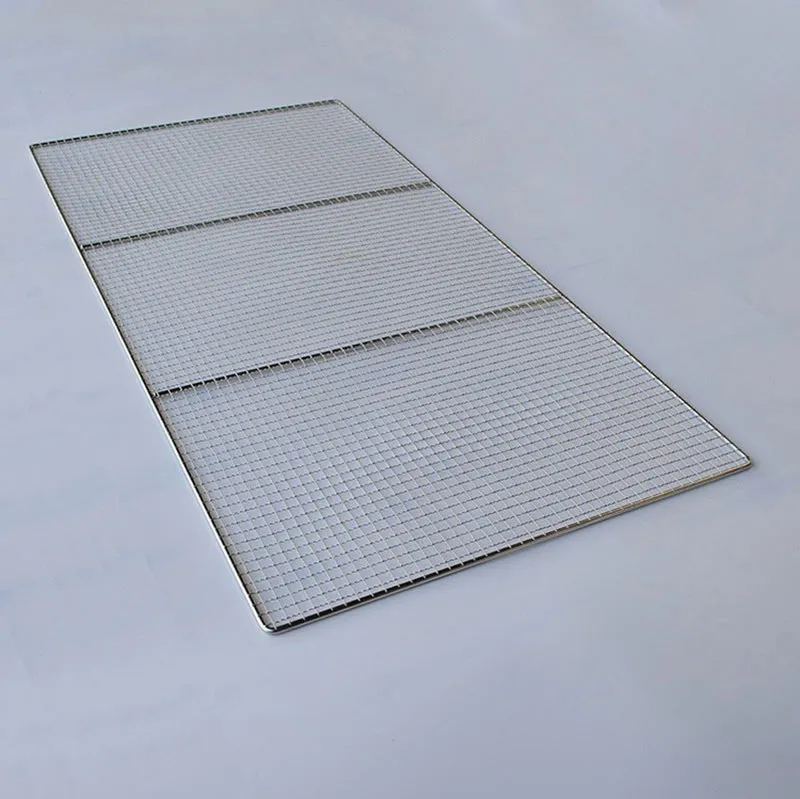
A mesh tray is often the better option when air needs to reach the product from multiple directions. Its open surface supports ventilation during drying and cooling, while allowing moisture and certain liquids to pass through. This design can be useful for food dehydration, cooling baked goods, processing herbs, and applications where airflow through the tray is an important consideration.
A solid tray provides a continuous supporting surface. It is generally more suitable for liquids, fine powders, small particles, or products that could fall through a mesh opening. It can also help contain sauces, oils, and other materials that need to remain on the tray during handling.
Perforated trays offer another option. Unlike wire mesh, they use a sheet with manufactured holes. Their performance depends on the hole pattern, open area, sheet thickness, and product characteristics. They may be suitable when a more continuous support surface is needed alongside controlled airflow or drainage.
When comparing these designs, consider product size, weight, moisture content, cleaning requirements, and the equipment in which the tray will operate. There is no universally superior design; the right choice is the one that meets the process requirements.
Jinzehong helps buyers specify customized metal mesh trays by application, dimensions, opening size, material, and loading requirements. If you are replacing solid trays or upgrading a drying line, provide the existing tray dimensions and the main performance issue you want to address. This makes it easier to evaluate a suitable alternative.
A properly specified stainless steel mesh tray should fit both the equipment and the products being processed. For industrial buyers, customization is not simply about choosing a tray length and width. Mesh geometry, structural strength, edge design, and handling requirements can all affect daily operation.
Start with the available installation space. Measure the usable length and width of the oven rack, drying cabinet, conveyor, or processing machine. Then confirm the maximum tray height, clearance between stacked trays, and any requirements for handles, locating features, or supporting rails. These details help prevent interference during loading and unloading.
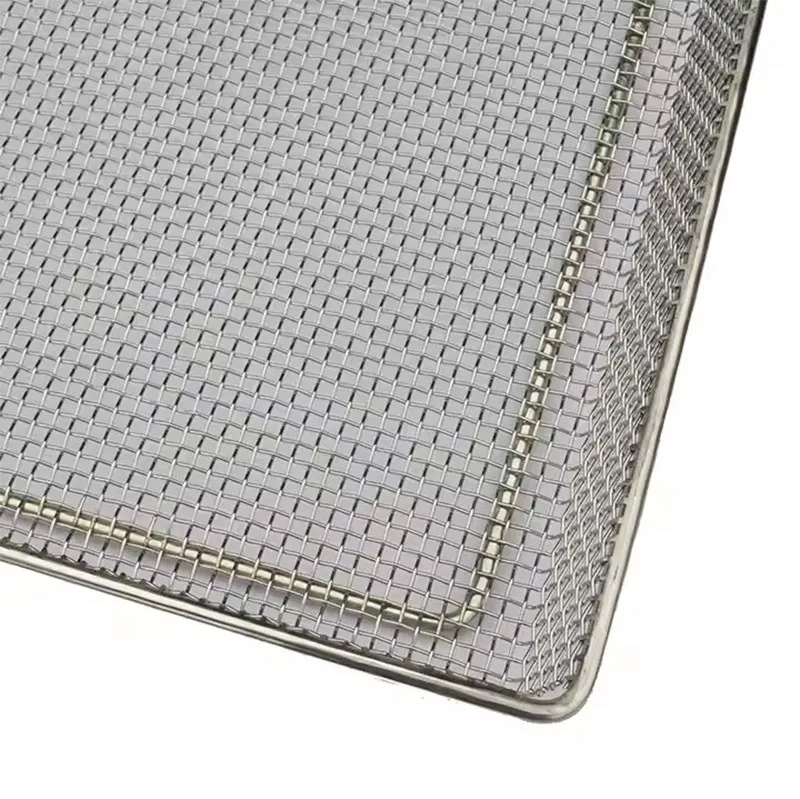
Next, select the mesh opening and wire diameter according to product size and weight. Smaller openings can provide better support for small items, while larger openings may allow greater airflow. Wire diameter and frame construction should be selected together to balance load capacity, rigidity, and handling weight. Actual requirements should be confirmed against the intended operating conditions.
Material and finish are also important. Stainless steel 304 may suit many general food-processing environments, while 316 or 316L may be appropriate where greater corrosion resistance is required. Smooth edges and an accessible surface structure can simplify routine cleaning, but the final design should also consider the cleaning method and applicable hygiene standards.
Jinzehong supports customization of tray dimensions, mesh openings, wire diameter, and loading requirements. Depending on the project, buyers can discuss additional structural details to match their equipment and workflow.
To request a quotation, prepare a drawing or sample, overall dimensions, required quantity, processed product details, working temperature, and target load per tray. If drawings are unavailable, photographs and measurements of the existing tray can provide a useful starting point for discussing a custom solution.
In commercial baking and food processing, tray selection affects more than product support. The right baking mesh tray should fit the production equipment, withstand repeated handling, and suit the characteristics of the food being processed. A tray designed for cooling biscuits may have different requirements from one used for drying fruit or supporting heavier products on an industrial line.
For bakeries, key considerations include product dimensions, underside airflow, release requirements, and the tray's compatibility with existing oven racks. Mesh trays can be useful for selected products that benefit from ventilation, although the mesh pattern must be matched to the dough or finished product. Very soft mixtures and small pieces may require a different surface design to prevent deformation or product loss.
For drying operations, tray depth, mesh opening, and loading density deserve particular attention. Overloading a tray can restrict airflow even when the mesh itself is open. Consistent product distribution and suitable spacing between trays can help maintain more uniform processing conditions. Actual drying performance will still depend on the equipment, temperature, humidity, and air circulation.
In food factories, repeated cleaning is another important consideration. Stainless steel construction, appropriate surface finishing, and accessible corners can support routine sanitation. Buyers should confirm that the selected material and finish meet their specific food-contact and cleaning requirements.
Jinzehong manufactures customized wire mesh trays for baking and drying applications, with options for stainless steel materials, dimensions, mesh openings, and loading requirements. The design can be discussed around the production line rather than relying on a generic tray size.
Before ordering, identify the product being processed, the equipment model or usable tray dimensions, the working environment, and the required output. This information helps narrow the design options and supports a more practical purchasing decision.
Designed for Airflow and Precision

From mesh size and wire thickness to tray dimensions and edge styles, every Custom Wire Mesh Tray for Baking and Drying can be personalized. Choose stainless steel for food safety and durability, or add reinforcement for industrial-level performance. Our engineers support you with drawings, samples, and solutions tailored to your application.

Built with food-safe stainless steel and corrosion-resistant finishing, the Custom Wire Mesh Tray for Baking and Drying is ideal for use in ovens, dehydrators, and cooling systems. Perfect for food factories, bakeries, and commercial kitchens, it supports repeated use, easy cleaning, and consistent results over time.
Hit enter to search or ESC to close