Industrial Silencers: A Buyer's Guide for Noise Compliance & Efficiency
For import managers, brand owners, and sourcing agents seeking reliable industrial silencers, the core questions are clear: How do I reduce hazardous noise to meet OSHA and local regulations? Can I find a supplier that balances consistent quality, custom design capability, and high-speed delivery without compromising on performance? This guide cuts through the complexity, outlining how modern silencing solutions integrate with your systems to ensure compliance, protect personnel, and enhance operational continuity, backed by scalable manufacturing and rigorous quality assurance.
The Unseen Cost of Industrial Noise: Key Pain Points in Procurement
Procuring industrial silencers is often reactive—driven by a compliance deadline or a worker safety complaint. This urgency leads to common frustrations:
- Performance Uncertainty: Will the silencer deliver the promised dB(A) reduction across the required frequency spectrum for your specific application (e.g., compressor exhaust, pneumatic valve, gas turbine)?
- Supply Chain Volatility: Unreliable lead times from suppliers can delay entire projects, incurring costly downtime.
- Fit and Integration Issues: Off-the-shelf models rarely match unique port sizes, pressure ratings, or spatial constraints, leading to expensive modifications.
- Hidden Costs: Subpar materials or construction lead to premature failure, excessive backpressure (reducing system efficiency), and frequent replacements.
- Documentation Gaps: Lack of clear test reports, CAD drawings, and compliance certificates (CE, Pressure Equipment Directive) complicates procurement and audits.
Engineered Solutions: How High-Performance Silencers Address These Challenges
Effective noise control is not just about adding a component; it's about integrating a system designed for your operational envelope. Modern silencers utilize absorption, reflection, or resonant principles tailored to the noise source.
Key Design Considerations for B2B Buyers
- Application-Specific Design: Silencers for high-pressure steam venting differ materially from those for low-pressure pneumatic lines. The solution must match the media, temperature, pressure, and flow rate.
- Attenuation Spectrum: A quality silencer targets the problematic frequencies. Broadband absorptive silencers (using mineral wool or fiberglass) handle general noise, while reactive (chambered) silencers target specific low-frequency tones.
- Pressure Drop Management: A poorly designed silencer creates excessive backpressure, forcing pumps or compressors to work harder and increasing energy costs. Optimal designs balance noise reduction with minimal flow restriction.
- Durability & Maintenance: Industrial environments demand robust materials—carbon or stainless steel housings, stainless steel mesh or perforated inner liners, and moisture-resistant absorptive materials for long service life.
Why Partner with a Specialist Manufacturer for Your Silencer Needs?
Choosing a supplier with deep engineering and manufacturing integration transforms silencers from a commodity into a value-adding component. Here’s what a dedicated partner brings:
| Feature | Standard Supplier | Specialist Manufacturer (e.g., Jinzehong) |
|---|---|---|
| Design Flexibility | Limited standard sizes | Full OEM/ODM support – custom flange connections, lengths, diameters, and materials to spec |
| Quality Control | Batch sampling | In-process quality assurance from raw material (wire mesh, steel coil) to welding and pressure testing |
| Lead Time Reliability | Often variable | Streamlined, high-speed delivery protocols enabled by integrated production on a 5000 m² facility |
| Technical Data | Generic specs | Detailed CAD drawings, predicted attenuation curves, and material certifications provided |
Core Commercial Terms for International Buyers
- MOQ (Minimum Order Quantity): Flexible, often starting from 1 unit for prototype or sample orders to accommodate testing and validation.
- Lead Time: Standard designs: 15-25 days. Custom OEM/ODM projects: 25-40 days, depending on complexity. Expedited options may be available.
- Customization Capability: Full support for custom dimensions, materials (SS304, SS316, carbon steel), connection types (flanged, threaded, NPT), and pressure ratings. In-house tooling and a powerful factory setup facilitate this.
- Certifications & Compliance: Manufacturers should hold ISO 9001:2015 for quality management. Products can be manufactured to comply with CE directives (e.g., PED 2014/68/EU for pressure equipment) and RoHS. Specific certifications are project-dependent.
- Packaging & Logistics: Standard export packaging (wooden crates/pallets) for sea freight. Terms typically FOB main Chinese port (e.g., Tianjin, Shanghai). CIF quotes available upon request.
- After-Sales Support: Includes installation drawings, technical guidance, and a standard warranty against manufacturing defects (typically 12 months).
Note: All parameters, MOQ, lead times, and certification status are for reference. Please refer to the actual order confirmation and technical datasheet for your specific project.
Trust & Verification: Insights from the Field
Independent validation is crucial in B2B decisions. Here is feedback from professionals who have navigated this procurement process:
"Sourcing for a compressor package project, we needed custom flange adapters on short notice. The engineering team provided clear DWG files for approval, and the units arrived ahead of schedule. The noise reduction met our spec exactly. It's a relief to find a factory that treats custom work as standard." – Michael R., Procurement Manager, Industrial Equipment Assembler, USA
"Our brand requires strict quality control on all components we private label. We've audited several silencer suppliers. The systematic QA process, from raw material checks to final pressure testing, gave us confidence for our OEM partnership. Consistency across batches is their strong point." – Sarah L., Brand Owner, Power Systems Solutions, UK
"As an agent for multiple clients in Europe, I value transparency and communication. This supplier provides regular production updates with photos, which I can share directly with my clients. It minimizes misunderstandings and builds trust. Their familiarity with CE marking requirements for our region is a definite plus." – David K., Sourcing Agent, Based in Germany
Ready to Specify Your Industrial Silencer Solution?
Move beyond generic offerings. Partner with a manufacturer that combines engineering expertise with the agility of China's supply chain to deliver a precise, compliant, and durable noise control solution.
Next Step: Provide your basic application parameters (noise source, pressure, temperature, connection size, target noise level) to initiate a technical consultation and receive a detailed proposal with CAD layouts.
Contact Jinzehong Wire Mesh Products Co., Ltd.
Tel: +86 15383785666 | Email: ada@jinzehongwiremesh.com
Submit Your Silencer Requirements

Frequently Asked Questions (FAQ) on Industrial Silencers
Q1: What information do I need to provide to get an accurate quote for a custom industrial silencer?
A: To ensure an accurate proposal, please provide: 1) Media (air, steam, gas), 2) Operating Pressure & Temperature, 3) Flow Rate (SCFM or Nm³/h), 4) Inlet/Outlet Connection Type and Size, 5) Desired Noise Reduction Level (dB(A)) or Target Outlet Noise, 6) Any space constraints.
Q2: Can you manufacture silencers to comply with the CE marking and Pressure Equipment Directive (PED)?
A: Yes. We manufacture silencers that can be designed and constructed to meet the essential requirements of applicable CE directives, including PED. This involves material traceability, design calculations by certified engineers, and following a conformity assessment procedure. Final certification often requires involvement of a notified body, which we can facilitate.
Q3: What is the typical warranty for your industrial silencers?
A: We offer a standard 12-month warranty from the date of shipment against any defects in material or workmanship under normal use and service. Warranty terms are detailed in our commercial contract.
Q4: How do you ensure consistent quality across production runs?
A: Our ISO 9001-based quality system mandates strict incoming material inspection, in-process checks during cutting, welding, and assembly, and a final inspection that includes dimensional verification and, if specified, pressure testing. This system, managed within our integrated 5000 m² facility, ensures consistency.
Q5: What are the main advantages of choosing an absorptive silencer over a reactive silencer?
A: Absorptive silencers (with sound-absorbing fill) are generally more effective at mitigating broad-spectrum, high-frequency noise (common in pneumatic exhausts, fans) and have a lower pressure drop. Reactive silencers (using chambers and passages) are better for low-frequency, tonal noise (like engine exhaust) but can be larger and cause more backpressure. The choice is application-specific.
Author Bio:

John Miller is a senior mechanical engineer with over 15 years of experience in industrial acoustics and fluid system design. He has collaborated with manufacturers globally to develop noise abatement solutions for the oil & gas, power generation, and heavy machinery sectors. His writing focuses on translating technical specifications into actionable procurement insights for B2B buyers.
Image Alt Text Suggestions:
industrial-silencer-compressor-exhaust-installation.jpg
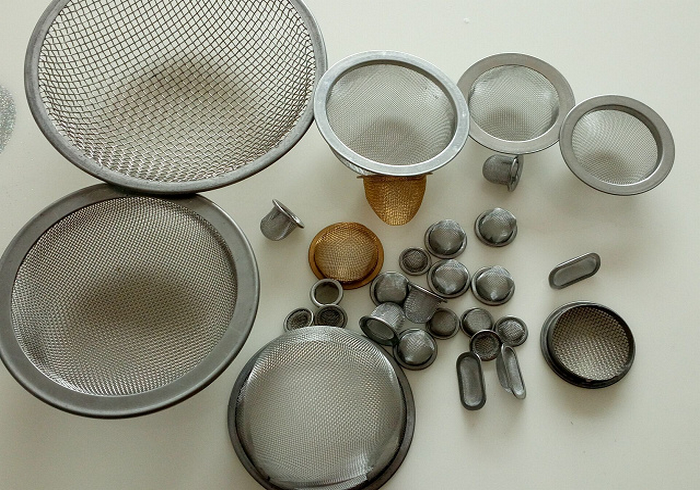
custom-OEM-silencer-different-sizes-types.jpg
factory-production-floor-silencer-assembly.jpg
silencer-acoustic-performance-test-graph.jpg
industrial-silencer-export-packaging-wooden-crate.jpg
air duct silencer industrial acoustic industrial noise
Disclaimer: The technical data, specifications, and commercial terms (MOQ, lead time) provided in this article are for informational purposes. They are subject to change based on specific project requirements, material costs, and production schedules. Please request and refer to the official quotation, technical datasheet, and sales contract for all order confirmations.
© Jinzehong Wire Mesh Products Co., Ltd. | Established in 2000 | South Road, 500 meters North of Houzhangzhuang, Anping County, Hengshui City, Hebei Province, China.