Optimal Chain Link Fencing Post Spacing: Engineering Standards for Durability
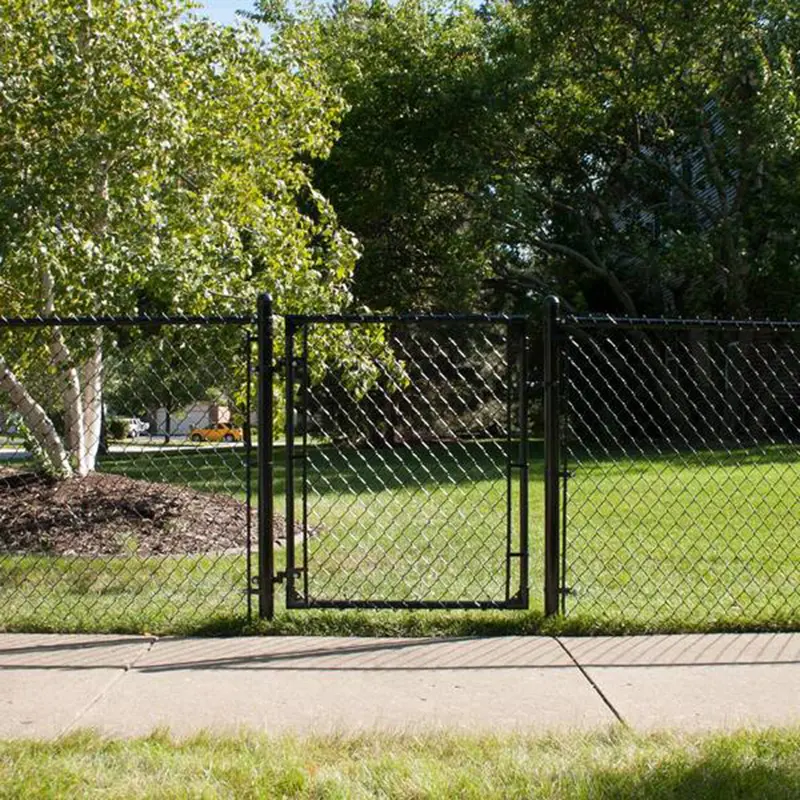
For optimal structural integrity, standard chain link fencing post spacing is typically 10 feet (3.05 meters) center-to-center for standard gauge wire. However, for high-tension security applications or heavy-gauge meshes, spacing may be reduced to 6 to 8 feet. Correct spacing prevents sagging, ensures load-bearing stability, and minimizes long-term maintenance costs. Improper spacing is the leading cause of fence failure in high-wind or high-impact zones. Specifications below are industry-standard guidelines; final parameters depend on specific project loads and local codes.
Choosing the right post spacing is not merely an aesthetic choice; it is a critical engineering decision that affects the lifespan of your fencing project. At Jinzehong Wire Mesh Products Co., Ltd., we understand that overseas buyers—from the USA to Europe—require precision, compliance, and durability. This guide breaks down the technical variables of post spacing, helping Import Managers and Wholesalers make data-driven procurement decisions that balance cost-efficiency with structural performance.
Why Post Spacing Matters: Common Procurement Pain Points
Many B2B buyers encounter fencing failures not because the wire mesh is poor quality, but because the structural framework—the posts and their spacing—is underspecified for the environment. Common issues include:
- Sagging Mesh: Excessive spacing leads to visible drooping, compromising security and aesthetics.
- Wind Load Failure: In coastal or high-wind regions, wider spacing increases the surface area exposed to wind pressure, potentially bending or snapping posts.
- Increased Maintenance Costs: Incorrect spacing requires more frequent tensioning and repair, increasing the Total Cost of Ownership (TCO) for brand owners.
- Compliance Risks: Some local building codes and safety standards (e.g., for schools or industrial sites) mandate specific post densities to ensure perimeter security.
Understanding About chain link fencing post spacing is essential to avoid these pitfalls. It is the primary factor in determining how much weight the fence can hold and how well it withstands environmental stressors.
Technical Analysis: Determining the Right Spacing
Post spacing is not a one-size-fits-all metric. It is determined by three key variables: Wire Gauge, Tension Banding, and Environmental Conditions.
1. Standard Residential & Light Commercial Use
For typical residential projects or light commercial boundaries where high-security impact is not the primary concern, the industry standard remains 10 feet (3.05m) center-to-center. This spacing works effectively with standard 9-gauge (3.76mm) or 11-gauge (4.0mm) wire meshes. It offers a balance between material cost and structural stability.
2. High-Security & Industrial Applications
For industrial sites, prisons, or high-security perimeters, spacing is often reduced to 6 feet (1.83m) or 8 feet (2.44m). This is particularly important when using heavier gauge wires (e.g., 6-gauge or 9-gauge with barbed wire tops). Closer spacing distributes the lateral load more evenly across the fence line, preventing individual posts from bearing excessive stress.
3. Corner and Gate Posts
While line post spacing is consistent, corner posts and gate posts require different engineering. These posts must handle the tension of the entire run. Therefore, they are often braced with diagonal supports (strain braces) regardless of the spacing between line posts. Jinzehong provides reinforced gate frames and heavy-duty corner posts to complement your chosen spacing strategy.
Comparison: Spacing vs. Application
| Application Type | Recommended Spacing | Typical Wire Gauge | Key Benefit |
|---|---|---|---|
| Residential / Garden | 10 ft (3.05m) | 11 GA - 12 GA | Cost-effective, easy installation |
| Commercial / School | 8 ft - 10 ft (2.44m - 3.05m) | 9 GA - 11 GA | Balanced security and durability |
| Industrial / High Security | 6 ft - 8 ft (1.83m - 2.44m) | 6 GA - 9 GA | High wind resistance, impact protection |
| Temporary / Event | 10 ft (3.05m) | 12 GA - 13 GA | Quick deployment, lightweight |
Note: All technical parameters are subject to change based on specific project requirements. Please refer to the actual order confirmation for final specifications.
Why Choose Jinzehong for Your Fencing Projects?
As a leading manufacturer headquartered in Anping County, the "Hometown of Wire Mesh" in China, Jinzehong Wire Mesh Products Co., Ltd. leverages over 20 years of experience to deliver superior products. Our commitment to quality assurance and customization sets us apart in the global market.
Core Selling Points
- Powerful Factory Capacity: Our facility spans a large industrial area, equipped with advanced automated weaving and coating lines. This allows us to handle large-volume orders without compromising quality, ensuring high-speed delivery for urgent B2B projects.
- OEM/ODM Design Support: We understand that brand owners and wholesalers often have unique specifications. Our R&D team supports full customization, including post spacing, mesh size, wire diameter, and coating types (PVC, Galvanized, PVDF).
- Quality Assurance: Every batch undergoes rigorous testing for tensile strength, coating thickness, and corrosion resistance. We adhere to international standards, ensuring our products meet the durability expectations of markets like the USA, Europe, and Australia.
- Supply Chain Efficiency: Located in Hebei Province, we benefit from China’s robust supply chain infrastructure. This allows us to offer competitive pricing and reliable logistics solutions, reducing your overall procurement costs.
Technical Specifications & Compliance
While specific certifications may vary by product line and destination country, Jinzehong is committed to international compliance standards. Our products are designed to meet:
- ISO 9001: Quality Management System standards.
- ASTM/EN Standards: For wire mesh and fencing materials in US and European markets.
- RoHS Compliance: For coating materials used in environmentally sensitive regions.
Disclaimer: Certifications are provided based on request and product type. Please consult our sales team for specific documentation for your target market.
Procurement Guide for Import Managers and Wholesalers
When sourcing chain link fencing, understanding the total cost structure is vital. Here is how Jinzehong supports your procurement process:
1. MOQ and Lead Time
We offer flexible Minimum Order Quantities (MOQ) to accommodate both large-scale infrastructure projects and smaller wholesale orders. Our standard lead time is 15-25 days after order confirmation, depending on customization requirements and production schedule. For urgent orders, our high-speed production lines can expedite delivery.
2. Packaging and Logistics
Proper packaging is crucial to prevent damage during ocean freight. We use:
- Standard Export Packaging: Steel straps, waterproof wrapping, and palletized containers.
- Custom Packaging: Available for brand owners requiring specific labeling and packaging designs.
We support various Incoterms, including FOB (Free on Board) and CIF (Cost, Insurance, and Freight), providing transparency in shipping costs.
3. After-Sales Service
We provide comprehensive after-sales support, including technical guidance for installation, replacement parts for defective items, and responsive customer service via email and phone. Our goal is to ensure a seamless experience from inquiry to delivery.
What Our Global Partners Say
Our reputation is built on the satisfaction of our clients. Here are testimonials from real partners in the industry:
James T., Sourcing Agent (USA): "We’ve worked with several Chinese suppliers, but Jinzehong stands out for their attention to detail. The post spacing consistency was perfect for our residential development project in Texas. The packaging was excellent, with zero damage upon arrival in Long Beach. Highly recommended for wholesalers."
Sarah L., Brand Owner (UK): "As a brand owner, I need OEM partners who understand quality control. Jinzehong’s team was very responsive to our specific requirements for post spacing and coating thickness. The delivery was on time, and the product quality exceeded our expectations. Their communication in English is professional and clear."
Michael R., Import Manager (Australia): "The technical support from Jinzehong was impressive. They helped us calculate the optimal post spacing for our high-wind coastal site. The fencing has held up perfectly over the last two years. Their capacity to handle large orders without delay is a huge advantage for our business."
David K., Wholesaler (Canada): "Competitive pricing without compromising quality. The factory tour video showed their advanced production lines, which gave us confidence in their ability to deliver. The post spacing options were flexible, allowing us to offer different tiers to our retail customers."
About the Author
Mark Henderson is a Senior Technical Consultant at Jinzehong Wire Mesh Products Co., Ltd. With over 15 years of experience in the wire mesh industry, Mark specializes in structural engineering for fencing systems and supply chain optimization. He holds certifications in International Trade Logistics and Material Science. Mark frequently contributes to industry publications on best practices for fencing installation and procurement. He is dedicated to helping B2B buyers navigate the complexities of global sourcing.

Frequently Asked Questions (FAQ)
Q1: What is the standard distance between chain link fence posts?
A1: The standard distance is typically 10 feet (3.05 meters) center-to-center for line posts. However, for high-security or high-wind areas, this can be reduced to 6 or 8 feet for increased stability.
Q2: Does post spacing affect the price of the fence?
A2: Yes, closer spacing requires more posts and potentially more concrete for installation, which increases material and labor costs. However, it may reduce the gauge of wire needed, potentially offsetting some costs. Jinzehong can help you optimize this balance.
Q3: Can Jinzehong customize the post spacing for our project?
A3: Absolutely. We offer full OEM/ODM support. Whether you need standard 10-foot spacing or custom intervals for a specific architectural design, our production lines can accommodate your requirements.
Q4: How do you ensure the quality of the posts and spacing consistency?
A4: We use automated machinery for manufacturing posts and mesh, ensuring uniform dimensions. Each batch is inspected for straightness, coating thickness, and dimensional accuracy before shipment.
Q5: What is the MOQ for ordering chain link fencing with custom spacing?
A5: Our MOQ varies based on the product and customization level. Generally, we can accommodate orders starting from one 20-foot container. Please contact our sales team for specific MOQ details.
Ready to Optimize Your Fencing Project?
Partner with Jinzehong Wire Mesh Products Co., Ltd. for high-quality, reliable, and customizable chain link fencing solutions. Our team is ready to assist you with technical consultations, quotes, and logistical support.
Contact Us Today:
- Email: ada@jinzehongwiremesh.com
- Phone: +86 15383785666
- Website: Contact Page
- Address: South Road, 500 meters North of Houzhangzhuang, Anping County, Hengshui City, Hebei Province, China
Disclaimer: All product specifications, certifications, and pricing are subject to change. Please refer to the actual order confirmation and latest technical datasheets for accurate information. Jinzehong Wire Mesh Products Co., Ltd. reserves the right to modify products without prior notice.