Chain Link Fence Spacing and Post Chart: The Ultimate Guide for Professional Buyers
Finding the correct chain link fence spacing post chart is critical for import managers, wholesalers, and brand owners planning large-scale procurement. An accurate chart ensures structural integrity, optimizes material usage, and prevents costly installation errors. This guide provides detailed spacing tables, explains key technical parameters for compliance, and outlines how partnering with a specialized manufacturer like Jinzehong delivers quality assurance, OEM flexibility, and reliable high-speed delivery from China's robust supply chain.
Common Industry Pain Points in Fence Sourcing
Procuring chain link fencing involves navigating several challenges that impact project timelines, budgets, and final quality. Understanding these pain points is the first step toward a successful purchase.
- Incorrect Spacing Specifications: Using an inaccurate or generic chain link fence post spacing chart leads to weak structures, sagging fabric, and potential failure under wind or impact loads.
- Material and Cost Inefficiency: Improper post spacing results in either over-engineering (unnecessary posts, higher costs) or under-engineering (safety risks, frequent repairs).
- Supply Chain Delays: Unreliable manufacturers cause project holdups with inconsistent quality, delayed shipments, and poor communication.
- Compliance Risks: Fencing that doesn't meet regional standards (e.g., ASTM, specific country codes) can lead to rejected shipments, fines, or liability issues.
- Customization Limitations: Many suppliers offer rigid catalogs, lacking the OEM/ODM support needed for branded or application-specific fencing solutions.
Comprehensive Chain Link Fence Post Spacing Guidelines
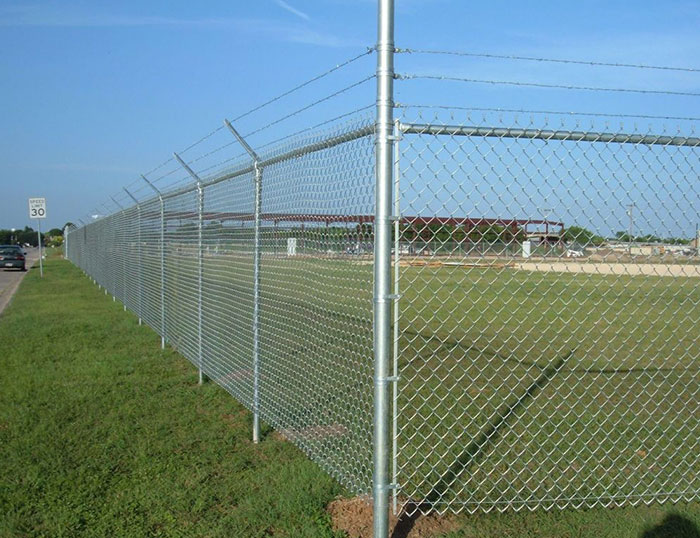
The spacing between line posts, end posts, and corner posts is determined by fence height, wire gauge, and intended use (residential, commercial, industrial). Below are detailed, industry-accepted spacing charts. (All measurements are in feet and inches, standard for the US market. Specifications are for guidance; please refer to the actual order confirmation for project-specific engineering.)
Standard Line Post Spacing Chart
| Fence Height (ft) | Recommended Max Line Post Spacing (ft) | Typical Wire Gauge (Ga) | Common Application |
|---|---|---|---|
| 4 | 10 | 11, 9 | Residential, Light Commercial |
| 6 | 8 - 10 | 9, 6 | Commercial, Schools |
| 8 | 8 | 6, 4 | Industrial, High-Security |
| 10 - 12 | 6 - 8 | 4, 2 | Prisons, Critical Infrastructure |
Key Consideration: End posts, corner posts, and gate posts require heavier gauging and deeper concrete footings. Spacing may need reduction in high-wind areas (as per local building codes).
Terminal Post (End/Corner) Specifications
Terminal posts bear the tension of the entire fence run. The chart below compares standard requirements.
| Post Type | Diameter Increase over Line Post | Minimum Concrete Footing Depth |
|---|---|---|
| End/Corner Post | + 0.5 to 1 inch | 30 inches |
| Gate Post | + 1 to 2 inches | 36 inches or more |
How Jinzehong Wire Mesh Products Co., Ltd. Solves These Challenges
With over two decades of specialization, Jinzehong translates these technical guidelines into reliable, customizable fencing systems. Our approach integrates precise engineering with efficient manufacturing.
1. Engineering Support & Custom Chart Development
We provide project-specific chain link fence post spacing charts and CAD drawings based on your site conditions (wind load, soil type, topography). This service prevents specification errors and optimizes your bill of materials.
2. Manufacturing & Quality Assurance
- Factory Power: Operating from a 5,000 m² facility in Anping, we control the production process from raw material (low-carbon steel wire, galvanized wire) to finished mesh and framework.
- Quality Control: Our in-house lab tests wire tensile strength, zinc coating weight (for galvanized products), and weld shear strength. Key certifications include ISO 9001 for quality management systems.
- Compliance: Products can be manufactured to meet international standards such as ASTM A392 (Chain-Link Fence Fabric), ASTM A491 (Aluminum-Coated Fabric), and CE marking for the European market.
3. Full OEM/ODM Customization Capability
We are not just a supplier; we are a manufacturing partner. Customization options include:
- Specifications: Any mesh size, wire gauge, height, and post spacing.
- Materials: Galvanized steel, PVC-coated (various colors), aluminum, and stainless steel. Branding: Private labeling, custom packaging, and tailored accessory kits (tension bars, brace bands, gates).
4. Supply Chain & Logistics Efficiency
- Lead Time: Standard product lead times range from 15-25 days. Urgent production lines are available for critical projects.
- MOQ: We offer flexible Minimum Order Quantities, with competitive rates for container loads (FCL). Specific MOQs depend on product type and customization level.
- Logistics Expertise: Experienced team handles all export documentation, FOB/CIF terms, and can recommend optimal port routing to the USA and other English-speaking regions.
What Our Partners Say: Reviews from Real Clients
Michael T., Procurement Manager - Florida, USA: "We ordered 15,000 feet of 6-ft vinyl-coated fencing for a coastal community project. Jinzehong's team provided a detailed spacing chart that accounted for salt spray and wind. The posts and fabric arrived perfectly bundled, labeled, and ahead of schedule. Their technical documentation made our installer's job straightforward."
Sarah L., Brand Owner - United Kingdom: "As a reseller, we needed a unique green coating and custom post caps with our logo. Their ODM team nailed the color match on the first sample. The quality is consistent across multiple shipments, which has helped us build a strong brand reputation."
David K., Import Agent - Australia: "I've sourced fencing from multiple suppliers. Jinzehong stands out for their communication. When we had a question about AS standards compliance, they had an engineer on a video call within 24 hours with the right answers. It’s a truly professional partnership."
"Precision Fencing Co." - Texas, USA: "We use their heavy-duty 4-gauge, 10-ft high system for industrial sites. The spacing and post diameter recommendations have held up perfectly in our high-wind plains. Their factory's quality control means we rarely see a defective section, saving us time and cost on site."
Your Next Step: From Chart to Completed Project
Accurate post spacing is the foundation of a durable fence. Partnering with an experienced manufacturer ensures this foundation is built correctly from the start.
Ready to get a project-specific quote or a customized spacing chart? Contact our engineering and sales team today. Provide your basic project parameters (length, height, application, desired material), and we will return a detailed proposal including technical drawings, compliance information, and a transparent FOB/CIF quote.
Contact Jinzehong Wire Mesh Products Co., Ltd.
📞 Tel: +86 15383785666
✉️ Email: ada@jinzehongwiremesh.com
📍 Add: South Road, 500 meters North of Houzhangzhuang, Anping County, Hengshui City, Hebei Province, China
🌐 Contact Page: https://www.jinzehongmesh.com/contactus.html
Founded in 2000 | 5000 m² Factory | ISO 9001 Certified | OEM/ODM Specialist
Frequently Asked Questions (FAQ)
Q1: How does post spacing change for vinyl-coated (PVC) chain link fence?
A: The core spacing guidelines remain similar. However, because the PVC coating adds slight weight and diameter, some engineers recommend reducing the maximum spacing by 1-2 feet for fences over 6 ft high to account for increased wind load. We provide specific recommendations based on your chosen coating thickness.
chain link fence post spacing steel fence post spacing welded wire fence post spacing
Q2: Can you manufacture fencing to meet specific US state or county building codes?
A: Yes. We require you to provide the relevant code section or performance requirement (e.g., wind load resistance in pounds per square foot). Our engineering team will then design the post spacing, diameter, concrete footing specification, and fabric gauge to comply. We regularly produce fencing for projects in Florida, California, and other regulated markets.
Q3: What is your typical MOQ for a custom chain link fence project?
A: For a fully custom project (e.g., specific color coating, post design), the typical MOQ starts at one 20-foot container. For standard galvanized or black vinyl-coated products in common sizes, we can often accommodate smaller orders. Contact us with your quantity needs for a precise answer.
Q4: Do you supply the complete system, including hardware and concrete?
A: We supply all above-ground components: fabric, line posts, terminal posts, top rails, tension bars, brace bands, bolts, and hinge kits for gates. Concrete for footings is sourced locally at the installation site due to its weight and cost to ship. We provide detailed installation manuals and footing dimension charts.
Q5: How do you ensure consistency in zinc coating for galvanized fences?
A: We use a controlled hot-dip galvanizing process. The zinc coating weight is regularly tested to meet standards like ASTM A123. For highly corrosive environments, we recommend a heavier coating class (e.g., Class 3) or our Galfan coating, which offers 2-3 times the corrosion resistance of standard galvanizing.
Disclaimer: The chain link fence spacing post charts and technical data provided in this article are for informational and planning purposes. They are based on general industry standards and practices. Final engineering specifications for any project must account for local soil conditions, wind loads, building codes, and specific use cases. All product specifications, MOQs, lead times, and prices are subject to change and must be confirmed in writing with Jinzehong Wire Mesh Products Co., Ltd. prior to order confirmation.
 Article Author: John M. Anderson. With over 15 years in the perimeter security and wire mesh industry, John has worked as a specification consultant for large-scale infrastructure projects across North America and Europe. He now collaborates with leading manufacturers to translate complex engineering standards into practical procurement guidance for global buyers.