Optimizing Operations with Advanced AS RS Systems for Modern Supply Chains
For import managers, brand owners, and sourcing agents, selecting the right AS RS systems (Automated Storage and Retrieval Systems) is a critical decision impacting warehouse efficiency, space utilization, and long-term ROI. This guide explores how high-performance AS/RS solutions address industry challenges, the key specifications to evaluate, and the advantages of partnering with an experienced manufacturing partner to ensure system reliability and seamless integration.
The Modern Warehouse Dilemma: Pain Points Driving the Demand for AS/RS
Today's B2B buyers face intense pressure to optimize logistics. Manual warehousing struggles with escalating labor costs, inventory inaccuracies, and inefficient use of valuable cubic space. Slow order fulfillment can damage customer relationships, while safety concerns and seasonal demand spikes create operational instability. An effective automated storage and retrieval system is not merely a piece of equipment; it's a strategic investment in supply chain resilience.
- Space & Cost Inefficiency: Traditional shelving wastes vertical space. AS/RS systems utilize building height dramatically, increasing storage density by up to 85% compared to conventional methods.
- Accuracy & Speed Gaps: Manual picking is prone to errors and slower cycle times. Automated systems ensure near-perfect inventory accuracy and consistent, high-speed retrieval 24/7.
- Scalability Challenges: Fixed storage layouts cannot easily adapt to business growth or SKU proliferation. Modular AS/RS designs allow for phased expansion.
- Labor & Safety Issues: Difficulty in hiring and retaining skilled forklift operators, coupled with workplace accident risks, presents significant liabilities.
Engineered Solutions: The Core Components of a Reliable AS/RS
A robust AS RS system integrates several precision-engineered components. Understanding these helps in specifying a system tailored to your throughput, payload, and footprint requirements.
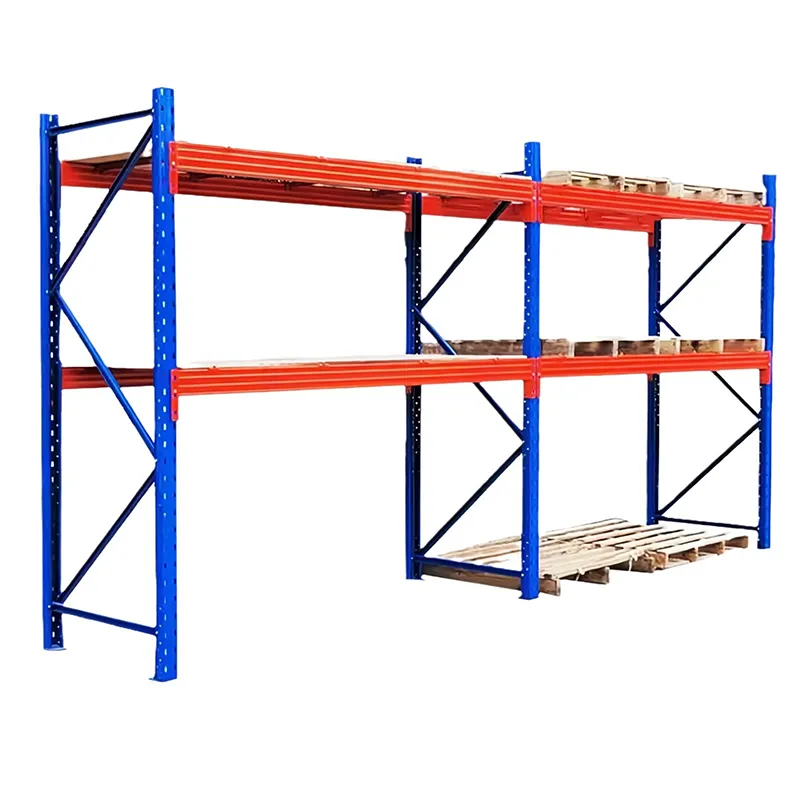
1. Structural Frame & Racking
The backbone of the system. High-tensile steel frames provide the rigidity needed for high-rise storage. Load capacities and seismic considerations must be engineered to local standards.
2. Storage & Retrieval (S/R) Machines
These computer-controlled machines move on rails within the aisles. Key specifications include:
Travel Speed: Horizontal (e.g., 0-300 m/min), Vertical (e.g., 0-100 m/min).
Load Capacity: Ranges from light unit loads (50 kg) to heavy pallets (2000+ kg).
Positioning Accuracy: Typically within ±1 mm for precise load handling.
3. Storage Containers & Pallets
Standardized containers (totes, bins) or pallets interface with the S/R machine. Custom sizes and reinforcements are available for specific products.
4. Conveyor & Sortation Interface
This subsystem transports items to and from the AS/RS, linking it to picking stations or production lines.
5. Warehouse Management System (WMS) / Control Software
The "brain" of the operation. It manages inventory in real-time, optimizes storage locations, and directs all automated equipment.
Technical & Compliance Note: Reputable manufacturers design systems to comply with international machinery safety standards (e.g., ISO 12100) and can provide components with relevant certifications (CE, UL). Electrical components should meet IEC standards. Always verify compliance specifications for your target market.
Why Partner with a Specialist Manufacturer for Your AS/RS Project?
Procuring an automated storage system is a significant capital expenditure. The choice of supplier impacts not just the initial cost, but total cost of ownership, system uptime, and long-term support. Here’s what a partnership with an established factory brings to the table.
Vertical Manufacturing & Quality Assurance
Control over the production process—from steel sourcing and fabrication to assembly and testing—ensures consistency and quality. Look for a supplier with in-house machining, welding, and painting capabilities, backed by a structured quality assurance protocol like ISO 9001:2015.
OEM/ODM Design Flexibility
Off-the-shelf solutions rarely fit perfectly. OEM/ODM design support is crucial. An experienced engineering team can adapt system dimensions, load capacities, and control interfaces to integrate seamlessly with your existing warehouse layout and business processes.
Leveraging China's Industrial Supply Chain
Strategic sourcing within China's supply chain ecosystem allows for competitive pricing without compromising on core component quality. It provides access to a vast network of certified sub-suppliers for motors, guides, sensors, and control systems.
Project Management for High-Speed Delivery
Clear project timelines and dedicated coordination are essential for high-speed delivery. A professional supplier provides detailed production schedules, routine updates, and expert logistics planning for FOB or CIF shipments, ensuring components arrive as planned for smooth on-site installation.
| Feature | Standard Supplier | Integrated Manufacturer |
|---|---|---|
| Design Customization | Limited to catalog options | Full ODM support, custom engineering |
| Quality Control | Reliant on third-party audits | In-house QA from material to final test |
| Cost Structure | Middleman margins added | Direct factory pricing, better value |
| Lead Time Reliability | Variable, less transparent | Controlled production line, more predictable |
| After-Sales Support | May involve multiple parties | Single-point responsibility, technical documentation provided |
Trust and Verification: Building Confidence in Your Investment
For B2B buyers, proof of capability is paramount. Trust is built on verifiable data, client testimonials, and transparent business practices.

Jinzehong Wire Mesh Products Co., Ltd.: A Profile in Manufacturing Focus
Established in 2000 and headquartered in Anping, China, Jinzehong Wire Mesh Products Co., Ltd. has applied decades of precision metal fabrication expertise to the structural and component needs of material handling systems. Operating from a facility covering 5,000 m², the company's focus on rigorous production standards provides a solid foundation for fabricating the structural elements integral to reliable AS/RS installations. (Please note: Specific technical parameters and project scope are subject to engineering review and final order confirmation.)
Feedback from the Field: Real User Experiences
"We integrated their custom racking and shuttle components into our new auto-parts warehouse in Ohio. The precision was critical for our S/R machines. The drawings were accurate, and the parts arrived well-packaged and on schedule. The quality is consistent with the samples they provided."
— Michael R., Logistics Director, Automotive Parts Distributor
"As a sourcing agent for a European retail client, I needed a supplier who could handle both standard and modified tote designs for a mini-load system. Jinzehong's engineering team was responsive. They managed the ODM process smoothly from prototype to production run, which helped us meet the client's tight launch window."
— Sofia L., Sourcing Agent, EU Market
"Our project required several batches of heavy-duty structural steel frames. What impressed me was their systematic QA process. They documented material certificates and provided in-process inspection reports without us asking. It made the certification process with our local safety inspector much simpler."
— David K., Project Manager, Warehouse Integrator
Your Next Step: From Inquiry to Operational Efficiency
Implementing an AS RS systems project is a collaborative process. To move forward efficiently, come prepared with key project parameters. This enables potential suppliers to provide the most accurate and valuable preliminary assessment.
Key Information to Prepare:
- Application: What is being stored? (Dimensions, weight, fragility of unit load)
- Throughput Requirements: Target number of storage/retrieval cycles per hour.
- Space Constraints: Available warehouse length, width, and clear ceiling height.
- Integration Level: Are you sourcing standalone components (racking, shuttles) or seeking a turnkey solution?
- Target Market Compliance: Required certifications (e.g., CE marking for Europe).
Clear Commercial Terms
Professional suppliers offer transparent terms to facilitate planning:
MOQ: Often flexible based on project scope; can range from a single container of components to full-system orders.
Lead Time: Typically 4-8 weeks for standard components, subject to order complexity and factory schedule. Custom ODM projects require detailed discussion.
Customization: Full OEM/ODM support is available, including design collaboration, sample production, and pilot runs.
Packaging & Logistics: Export-standard wooden crates or pallets. Standard terms are FOB Tianjin/Xingang or CIF to your nearest major port.
After-Sales: Comprehensive technical drawings, installation manuals, and remote support are standard. On-site service can be arranged.
Ready to Specify Your System?
Discuss your AS/RS project requirements with a manufacturing specialist. Request a preliminary layout analysis or a quotation for specific components.
Contact: Jinzehong Wire Mesh Products Co., Ltd. | Tel: +86 15383785666 | Email: ada@jinzehongwiremesh.com
Add: South Road, 500 meters North of Houzhangzhuang, Anping County, Hengshui City, Hebei Province, China
Web: Visit Contact Page
Frequently Asked Questions (FAQ) on AS/RS Systems
Q: What are the main types of AS/RS systems?
A: Common types include Unit Load AS/RS for full pallets, Mini-Load AS/RS for smaller totes or bins, Vertical Lift Modules (VLMs), and Carousel systems. The choice depends on item size, weight, and required throughput.
Q: What is a typical lead time for AS/RS components from a Chinese manufacturer?
A: Lead times vary significantly. Standard racking or shuttle components may have a lead time of 4-8 weeks. Fully customized ODM systems require detailed engineering and thus longer timelines, often 12-20 weeks. Always confirm based on your specific bill of materials.
Q: Can I get a small MOQ for a pilot project or to replace parts?
A: Many manufacturers offer flexible MOQ, especially for replacement parts or pilot projects. It's best to discuss your specific needs directly, as MOQ for custom-designed items will differ from standard catalog components.
Q: How do I ensure the system components will be compatible with my existing warehouse software (WMS/WCS)?
A: This is a critical pre-order discussion. Reputable suppliers will provide detailed interface protocols (often via API or standard communication protocols like OPC UA). You must share your WMS/WCS specifications so they can confirm compatibility or suggest necessary middleware.
Q: What post-delivery support can I expect?
A: Standard support includes detailed assembly drawings, electrical schematics, and operation manuals. Remote technical support via video call is common. On-site installation supervision and commissioning services are usually available as an additional scope of work to be agreed upon.

About the Author: Alex Morgan
Alex is a logistics automation consultant with over 15 years of experience advising wholesalers and brand owners on warehouse optimization projects across North America and Europe. He focuses on the practical integration of automated storage and retrieval systems into existing supply chains, with an emphasis on ROI analysis and vendor qualification. The views expressed are based on industry experience and aim to provide a framework for informed procurement decisions.
Disclaimer: Specifications, lead times, and compliance information mentioned are for general reference. They are subject to change and must be verified with the supplier against your specific project requirements prior to any purchase order. Performance metrics depend on full system design and integration.