How to Successfully Install a Wire Fence on a Slope: A Complete Guide for Wholesalers & Importers
Search Intent Answer: Installing a wire fence on a slope presents unique challenges including soil erosion, post alignment, and panel fitting. A successful installation requires specialized techniques, adaptable fencing systems, and often, custom-designed panels to ensure security, durability, and visual appeal on uneven terrain. This guide provides practical solutions and sourcing strategies for B2B buyers managing large-scale slope fencing projects.
The Steep Challenge: Common Industry Pain Points in Slope Fencing Projects
For import managers, brand owners, and sourcing agents procuring fencing for landscapes with significant gradients, several recurring issues impact project timelines, budgets, and final quality:
- Material Waste & High Costs: Using standard, rigid fence panels on a slope results in large triangular gaps at the top or bottom, compromising security and requiring extensive cutting and fitting, which drives up labor costs and material waste.
- Structural Weakness: Improperly aligned posts and tensioning on inclines can lead to premature sagging, reduced impact resistance, and failure under wind load or pressure.
- Erosion & Drainage Issues: Fencing that disrupts natural water flow can accelerate soil erosion behind the fence line, undermining post stability.
- Inconsistent Aesthetics: A "stair-step" or racked installation that looks jagged and unprofessional, potentially devaluing a property development or agricultural project.
- Supply Chain Delays: Sourcing standard fencing only to discover it's unsuitable for the terrain leads to costly project pauses, waiting for replacement or custom solutions.
Engineered Solutions: Sourcing the Right Fencing System for Sloped Ground
The key to overcoming these challenges lies in selecting and sourcing a fencing system designed for adaptability. Solutions generally fall into two categories:
1. The Racked (Contoured) Installation Method
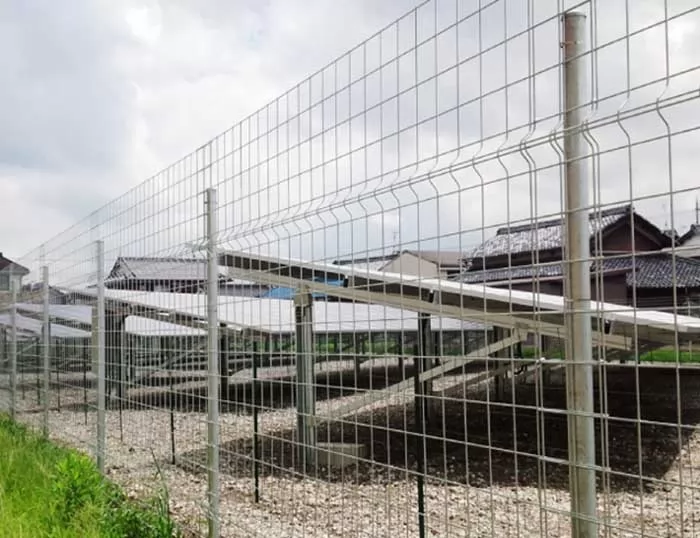
This method involves installing the fence panels so they follow the contour of the slope. Posts are set vertically, while the panels are angled to match the grade. This requires hinged or adjustable brackets at the posts, allowing the panel to pivot. It is best for gradual to moderate slopes and provides a clean, continuous fence line.
2. The Step-Down (Terraced) Installation Method
Here, the fence is installed in horizontal sections, creating a "stair-step" effect down the slope. This method uses standard rectangular panels but is labor-intensive. The critical factor is calculating the vertical drop between sections to minimize security gaps. It is often used for very steep slopes where racking is impractical.
3. The Use of Flexible Fencing Materials
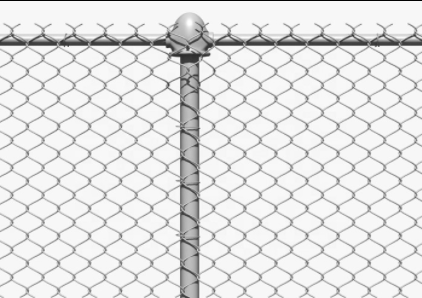
For certain applications like agricultural or perimeter security on rough terrain, chain link or hexagonal wire mesh (chicken wire) combined with tension wires and line posts offers great flexibility. The mesh can be tensioned to follow the ground's contour more naturally than rigid panels.
Why Source Slope Fencing from a Specialized Manufacturer: The Jinzehong Advantage
Jinzehong Wire Mesh Products Co., Ltd. translates 20+ years of wire mesh expertise into practical advantages for global buyers facing complex fencing projects.
| Project Challenge | Standard Supplier Approach | Jinzehong's Solution |
|---|---|---|
| Variable Slope Angles Across a Single Project | Supply one standard panel type, leaving installation crew to adapt on-site. | OEM/ODM Design Support: Provide CAD-based design consultation to create a mix of standard and custom-angle panels for optimal fit. |
| Need for High Corrosion Resistance in Humid/Variable Climates | Offer basic galvanization (e.g., 60g/m²). | Quality Assurance with Options: Provide hot-dip galvanizing (up to 240g/m²), Galfan coating, or PVC coating in various thicknesses (e.g., 0.5mm-0.8mm) per project specs. |
| Tight Construction Timeline | Standard 30-45 day lead time, no expedite options. | High-Speed Delivery Leverage: Utilize integrated China's supply chain advantages. For standard specs, offer lead times as short as 15-20 days for container loads, with production status updates. |
| Need for Technical Compliance Documentation | Generic material certificates. | Compliance-Ready Export: Products can be manufactured to meet relevant international standards. Factory maintains ISO 9001:2015 certification for quality management systems. Materials can comply with RoHS directives. |
Technical Parameters & Customization Capabilities
- Core Materials: Low-carbon steel wire, stainless steel wire (304, 316).
- Common Wire Gauges: From 1.0mm to 4.0mm (depending on mesh type and application).
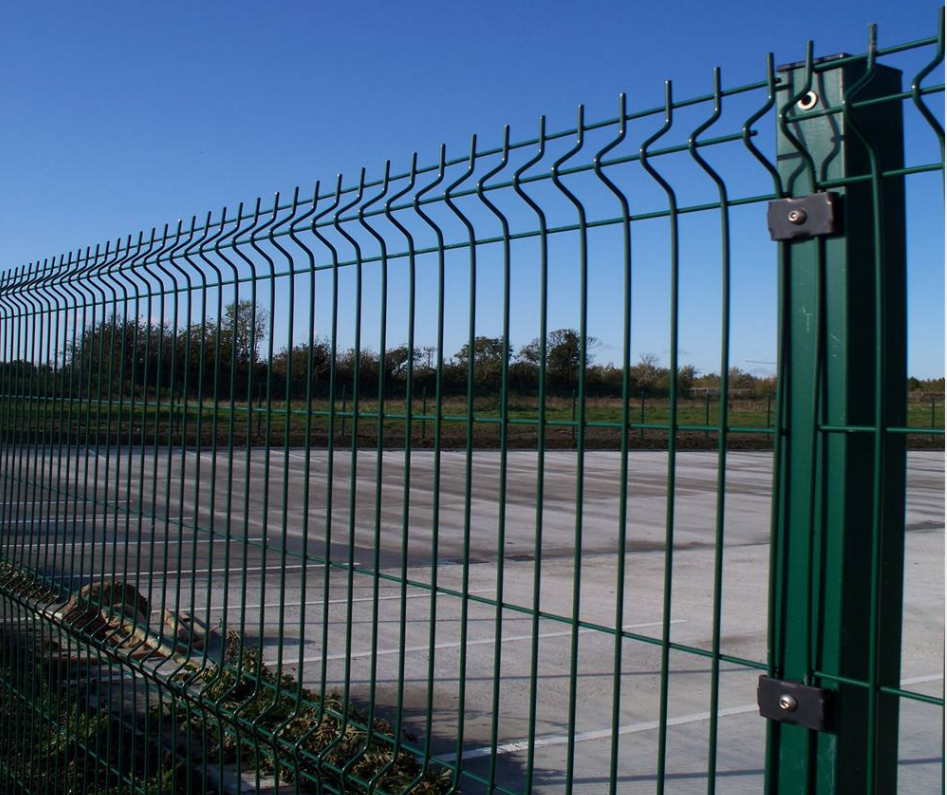
- Mesh Types: Welded wire mesh (square, rectangular), Chain Link, Hexagonal Wire Netting, Double Wire Mesh.
- Surface Treatment: Electro-galvanized, Hot-dip galvanized, PVC coated (green, black, grey, etc.), Galfan coated.
- Panel Sizes: Standard heights from 0.5m to 2.4m; lengths of 2m, 2.5m, 3m. Custom dimensions are a core ODM service.
- Post Types: Standard round or square posts, available with matching surface treatment. Can be supplied with adjustable brackets for slope installation.
Disclaimer: All technical parameters are for reference. Final specifications, tolerances, and performance characteristics are subject to the specific requirements confirmed in your order contract.
Building Trust: Capacity, Compliance, and Clear Commercial Terms
For B2B buyers, trust is built on transparent operational data and reliable commercial terms.
Factory & Capacity Information
Jinzehong Wire Mesh Products Co., Ltd., founded in 2000, is based in Anping, China. The facility covers an area of 5000 m², housing advanced welding, galvanizing, and coating lines. This integrated setup allows for quality control from raw wire to finished, palletized fencing panels ready for export.
Key Terms for International Buyers
- MOQ (Minimum Order Quantity): Typically 1x 20ft or 40ft container for standard items. For custom ODM projects, MOQ is negotiable based on design complexity.
- Lead Time: 15-25 days for standard items in stock or high-volume production. 25-35 days for custom-designed/OEM orders. (Subject to factory schedule and confirmed upon order).
- Customization (OEM/ODM): Fully supported. Provide drawings, samples, or specifications for quotation. Prototypes can be arranged.
- Packaging: Standard export packaging includes plastic wrap, cardboard corner protectors, and steel strapping on wooden pallets. Branded packaging available.
- Logistics & Payment: Standard trade terms: FOB Tianjin/Xingang, CIF, etc. Accepted payment methods: T/T, L/C at sight.
- Quality Guarantee & After-Sales: Provide material certificates and inspection reports. Clear communication channel for any post-delivery queries.
Project Insights: Reviews from Professionals in the Field
"We were fencing a 30-acre equestrian property in Colorado with rolling hills. Jinzehong worked with us to create a mix of 6ft welded mesh panels with some at custom angles. The hot-dip galvanizing is holding up perfectly against snow and moisture. Their project coordination made the import process smooth for our first large container order."
– Michael T., Property Development Manager, USA
"As a wholesaler supplying to landscaping contractors, we needed a reliable source for PVC-coated fencing that could be adapted for slopes. Jinzehong's consistent quality and ability to provide detailed CAD drawings for client approvals have been key. Their lead times are competitive, which helps us keep inventory turning."
– Sarah L., Owner of GreenScape Supplies, Australia
"Sourcing for a vineyard installation in Chile was challenging due to the steep terraces. We required non-standard panel heights for a step-down installation. Jinzehong's team handled the custom ODM order efficiently. The packaging was robust – no damage upon arrival. A solid partner for complex topographical projects."
– Carlos R., Sourcing Agent, Chile

Ready to Secure Your Sloped Project with Confidence?
Stop adapting standard fencing to complex slopes. Partner with a manufacturer that builds adaptability in from the design stage.
Next Step for Buyers: Send us your project details, terrain sketches, or technical specifications. Our engineering and sales team will provide a tailored solution quote, factory capacity check, and a clear timeline.
Contact Jinzehong for a Direct Quotation:
Email: ada@jinzehongwiremesh.com | Tel/WhatsApp: +86 15383785666
Visit: Jinzehong Contact Page
Frequently Asked Questions (FAQ) for Slope Fencing Procurement
hog wire fence on slope sloped fences fence gate wire
Q1: What is the best type of wire fence for a steep slope?
A: There is no single "best" type, as it depends on the slope angle, soil, and purpose. For very steep slopes, a step-down method with chain link or custom-sized rigid panels is often most practical. For gentler slopes, a racked installation with welded mesh panels on adjustable brackets provides a cleaner look. Consulting with a manufacturer who offers both standard and custom solutions is recommended.
Q2: Can you supply the necessary hardware for slope installation?
A: Yes. A capable supplier should be able to provide a complete system. This includes fence panels, posts (often longer for sloped ground penetration), and heavy-duty, adjustable mounting brackets designed to allow the panel to pivot and follow the grade. Always specify that your project is for a slope when requesting a quotation.
Q3: How do you prevent corrosion for fences on slopes exposed to weather?
A: Corrosion protection is critical. Specify a robust surface treatment based on your climate. For high humidity or coastal areas, hot-dip galvanizing (with a high zinc coating weight, e.g., >200g/m²) or PVC coating with a galvanized underlayer offers superior protection. Ensure your supplier provides material certificates for the coating.
Q4: What information do you need to provide a quote for a custom slope fencing project?
A: To get an accurate quote, provide: 1) Terrain details (slope angle/percentage, total linear meters), 2) Desired fence specifications (height, mesh style, wire gauge, coating type/color), 3) Installation method preference (racked or step-down), 4) Approximate project timeline, and 5) Destination port for shipping calculation.
Q5: What is the typical packaging for overseas shipping?
A: Fencing panels are typically bundled and secured onto standard wooden pallets with steel strapping. Panels are separated by cardboard or foam to prevent scratching, and the entire pallet is wrapped in plastic or shrink film. This ensures safe handling during container loading and ocean transit.

Article by: David Chen
David Chen is a Senior Technical Sales Manager with over 12 years of experience in the international wire mesh and fencing industry. Based in Anping, he specializes in translating complex project requirements—particularly for challenging terrains like slopes and coastal areas—into manufacturable, cost-effective solutions for global wholesalers and project developers. He focuses on practical application, material science, and supply chain efficiency.
Company: Jinzehong Wire Mesh Products Co., Ltd. | www.jinzehongmesh.com