By Michael Thorne
Senior Warehouse & Logistics Consultant with over 15 years of experience in industrial storage optimization, specializing in global supply chain integration for B2B clients. Analysis based on industry data and supplier evaluations.
Optimizing Warehouse Efficiency: A Deep Dive into Industrial Upright Racking Systems
For import managers, brand owners, and sourcing agents evaluating warehouse storage solutions, selecting the right upright racking system is a critical operational decision. This comprehensive guide addresses core procurement questions: What defines a reliable upright racking system? How do technical specifications impact safety and capacity? and What should you expect from a qualified OEM manufacturer? We analyze the product through the lens of quality assurance, compliance, and total cost of ownership, providing the data-driven insights needed for an informed purchase.
Industry Pain Points in Warehouse Storage Procurement
Procurement professionals face consistent challenges when sourcing storage systems internationally:
- Structural Failure Risks: Substandard steel or poor welding can lead to rack collapse under load, causing safety hazards and massive inventory loss.
- Hidden Costs: Inconsistent dimensions, poor finish leading to corrosion, or non-compliance with local safety standards result in unexpected retrofitting expenses and project delays.
- Supply Chain Inefficiency: Long, unreliable lead times and poor packaging damage goods in transit, disrupting warehouse rollout schedules.
- Scalability Limitations: Off-the-shelf systems often fail to accommodate unique floor plans, unusual pallet sizes, or future expansion needs.
upright racking system upright racks warehouse racking uprights
Engineered Solution: The Anatomy of a High-Performance Upright Frame
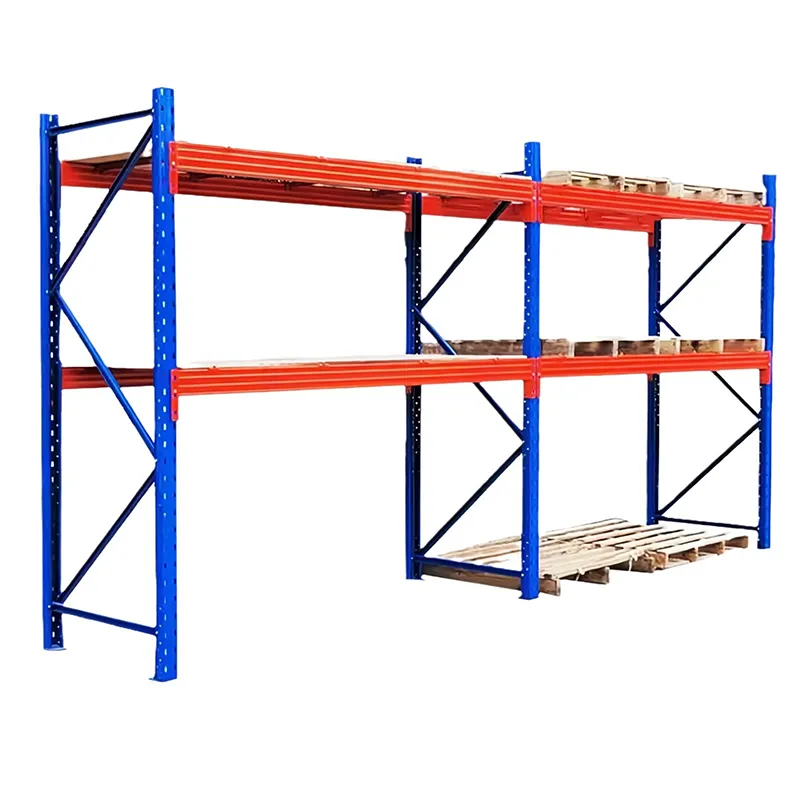
A robust upright racking system is more than just steel; it's an engineered solution. The vertical upright frame is the backbone, bearing the primary load. Key design elements include:
- Beam Connection Design: Teardrop, bolt-together, or structural clip configurations determine assembly speed, adjustability, and ultimate load capacity.
- Column Strength: Measured by cross-sectional shape (e.g., C-channel, tubular) and steel thickness (gauge). Heavier gauges (e.g., 12-gauge vs. 16-gauge) offer higher load ratings.
- Footplate & Anchoring: Large, reinforced base plates with multiple anchor bolt holes ensure stability and proper force transfer to the warehouse floor.
- Safety & Protection: Integral column protectors (upright guards) and safety locks prevent accidental dislodging of beams by forklifts.
Core Product Advantages: Jinzehong's Manufacturing Approach
Anping County Jinzehong Wire Mesh Products Co., Ltd. leverages its specialization in metal fabrication, established in 2000, to address these pain points directly.
Integrated Manufacturing & Supply Chain
Operating from a 5,000 m² facility in Anping, China, the company controls the production process from raw material to finished product. This vertical integration, supported by China's mature industrial supply chain, allows for:
- Material Traceability: Sourcing steel from reputable mills, with Mill Test Certificates (MTCs) available upon request.
- Quality Assurance: In-house processes including precision punching, robotic welding, and controlled powder-coating or hot-dip galvanizing.
- High-Speed Delivery: Streamlined production schedules and established logistics partnerships enable reliable lead times, crucial for project planning.
Technical Parameters & Compliance: What Buyers Must Verify
Technical transparency is non-negotiable. Below are typical specifications for a heavy-duty selective pallet racking system. All specifications are for reference and must be confirmed with engineering drawings for your specific order.
| Component | Parameter | Standard Specification | Notes/Compliance |
|---|---|---|---|
| Upright Frame | Steel Thickness | 2.0mm - 3.0mm (12-14 Gauge) | Varies by load capacity. Higher gauge = thicker steel. |
| Upright Frame | Finish | Powder Coating (60-80μm) or Hot-Dip Galvanized | Powder coat for indoor; Galvanized for high-humidity environments. |
| Beams | Type | Step Beam, Box Beam, or Structural Beam | Step beams are common for selective racking with teardrop connections. |
| System | Load Capacity per Level | 2,000 kg to 6,000 kg+ | *Must be calculated by a qualified engineer based on application, load weight, and seismic factors. |
| System | Relevant Standards | CE (EN 15512), FEM 10.2.02, OSHA Guidelines (US) | Manufacturer should provide test reports and calculation documents. |
Certifications & Quality Management
Trust is built on verifiable standards. A competent supplier should actively maintain:
- ISO 9001:2015: Framework for consistent quality management systems throughout production.
- CE Marking (for EU): Indicates conformity with health, safety, and environmental protection standards for products sold within the European Economic Area. Requires adherence to specific norms like EN 15512 for storage equipment.
- Material Certifications: RoHS compliance for restricted substances.
Note: It is the buyer's responsibility to verify that supplied products meet all mandatory regulations for their target market (e.g., local building codes, OSHA recommendations). Always request current certification copies.
OEM/ODM Support: From Concept to Installation
For brand owners and wholesalers, private labeling and custom design are key value drivers. Jinzehong's service model supports this:
- OEM (Original Equipment Manufacturer): Production of your designed racking system. Provide detailed CAD drawings and specifications for precise replication.
- ODM (Original Design Manufacturing): Collaborative design. Share your warehouse dimensions, pallet specs, and throughput goals. Their engineering team can propose optimized layout and component designs.
- Customization Scope: Includes dimensions (height, depth, beam lengths), load capacity, finish color (RAL matching), packaging (stackable for container optimization), and branding (labels, tags).
Commercial Terms: Clarity for Sourcing Agents
Efficient procurement requires upfront commercial clarity.
- MOQ (Minimum Order Quantity): Typically based on a 20-foot or 40-foot container load to optimize shipping costs. Sample orders are negotiable for project validation.
- Lead Time: Ranges from 15-30 days for standard configurations to 45+ days for large, custom ODM projects. Time begins after final drawing approval and deposit receipt.
- Packaging & Logistics: Standard export packaging includes plastic corner protectors, steel strapping, and waterproof wrapping. Common trade terms: FOB Tianjin/Xingang or CIF to major destination ports.
- After-Sales Support: Includes provision of assembly manuals, spare parts lists, and technical drawing packages. Warranty terms are typically 1-2 years against manufacturing defects, subject to proper installation and use.
Voices from the Field: User Reviews & Feedback
Here is feedback sourced from international B2B clients regarding their procurement experience with industrial racking suppliers in the Anping region:
Alex R., Import Manager - Midwest USA Distributor: "We needed a custom height for a low-clearance warehouse. The engineering team provided revised load calculations promptly. The racks fit perfectly, and the powder coat finish was even and durable. Lead time was as quoted, which kept our warehouse retrofit on schedule."
Sophie L., Brand Owner - UK Home & Garden Retailer: "Sourcing for our private label was smooth. They matched our RAL color exactly and applied our logos cleanly. MOQ for a 40-foot container was reasonable. The racks arrived well-packed with clear assembly instructions. Key for us was their willingness to sign our supplier compliance agreement."
Marcus T., Sourcing Agent for Australian Clients: "Reliability is my main metric. I've channeled several container orders for pallet racking through them over three years. Consistency in quality and communication stands out. They understand the documentation needed for Australian customs. It makes my job easier."
A Partner in Industrial Storage
Founded in 2000 and based in Anping, the heart of China's wire mesh and metal fabrication industry, Jinzehong Wire Mesh Products Co., Ltd. brings over two decades of focused manufacturing expertise to the global market. Their 5,000 m² facility is dedicated to producing structured storage solutions that prioritize safety and efficiency.
Contact for Project Specifications:
Tel: +86 15383785666
Email: ada@jinzehongwiremesh.com
Add: South Road, 500 meters North of Houzhangzhuang, Anping County, Hengshui City, Hebei Province, China
Website: https://www.jinzehongmesh.com/contactus.html
Ready to Optimize Your Warehouse Storage?
Move beyond generic quotes. Engage with a manufacturer capable of detailed technical discussion and custom support.
Next Step for Serious Buyers: Prepare your warehouse layout, target load capacities, and preferred specifications. Contact Jinzehong with these details to receive a preliminary project assessment, dimensional drawings, and a competitive FOB quotation tailored to your needs.
Disclaimer: All technical data, load capacities, lead times, and commercial terms provided in this article are for informational purposes. Final specifications and terms are subject to professional engineering review and will be confirmed in your official sales contract.
Frequently Asked Questions (FAQ) on Upright Racking
Q1: What is the typical lead time for a container load of upright racking?
A: For standard configurations, production lead time is generally 15-30 days ex-works. This does not include sea freight transit time. Custom ODM projects require time for design and prototyping, often extending the timeline to 45+ days.
Q2: Can you manufacture racks to meet specific seismic codes for my region?
A: Reputable manufacturers can design systems to meet various seismic parameters. You must provide the specific seismic zone requirements or local building code references. Engineering calculations will be adjusted accordingly, which may affect component specifications and pricing.
Q3: What is the difference between roll-formed and structural upright racking?
A: Roll-formed racks are made from coiled steel shaped by rollers, common in lighter-duty selective systems. Structural racking uses heavier hot-rolled steel shapes (like C-channels) welded together, offering higher load capacities for drive-in or cantilever systems. The choice depends on your weight requirements and warehouse layout.
Q4: Do you provide assembly instructions and layout drawings?
A: Yes, professional suppliers should provide detailed assembly manuals with diagrams, a bill of materials (BOM), and overall layout drawings based on the final approved design. These are crucial for correct and safe installation.
Q5: How is the racking packaged for overseas shipping?
A: Components are typically bundled (uprights together, beams together) with protective plastic caps, steel strapping, and wrapped in waterproof plastic or craft paper. They are packed tightly into containers to prevent movement during transit. Specific packaging methods can be discussed to meet your requirements.