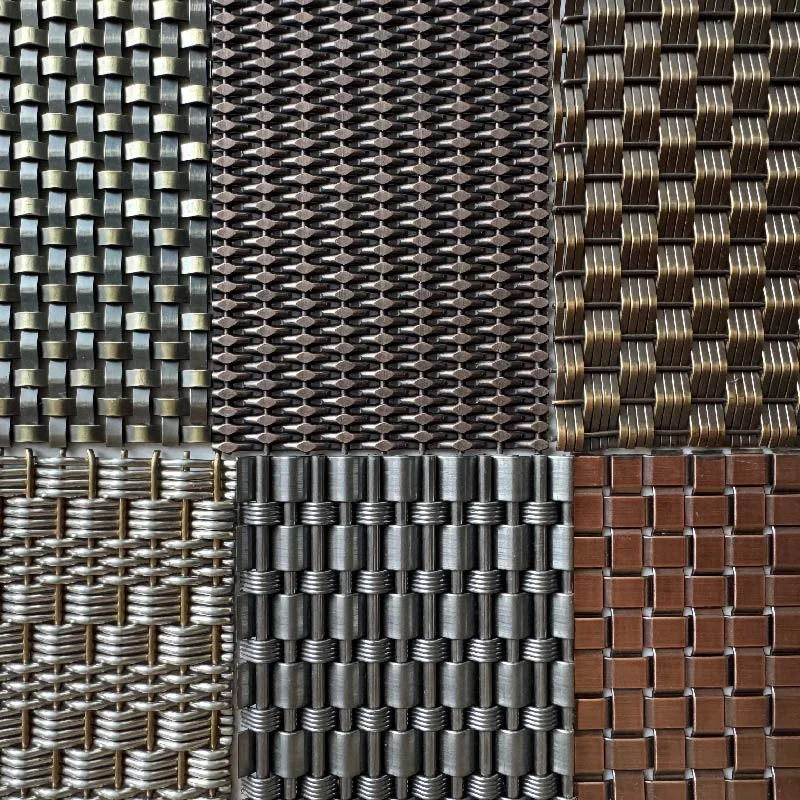
Steel Mesh Expanded: The Definitive Sourcing Guide for Industrial & Construction Buyers
For import managers, brand owners, and sourcing professionals seeking steel mesh expanded, the core questions are clear: What are its precise industrial applications? How do you ensure consistent quality and compliance in a global supply chain? What are the reliable lead times and customization options from a verified manufacturer? This guide, backed by 24 years of manufacturing expertise, provides actionable data and procurement insights, transforming expanded steel mesh from a commodity into a strategic component for your projects.
Navigating the Global Supply Chain: Key Pain Points in Sourcing Expanded Metal Mesh
Procuring industrial materials like expanded metal mesh internationally involves navigating a complex landscape. Common challenges faced by B2B buyers include:
- Inconsistent Quality & Spec Deviations: Receiving batches that do not match sample specifications in strand thickness, mesh size, or material grade, leading to project delays and cost overruns.
- Unpredictable Lead Times & Logistics: Vague production schedules and poor communication causing supply chain bottlenecks, especially critical for JIT (Just-In-Time) inventory models.
- Limited Customization & Design Support: Suppliers offering only standard catalog items without the engineering support for OEM/ODM design of custom patterns, finishes, or sizes.
- Compliance & Certification Risks: Uncertainty regarding international standards (CE marking for EU, ASTM specifications for USA) and traceability of mill test certificates for raw materials.
- Hidden Costs & Communication Gaps: Unclear pricing for low MOQ orders, complex Incoterms, and technical communication barriers with factory teams.
Engineered Solutions: How Precision-Manufactured Expanded Steel Mesh Meets Industrial Demands
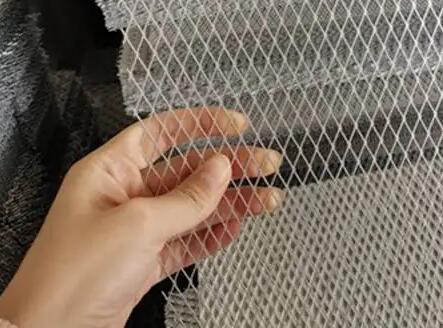
Expanded metal is not merely a perforated sheet; it is a versatile, integrally connected material created by slitting and stretching a solid steel coil. This manufacturing process produces a rigid, self-draining mesh with no welded joints, offering high strength-to-weight ratios.
Primary Application Scenarios
- Architecture & Construction: Facade cladding, sunscreens, walkways, security fencing, and reinforcement for stucco or concrete (expanded metal lath).
- Industrial & Manufacturing: Machine guards, filtration screens, conveyor belts, shelving, partitions, and acoustic panels.
- Infrastructure & Transportation: Highway fencing, drainage grates, platform flooring, and trailer bed liners.
- Commercial & Retail: Decorative panels, shelving, display units, and radiator covers.
| Material Grade | Common Thickness (SWG/mm) | Standard Mesh Patterns (LWD x SWD)* | Typical Surface Treatment | Key Application |
|---|---|---|---|---|
| Mild Steel (Q195, A36) | 13 SWG (2.3mm) - 20 SWG (0.9mm) | 1/2" x 1" (12.7x25.4mm), 3/4" x 3/4" (19x19mm) | Electro-galvanized, Powder Coated | Fencing, Enclosures, General Fabrication |
| Stainless Steel (304, 316) | 16 SWG (1.6mm) - 22 SWG (0.7mm) | 3/8" x 3/4" (9.5x19mm), 1/4" x 1/2" (6.4x12.7mm) | Mill finish, Electro-polished | Food Processing, Chemical, Marine, Architectural |
| Aluminum (1100, 3003) | 0.040" (1mm) - 0.125" (3.2mm) | 3/16" x 7/8" (4.8x22.2mm) Flattened | Anodized, PVDF Coating | Decorative Facades, Lightweight Partitions |
*LWD: Long Way of Diamond; SWD: Short Way of Diamond. Specifications are for reference. Please refer to actual order confirmation for precise technical data.
The Jinzehong Advantage: Integrating a Powerful Factory with Global Supply Chain Agility
Founded in 2000 and operating from a 5,000 m² facility in Anping, China—the heart of the global wire mesh industry—Jinzehong Wire Mesh Products Co., Ltd. has built its reputation on bridging the gap between high-volume manufacturing capability and tailored client service. Here’s how our operational model addresses the pain points:
1. Quality Assurance & Process Control
Our quality assurance protocol is integrated from raw material to shipment. We source coils from certified mills, with MTCs (Mill Test Certificates) available upon request. In-process checks on slit width, expansion ratio, and strand thickness are conducted using calibrated tools. Final inspection includes checking for consistent mesh pattern, flatness, and coating adherence (if applicable). While we adhere to strict internal QC standards, we recommend buyers clarify required third-party certifications (e.g., CE, ISO 9001:2015) for their specific market during inquiry.
2. OEM/ODM Design & Customization Capability
Beyond standard patterns, our engineering team supports full OEM/ODM design. This includes developing custom diamond sizes, creating flattened expanded mesh for smooth surfaces, and working with specific tolerances for integration into your product assembly. We can process material according to ASTM A1011, ASTM A240, or equivalent international standards.
3. High-Speed Delivery & Logistics Transparency
Leveraging China's supply chain efficiency and our in-house production planning, we offer competitive lead times. For standard items, production can often be completed within 10-15 working days after order confirmation. We provide clear FOB/CIF quotes and partner with reliable freight forwarders to ensure transparent tracking and on-time port delivery.
4. Flexible Commercial Terms for B2B Buyers
- MOQ (Minimum Order Quantity): We offer flexibility, with MOQs starting from 1 ton for standard items, making us accessible for trial orders and smaller projects.
- Packaging: Standard export packaging includes waterproof woven bags or wooden pallets/crates, designed to prevent corrosion and damage during ocean freight.
- Payment: Standard terms include T/T (30% deposit, 70% against copy of B/L), L/C at sight. Other terms are negotiable based on order volume and history.
- After-Sales: We provide comprehensive support including product documentation, technical data sheets, and assistance with any logistics inquiries.
Voice of the Market: Reviews from Global Procurement Professionals
"We needed a custom flattened expanded stainless steel mesh for a high-end architectural facade in the UAE. Jinzehong's team worked closely with our designers on the pattern and tolerances. The four containers arrived on schedule, and the quality was consistent across all bundles. Their communication was professional throughout."
– Michael R., Import Manager for a Construction Materials Firm
"As a sourcing agent for several European industrial clients, I value reliability. We've ordered galvanized expanded metal for machine guards from Jinzehong for three years. The zinc coating weight is always to spec, which is critical for corrosion resistance. Their consistent quality saves us time on inspection at the destination port."
– Sofia L., Independent Sourcing Agent
"Launching our own line of industrial shelving required a reliable mesh supplier for the backing panels. Jinzehong provided excellent ODM support, helping us select the optimal strand thickness and mesh opening for both strength and aesthetics. Their competitive MOQ allowed us to start with a pilot run, which minimized our initial risk."
– David K., Brand Owner & Product Developer
expanded plastic mesh steel metal mesh expanded metal
Clear Next Steps: From Inquiry to Delivery
To streamline your procurement process for steel mesh expanded, we recommend a clear path:
- Share Your Specifications: Provide details on material (e.g., mild steel, SS304), thickness, mesh pattern (LWD x SWD), dimensions, surface treatment, and required quantity.
- Request a Formal Quotation: We will issue a proforma invoice detailing price, FOB/CIF terms, lead time, payment terms, and packaging.
- Sample Confirmation (If Needed): We can arrange production samples for your evaluation prior to bulk order.
- Order Placement & Production: Upon deposit receipt, production is scheduled with regular updates provided.
- Quality Check & Shipment: Pre-shipment photos/videos are available. We handle all export documentation for a smooth customs clearance process.
Request Your Detailed Quotation & Technical Data Sheet Today
Contact: Ada | Tel/WhatsApp: +86 15383785666 | Email: ada@jinzehongwiremesh.com
Frequently Asked Questions (FAQ) for Expanded Metal Mesh Buyers
Q1: What is the difference between standard and flattened expanded metal mesh?
A: Standard expanded mesh has a raised, three-dimensional profile where the strands are angled. Flattened expanded metal is passed through a cold rolling mill after expansion, creating a flat, smooth surface with minimal raised edges, often preferred for conveyor belts, flooring, or aesthetic architectural applications.
Q2: Can you produce expanded mesh according to ASTM or European EN standards?
A: Yes. We regularly process materials meeting ASTM A1011 (steel) and ASTM A240 (stainless steel). For European standards (EN), we can source equivalent grade materials. It is crucial to specify the exact standard and grade required during the inquiry stage to ensure compliance.
Q3: What are the main factors affecting the price of expanded steel mesh?
A: The primary cost drivers are: 1) Raw Material Cost: Fluctuations in steel/aluminum coil prices; 2) Material Grade: Stainless steel (304, 316) is more costly than mild steel; 3) Specifications: Thicker gauge and larger sheet sizes increase material usage; 4) Surface Treatment: Hot-dip galvanizing, powder coating, or anodizing add cost; 5) Order Volume: Larger tonnage typically offers better unit economics.
Q4: How do you ensure the expanded mesh doesn't rust during sea shipment?
A: For carbon steel products, we apply a rust preventive oil or VCI (Vapor Corrosion Inhibitor) packaging upon request. Electro-galvanized or powder-coated mesh offers inherent protection. Proper export packaging in waterproof bags and ventilated containers is our standard practice to minimize moisture exposure.
Q5: What information do I need to provide to get an accurate quote?
A: To generate a precise quotation, please provide: Material Type/Grade, Sheet Thickness (SWG/mm), Mesh Size (LWD x SWD in inches/mm), Sheet Dimensions (Width x Length), Surface Treatment, Quantity (in kg/ton or square meters), and Destination Port. For OEM/ODM design projects, technical drawings are highly beneficial.

This guide was authored by Alex Chen, Technical Director at Jinzehong Wire Mesh with over 12 years of experience in metal mesh fabrication, application engineering, and international B2B project management. Alex specializes in translating complex client requirements into precise manufacturing specifications for expanded, woven, and welded mesh products across global markets.
For specific technical consultations, you can reach the engineering team via ada@jinzehongwiremesh.com.