Sorting Conveyor System: A Strategic Guide for Efficient Warehouse & Distribution Center Automation
For import managers, brand owners, and sourcing professionals seeking a sorting conveyor system, the core questions often revolve around reliability, integration ease, and total cost of ownership. This guide details how a modern sorting conveyor system addresses throughput bottlenecks, enhances accuracy, and scales with demand, backed by technical specifications, compliance, and a supplier's proven manufacturing capability from a key industrial hub.
The High Cost of Manual Sorting: Industry Pain Points
In today's fast-paced logistics environment, manual or semi-automated sorting processes create significant operational drag. Common challenges include:
- Throughput Limitations: Human-paced sorting creates bottlenecks during peak seasons, leading to delayed shipments and missed SLAs.
- Error Rates & Returns: Manual handling increases mis-sorts, directly impacting customer satisfaction and incurring reverse logistics costs.
- Labor Dependency & Costs: High reliance on seasonal labor, coupled with rising wage pressures and training overheads.
- Inflexible Scaling: Fixed conveyor layouts struggle to adapt to changing SKU profiles, parcel sizes, or throughput requirements.
- Space Inefficiency: Disorganized sorting areas consume valuable warehouse floor space that could be used for storage.
Engineered Solutions: How a Modern Sorting Conveyor System Works
A well-designed sorting conveyor system is not a single machine but an integrated solution. It typically involves induction, conveyance, identification, divestment, and outbound handling.
Key Subsystem Components & Technologies
1. Induction & Scanning Stations: This is where items are fed into the system. Options include manual induction stations, automated singulators, or inline scan tunnels equipped with barcode (1D/2D) scanners, RFID readers, or vision systems for dimensioning and weight capture (DWS).
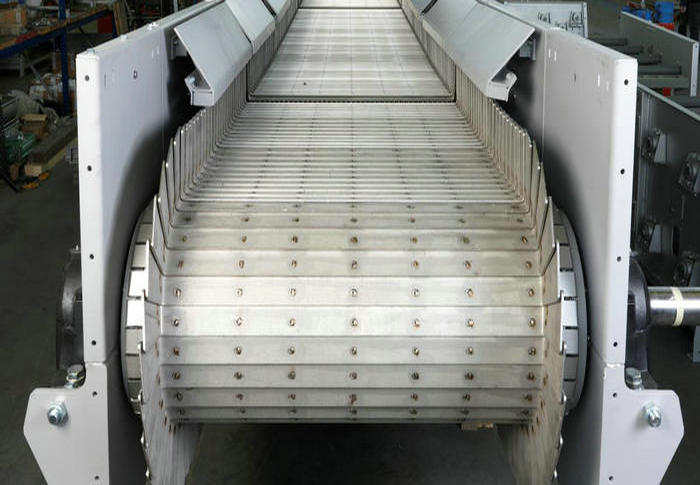
2. Conveyance & Sorting Mechanisms: The core of the conveyor sorting system. The choice of sorter depends on item characteristics and required speed.
| Sorter Type | Best For | Typical Rate (Units/Hr)* | Footprint |
|---|---|---|---|
| Cross-Belt Sorter | Mixed sizes, fragile items, high accuracy | Up to 15,000 | Moderate to Large |
| Tilt-Tray Sorter | Mid-weight parcels, polybags, general merchandise | 10,000 - 12,000 | Large |
| Slide Shoe Sorter | Cartons, totes, stable base items | 6,000 - 10,000 | Compact to Moderate |
| Pop-Up Wheel/Chain Diverters | Line-side sortation, bulkier items | Depends on configuration | Moderate |
sortation conveyor system conveyer system warehouse conveyor
*Note: Actual throughput depends on item dimensions, weight, induction rate, and system configuration. Please refer to technical specifications for your specific project.
3. Control Software (WCS/WMS Integration)
The "brain" of the operation. A robust Warehouse Control System (WCS) directs sortation logic, interfaces with your Warehouse Management System (WMS), manages recirculation, and provides real-time performance dashboards (e.g., sortation rates, error logs).
Why Source a Sorting Conveyor System from Jinzehong Wire Mesh?
Selecting a supplier involves evaluating manufacturing depth, quality control, and project support. Here’s how our approach aligns with B2B buyer priorities.
Core Advantages in Industrial Manufacturing
- Integrated Manufacturing Facility: Our operations are housed in a 5,000 m² facility in Anping, Hebei, allowing for vertical control over key production stages from steel processing to welding, assembly, and testing.
- Material & Process Expertise: Founded in 2000, our core competency in wire mesh and metal fabrication translates into durable conveyor frames, guards, and specialized components designed for 24/7 industrial use.
- OEM/ODM Flexibility: We support both OEM (your design) and ODM (our co-design) projects. Whether you need to adapt a standard conveyor sorting system layout or develop a fully custom solution for unique products, our engineering team can collaborate.
- Streamlined Supply Chain & Delivery: Located within China's central industrial supply chain network, we benefit from efficient access to motors, drives, sensors, and structural materials. This integration supports a competitive lead time of 30-45 days for standard systems, subject to final project scope.
- Quality Assurance Protocol: Quality checks are staged throughout production: incoming raw material inspection, in-process welding/assembly checks, and final pre-shipment run-off testing. This multi-point system aims to ensure performance alignment with agreed specifications.
Technical & Commercial Specifications for Buyers
Transparent specifications are crucial for procurement decisions. Below are general parameters; all final specs are confirmed prior to order.
- Typical System Capacities: Can be engineered for item weights from 0.5 kg to 50 kg, with widths and tray sizes configured to requirement.
- Control System: Standard PLC-based control (e.g., Siemens, Allen-Bradley) with HMI touchscreen. WCS integration capabilities are provided.
- Safety & Compliance: Systems are designed to meet relevant sections of international standards. Key components often carry CE certification. The manufacturing process is informed by ISO 9001 principles. (Final machine certification depends on integrated components and destination country regulations.)
- Minimum Order Quantity (MOQ): Typically 1 set for complete system projects, allowing for pilot or single-line implementation.
- Customization: Available for length, width, height, sorting mechanism, control interfaces, and special surface treatments (e.g., powder coating for corrosion resistance).
- Packaging & Logistics: Equipment is crated in heavy-duty timber frames for ocean freight protection. We handle FOB terms from our nearest port, with CIF/DAP options available.
- After-Sales Support: Provision of detailed electrical and mechanical manuals, wiring diagrams, and remote support via video call. On-site installation supervision can be arranged.
Trust and Verification: A Foundation Built on Industrial Focus
In B2B procurement, trust is built on transparency and proven capability.
- Established Track Record: Jinzehong Wire Mesh Products Co., Ltd. has been operating since 2000, specializing in metal-based industrial products.
- Physical Manufacturing Base: The 5,000 m² factory enables in-house control over core fabrication processes, a key differentiator from pure trading companies.
- Client-Centric Project Flow: The process involves requirement analysis > layout proposal > 3D drawing review > technical agreement > production > testing > shipping. This structured approach aims to minimize miscommunication.
What Importers & Sourcing Agents Are Saying
"We needed a custom cross-belt sorter for a 3PL expansion in the Midwest. Jinzehong's team worked closely with our engineers to modify the standard design for our specific carton sizes. The system was delivered within the promised timeline and has been running two shifts daily for over 18 months with minimal downtime. The accuracy rate is consistently above 99.5%, which was critical for our contract."
- Michael R., Operations Director, Logistics Provider, USA
"As a sourcing agent for European e-commerce clients, I value suppliers who are responsive and detail-oriented. The project documentation (BOM, drawings, test reports) from Jinzehong was thorough, which made customs clearance and our own client handover much smoother. The sorting conveyor system we sourced performed to spec during the factory acceptance test, which is not always a given."
- Sophie L., Sourcing Agent, Germany
"Our warehouse was struggling with manual sortation during peak. The slide shoe sorter system we implemented has doubled our sortation capacity with the same floor space. The construction is robust, and the local integrator we partnered with for installation commented on the quality of the welding and framing. Good value for the investment."
- David K., Import Manager, Retail Distributor, Canada
Next Step: From Inquiry to Operational Gain
Optimizing your sortation operation is a significant capital decision. A structured approach yields the best results.
To facilitate a precise quotation and feasibility analysis, please prepare the following information for initial discussion:
- Application: E-commerce parcels, postal items, cartons, totes, etc.
- Key Parameters: Max dimensions (LxWxH), weight range, and required sortation rate (units per hour).
- Layout Constraints: Available floor space (layout drawing is ideal) and required number of sortation chutes/lanes.
- Integration Needs: Current WMS/WCS environment and any preferred scanner or PLC brands.
- Project Timeline: Target installation window.
With this data, our engineering team can provide a preliminary layout and system recommendation, moving the conversation from concept to actionable proposal.
Request a Detailed System Proposal
Contact our project team to discuss your sorting conveyor system requirements. Share your preliminary data for a confidential review and initial layout concept.
Jinzehong Wire Mesh Products Co., Ltd.
Tel: +86 15383785666 | Email: ada@jinzehongwiremesh.com
Add: South Road, 500 meters North of Houzhangzhuang, Anping County, Hengshui City, Hebei Province, China
Contact Page: https://www.jinzehongmesh.com/contactus.html
Frequently Asked Questions (FAQ)
What is the typical lead time for a complete sorting conveyor system?
For standard configured systems, the production lead time is generally 30 to 45 days ex-works after final design approval and deposit. Highly customized projects may require additional time for engineering and specialized component sourcing. An estimated timeline is always provided in the formal proposal.
Do you provide installation services on-site?
We provide comprehensive installation manuals, videos, and remote guidance via video call. For complex systems, we strongly recommend and can help arrange for qualified local technicians or offer on-site supervision by our engineers (subject to visa availability and travel terms) to ensure proper commissioning.
Can the system integrate with our existing Warehouse Management System (WMS)?
Yes. Our standard control systems are designed with integration in mind. We will specify the communication protocols (typically TCP/IP, EDI, or API-based) during the design phase to ensure the conveyor sorting system can receive instructions from and send data back to your host WMS.
What kind of after-sales support and warranty is offered?
We offer a standard 12-month warranty on mechanical and electrical components against manufacturing defects, starting from the date of delivery. Technical support is provided remotely. A stock of common spare parts is maintained to facilitate prompt shipment if needed.
What information do you need to provide a preliminary quote?
To provide a meaningful initial proposal, we require key parameters: item dimensions/weight, required sorting speed (units/hour), number of sort destinations, available floor space (a layout sketch is very helpful), and any known preferences for control brands or scanning technology.
Author:  Alex Morgan, Senior Logistics Systems Analyst. With over 15 years of experience evaluating material handling solutions for North American and European distribution networks, Alex provides practical insights on automation feasibility and supplier evaluation for import teams.
Disclaimer: All technical data, capacities, and lead times mentioned in this article are for general reference and informational purposes. They are subject to change based on specific project requirements, final engineering review, and prevailing market conditions. Please refer to the formal order confirmation and contractual documentation for all binding specifications, terms, and conditions.