Choosing the wrong welding method can compromise structural integrity and increase long-term costs. Discover the data-driven comparison for durable, compliant, and cost-effective chassis restoration.
Get Your Free Welding Wire Sample & QuoteAs a purchasing manager or operations director, you're tasked with maintaining fleet safety and controlling repair budgets. The wrong welding approach for a truck or automotive chassis repair can lead to cascading failures.
The core question isn't just "MIG or TIG?" It's about matching the process to the specific repair, material, and performance requirement to maximize ROI and safety.
Jinzehong Wire Mesh Products Co., Ltd., with over two decades of metallurgical expertise, provides not just materials but the technical guidance for optimal chassis repair. Here’s how to decide.
| Parameter | MIG (GMAW) Welding | TIG (GTAW) Welding | Our Recommendation |
|---|---|---|---|
| Best For | Long, continuous seams; thicker sections (>18 gauge); non-critical frame members; high-volume repair shops. | Precision joints; thin materials; critical stress points (e.g., suspension mounts); crack repairs; alloys (aluminum, stainless). | Use MIG for 70-80% of chassis repairs (rails, crossmembers). Reserve TIG for critical, highly visible, or thin-area repairs. |
| Speed & Efficiency | High. Continuous wire feed allows faster travel speeds, reducing labor time per job. | Low. Manual filler rod addition requires significant skill and time. | For throughput, MIG is superior. Our high-quality MIG wires (ER70S-6) ensure speed doesn't compromise quality. |
| Weld Strength & Penetration | Good to excellent penetration on thicker materials. Can be prone to lack-of-fusion on poor setup. | Exceptional penetration and control. Produces the cleanest, strongest welds for critical applications. | Both can achieve X-ray quality. Success depends more on operator skill and material quality than the process alone. |
| Skill Floor | Easier to learn and achieve decent results. Semi-automatic process. | Steep learning curve. Requires significant practice to master torch and filler coordination. | MIG maximizes your existing workforce's efficiency. We provide technical data sheets for optimal machine settings. |
| Material Cost & Supply | MIG wire (spool) is generally more cost-effective. Higher deposition rate means less waste. | TIG rods (lengths) and argon purity gas can be more expensive per job. | Our factory-direct pricing on both MIG wire and TIG rods cuts your consumable cost by 15-30% vs. local distributors. |
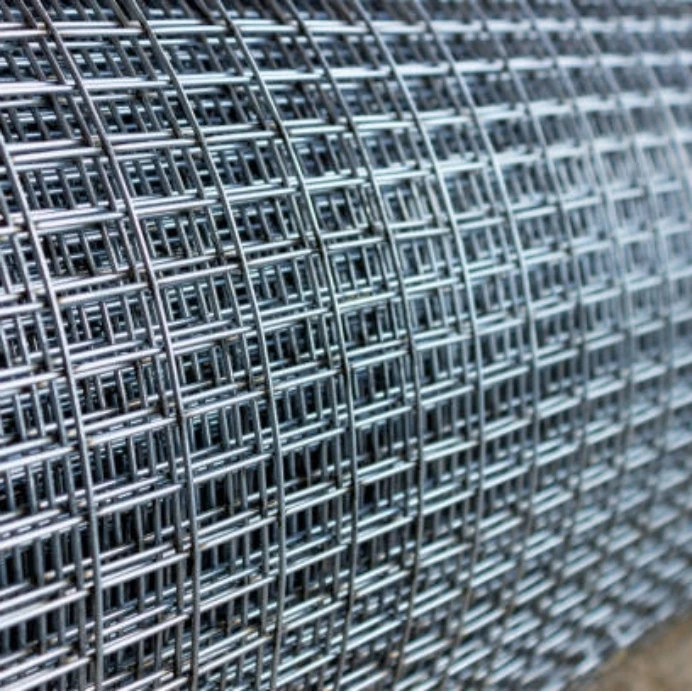
robotic tig welding automatic welding equipment galvanised welded mesh
Every chassis repair is unique. Our technical team can advise on process and material selection based on your specific OEM specs or repair standards.
➤ Consult Our Welding Experts for Your Specific CaseAbsolutely. We specialize in OEM/ODM design and supply. Provide your AWS classification (e.g., ER70S-3, ER70S-6), diameter, spool type (e.g., 10kg spindle, 15lb reel), and packaging, and we will manufacture to your exact specifications with consistent quality batch-to-batch.
Our standard MOQ is 1 pallet, which allows us to maintain competitive factory pricing. For first-time buyers, we offer a mixed pallet option so you can sample different wire types (MIG and TIG) to validate performance.
Every batch undergoes tensile strength, chemical analysis, and feedability tests. Certificates of Conformance are provided. In the highly unlikely event of a material defect, we have a 100% money-back or replacement guarantee. Your trust is our priority.
We offer flexible terms: T/T, L/C. For established partners, other arrangements can be discussed. With our high-speed delivery model and direct factory status, standard lead time is 15-25 days FOB Tianjin, with expedited options available. We handle all export documentation.
Yes. Our technical team can provide basic WPS guidelines for our materials, including suggested voltage, amperage, and gas mixtures (e.g., 75% Ar / 25% CO2 for MIG). For complex projects, we can collaborate on parameter development.
"I was skeptical about ordering welding wire from overseas, but Jinzehong changed my mind. The ER70S-6 wire feeds perfectly through our old Millers. No more downtime from tangles. We've been using them for 8 months now across two shops. The quality is as good as the big name brands at a fraction of the cost."
– David R., Shop Foreman, Commercial Fleet Repair, Texas, USA
"Our business is restoring classic cars, where weld appearance is everything. We use their TIG rods for the final chassis assembly and bodywork. The arc is stable, and the finish is clean with minimal post-polishing. Reliable supplier with good communication."
– Marcus L., Owner, Prestige Auto Restoration, Ontario, Canada
"As a small repair shop, controlling inventory cost is key. Jinzehong's mixed pallet option let me try their MIG wire and a few TIG rods. The performance was solid, and the pricing structure allows me to budget better. The direct contact with Ada in sales makes ordering simple."
– Sarah K., Procurement & Operations, Independent Garage, Brisbane, Australia
Limited-Time Offer for New B2B Inquiries: Contact us within the next 48 hours and receive a free 2kg sample spool of our premium ER70S-6 MIG wire or a selection of TIG rods to test in your own shop, plus a detailed wholesale price list.
Stop overpaying for consumables without compromising on the weld integrity that keeps vehicles safe and on the road.
Take the Next Step:
Jinzehong Wire Mesh Products Co., Ltd. | South Road, 500m North of Houzhangzhuang, Anping County, Hengshui City, Hebei Province, China. | Privacy Policy

About the Author: Michael Thorne is a Senior Welding Applications Engineer with over 20 years of experience in the automotive and heavy equipment sectors. He has collaborated with Jinzehong's R&D team for the past 5 years to develop welding consumables that meet the stringent demands of structural repair and international supply chains. His insights are based on hands-on testing and continuous feedback from professional repair shops worldwide.
Hit enter to search or ESC to close






Quality & Compliance: The Foundation of Trust
We don't just sell welding wire; we provide a reliable supply chain backbone for industries where failure is not an option.
Supplying Quality to Global Networks
[Client Logo Wall Placeholder - Text Indicative] | Automotive Parts Distributors (North America) | Heavy Equipment Remanufacturers (EU) | Fleet Maintenance Specialists (Australia) | OEM Subcontractors (Asia)
Verified Performance Feedback
Our Commitment to Standardized Quality
All our welding consumables are manufactured under a ISO 9001:2015 certified quality management system. Materials comply with international standards including AWS (American Welding Society) specifications, RoHS, and are traceable from melt to spool.
We ensure compliant packaging and documentation for smooth international logistics to your facility.