Geotextile Membranes: A Technical Buyer's Guide for Sourcing & Application
For import managers, wholesalers, and sourcing agents evaluating geotextile membranes, the core questions are clear: How do I ensure consistent quality, manage logistics efficiently, and secure a supplier capable of supporting my brand's specific project needs? This guide details the technical specifications, supply chain advantages, and partnership models that address these exact procurement challenges in civil engineering and construction projects.
Critical Challenges in Geotextile Procurement
Procuring geotextiles for international projects involves navigating several complex pain points:
- Inconsistent Material Performance: Variations in polymer quality, UV resistance, and tensile strength can lead to premature failure in separation, filtration, or reinforcement applications, resulting in costly site remediation.
- Unreliable Lead Times: Delays in production or shipping disrupt tight construction schedules, causing project overruns and contractual penalties.
- Limited Customization: Off-the-shelf roll sizes, weights, and permeabilities often don't match precise engineering specifications, forcing compromises on-site.
- Opaque Quality Assurance: A lack of transparent manufacturing processes and verifiable international certifications increases procurement risk.
- Logistical Complexity: Managing international freight, customs, and delivery for bulky rolls requires a supplier with proven export experience.
Engineered Solutions: The Role of Quality Geotextile Membranes
Geotextile membranes are synthetic fabrics engineered to solve fundamental geotechnical problems. Their performance is defined by specific functions:
1. Separation
Prevents the intermixing of distinct soil layers (e.g., subsoil and aggregate base), maintaining structural integrity and drainage capacity.
2. Filtration
Allows water flow while preventing soil particle migration, crucial for drainage systems, retaining walls, and coastal protection.
3. Reinforcement
Provides tensile strength to improve the load-bearing capacity of soft soils in applications like embankments, roads, and reinforced slopes.
4. Protection
Cushions and protects delicate geomembranes (like HDPE liners) from puncture by sharp aggregates.
| Geotextile Type | Primary Polymer | Key Properties | Common Applications |
|---|---|---|---|
| Non-Woven (Needle-Punched) | Polypropylene (PP) | High permeability, excellent filtration, separation | Drainage systems, landfill leachate collection, road subgrade separation |
| Woven (Slit Film/Monofilament) | Polypropylene (PP), Polyester (PET) | High tensile strength, low elongation, superior reinforcement | Soil reinforcement for steep slopes, unpaved roads, embankments |
Note: Specifications vary by project. Please refer to the actual technical data sheet for your order.
Partnering with a Specialized Geotextile Manufacturer
Addressing the procurement chain requires a supplier built on industrial capability and flexibility. Jinzehong Wire Mesh Products Co., Ltd., with its foundation in engineered mesh products since 2000, extends this precision manufacturing ethos to geotextile production.
Integrated Manufacturing & Quality Assurance
Operating from a 5,000 m² facility in Anping, China, our production process is vertically monitored. From raw polymer sourcing to final roll packaging, in-process checks ensure consistent weight, strength, and permeability. While we hold relevant quality management system certifications, final product specifications are verified against project-specific requirements.
OEM/ODM Design & Technical Support
We collaborate with brand owners and wholesalers to develop custom solutions. This includes:
- Custom roll dimensions (width, length) and weight per unit area (e.g., 200 g/m² to 600 g/m²).
- Tailored packaging with private labeling.
- Technical consultation on fabric selection for specific soil conditions (AOS, flow rate).
Supply Chain Efficiency
Leveraging China's integrated supply chain allows for competitive material sourcing and streamlined production. Our experience in international trade facilitates:
- Flexible MOQ: We accommodate trial orders for product verification and scale to large project volumes.
- Optimized Lead Time: Standard production runs are expedited due to in-house manufacturing control. Specific lead times depend on order complexity and quantity.
- Export Logistics: We handle professional packaging (waterproof wrapping, wooden pallets) and arrange FOB/CIF shipments through reliable freight forwarders.
What Partners Are Saying
"We needed a specific non-woven geotextile for a highway drainage project in Texas. Jinzehong worked with our engineers to adjust the permeability specs and delivered the trial order within 4 weeks. The consistency across all rolls has been excellent."
– Michael R., Procurement Director, Civil Engineering Firm, USA
"As a distributor, having a reliable OEM partner is key. Their custom branding and packaging support have helped us build our own product line in the landscape supply market. Their communication on shipping updates is proactive."
– Sarah L., Brand Owner, Landscape Supplies Wholesaler, Australia
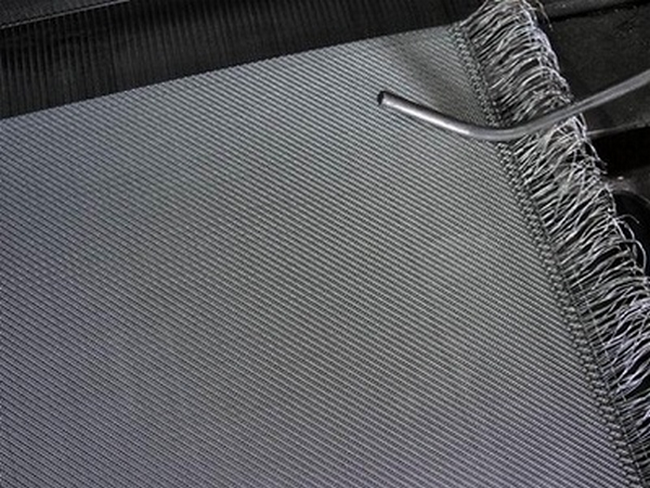
geotextile mesh pvc sheet membrane fabric geotextile
"We source various construction materials from Asia. For geotextiles, Jinzehong stands out for their technical knowledge. They didn't just sell a product; they asked detailed questions about the subgrade soil type, which prevented a potential specification error."
– David K., Sourcing Agent, International Procurement Hub, UK
Next Steps for Your Project
Transparent collaboration is the foundation of successful B2B partnerships. To move forward, we recommend the following action path:
- Share Your Specifications: Provide details on the project application, required geotextile type (non-woven/woven), target technical parameters (e.g., grab tensile strength, CBR puncture, permittivity), and estimated volume.
- Request a Technical Dialogue: Our engineering team can review your specs and provide product recommendations or feasibility analysis for custom requirements.
- Evaluate Samples: We can produce and ship physical samples for your quality verification and testing.
- Discuss Commercial Terms: Upon sample approval, we will provide a formal quotation detailing pricing, MOQ, lead time, payment terms (typically T/T, L/C), and shipping options.
Ready to Specify Your Geotextile Solution?
Contact our trade team for a detailed project consultation and access to our technical data sheets.
Jinzehong Wire Mesh Products Co., Ltd.
Tel: +86 15383785666 | Email: ada@jinzehongwiremesh.com
Submit Your Project Inquiry
Frequently Asked Questions (FAQ)
Q: What is the typical lead time for a standard container load of non-woven geotextile?
A: Lead times vary based on the specific product specification and order queue. Generally, for standard-grade non-woven geotextile, production and preparation for a 20ft/40ft container can range from 20 to 30 working days after order confirmation. An accurate timeline will be provided with your formal quotation.
Q: Do you provide geotextiles with CE marking or other international certifications?
A: Our manufacturing processes adhere to international quality standards. We can provide test reports from independent laboratories for key performance indicators (e.g., tensile strength, UV resistance). The applicability of specific certification marks (like CE for construction products) depends on the final destination country's regulations and must be discussed in detail for your project.
Q: Can you produce geotextiles with custom roll widths and lengths?
A: Yes, OEM/ODM services are a core part of our offering. We can customize roll dimensions (width and length) and weight per unit area to match your project plans or distribution requirements, subject to manufacturing feasibility.
Q: What are the standard payment terms for new clients?
A: Standard terms for new clients are typically 30% deposit via Telegraphic Transfer (T/T) with the balance paid against copy of Bill of Lading. Other terms like Letter of Credit (L/C) are negotiable based on order value and mutual agreement.
Q: How are the geotextile rolls packaged for ocean freight?
A: Rolls are typically wrapped in strong, waterproof plastic film to protect against moisture and contamination. They are then securely stacked and fastened on wooden pallets suitable for container loading. We ensure packaging meets standard requirements for international sea freight.

About the Author
David Chen is a technical sales director with over 12 years of experience in the international trade of engineered construction materials, specializing in geosynthetics and filtration products. He has collaborated with infrastructure projects across North America, Europe, and Southeast Asia, bridging the gap between engineering specifications and manufacturing capabilities. David authors content to help procurement professionals make informed sourcing decisions based on technical data and supply chain realities.