Floor Acoustical Underlayment: A Strategic Guide for B2B Buyers
If you are an Import Manager, Brand Owner, Wholesaler, or Sourcing Agent evaluating suppliers for floor acoustical underlayment, your primary questions likely revolve around performance consistency, supply chain reliability, and total project cost. This guide addresses these core concerns by detailing how a technically proficient factory, backed by robust quality systems and a responsive supply chain, delivers underlayment solutions that meet stringent Impact Insulation Class (IIC) and Sound Transmission Class (STC) requirements for commercial and residential projects across English-speaking markets.
Industry Pain Points in Sourcing Acoustic Underlayment
Procuring floor underlayment is often more complex than it appears. Common challenges you may face include:
- Inconsistent Performance: Batches that fail to meet promised acoustic ratings (IIC/STC), leading to failed inspections and costly callbacks.
- Unreliable Lead Times: Delays in production or shipping disrupting tight construction schedules and inventory planning.
- Hidden Compliance Costs: Products lacking verifiable certifications (CE, ASTM), requiring expensive third-party testing upon import.
- Limited Customization: Suppliers unable to support OEM/ODM requests for specific roll sizes, thicknesses, or branded packaging.
- Vague Technical Support: Lack of clear data on moisture resistance, compression recovery, or compatibility with various floor finishes (LVT, Engineered Wood, Laminate).
Engineered Solutions: The Anatomy of High-Performance Acoustical Underlayment
Effective underlayment is a system designed to manage sound, impact, and moisture. Key technical parameters you should evaluate in a supplier's offering include:
Core Material & Construction
Superior acoustic underlayment typically utilizes a composite structure:
- High-Density Polyethylene (HDPE) or Rubber Foam Core: For dampening impact noise and providing structural support.
- Laminated Vapor Barrier: A critical layer, often a polymer film, to prevent moisture vapor transmission (MVT) from subfloors, measured per ASTM E96. This is non-negotiable for concrete slab applications.
- Surface Texture: A non-slip surface to secure the flooring above and prevent movement.
Performance Data & Compliance
Trustworthy suppliers provide test reports from accredited laboratories. Essential certifications and standards for the US, EU, and ANZ markets include:
| Standard/Certification | Purpose | Typical Value/Requirement* |
|---|---|---|
| ASTM E2179 | Impact Sound Insulation (ΔIIC) | ΔIIC 15-21+ |
| ASTM E96 | Moisture Vapor Transmission Rate (MVT) | < 0.3 perms |
| CE Marking | EU Compliance for Construction Products | Mandatory for EU sales |
| ISO 9001:2015 | Quality Management System | Factory Certification |
*Performance values are model-specific. Please refer to the actual technical data sheet for the product in question.
Why Partner with a Specialist Factory in China's Supply Chain Ecosystem?
Choosing a manufacturer like Jinzehong, with deep roots in engineered material production, translates into tangible advantages for your procurement strategy.
Integrated Manufacturing & Quality Assurance
With operations spanning a 5,000 m² facility and a foundation dating back to 2000, the factory controls the production process from polymer compounding to laminating and slitting. This vertical integration enables:
- Rigorous In-Process QC: Raw material inspection, thickness monitoring, and adhesion testing at each stage to prevent defects.
- Batch Traceability: Every roll can be traced back to its production lot for consistent quality assurance.
- Capacity for Large Projects: The scale to handle container-load orders for big-box retailers or major construction projects without quality degradation.
OEM/ODM Design & Customization Flexibility
Beyond standard rolls, the factory supports tailored solutions critical for brand owners and wholesalers:
- Custom Dimensions: Pre-cut sheets, specific roll lengths and widths to reduce jobsite waste.
- Branded Packaging: Private label polybags, cartons, and palletization.
- Material Modifications: Adjustments to thickness (e.g., 2mm, 3mm), density, or vapor barrier permeability based on your regional building codes.
Typical MOQ: One 20-foot container (negotiable for initial sampling). Lead Time: 15-25 days for standard items; 30-35 days for custom OEM projects. Specifics depend on order volume and customization level.
High-Speed Delivery & Logistic Coordination
Leveraging China's mature export infrastructure, the company facilitates smooth logistics:
- Incoterms: Standard quotes are FOB Tianjin/Xingang or CIF to major ports like Los Angeles, Rotterdam, or Sydney.
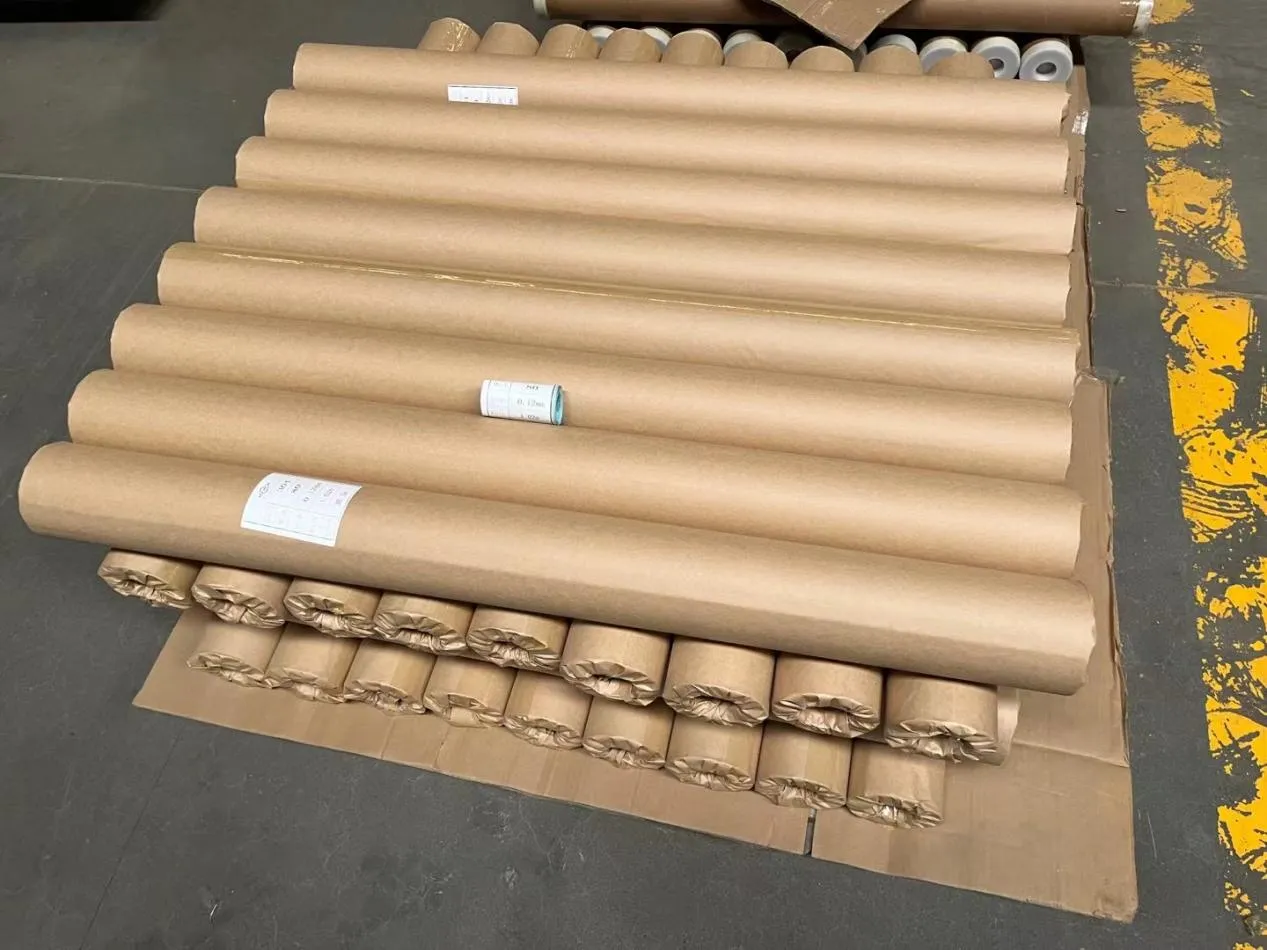
- Packaging: Rolls are shrink-wrapped, palletized, and secured for ocean freight to prevent moisture damage and deformation.
- Documentation: Provision of full shipping docs, certificates of origin, and compliance paperwork.
Trust Endorsement: What Professionals Are Saying
Feedback from global partners underscores the practical value of a reliable supply partnership.
"We've been importing their 3mm acoustic underlayment for our laminate flooring bundles in the Midwest for three years. The consistent ΔIIC rating means no surprises with building inspectors. Their logistics team's updates are proactive, which helps our warehouse planning significantly."
– Michael R., Procurement Director, Flooring Wholesaler, USA
"Our brand needed a custom-width underlayment for a new engineered wood line. They executed the OEM order perfectly, including our branded polybags. The factory audit reports (ISO 9001) gave our compliance team the confidence to approve them as a tier-1 supplier."
– Sarah L., Brand Owner, Home Renovation Products, Australia
"As a sourcing agent, I handle multiple projects. Their technical team provided clear ASTM test data for different substrates, which helped me advise my client correctly. The MOQ was reasonable for a trial order, and the delivery was on schedule."

– David K., Sourcing Agent, United Kingdom
Clear Next Steps for Your Procurement Evaluation
To move forward with a technical and commercial evaluation:
- Request Sample Kits & Data Sheets: Obtain physical samples of standard or proposed custom underlayment alongside verified lab test reports for IIC/STC and MVT.
- Specify Your Requirements: Provide details on target market, required certifications (CE, etc.), application (concrete/wood subfloor), roll size, and annual volume estimate.
- Discuss Logistics & Terms: Clarify preferred Incoterms (FOB/CIF), port of destination, and packaging needs to receive a comprehensive landed cost analysis.
Initiate this process by contacting the technical sales team at Jinzehong Wire Mesh Products Co., Ltd. They are structured to support the complex queries of B2B buyers.
Contact for Technical & Commercial Proposals:
Email: ada@jinzehongwiremesh.com | Tel: +86 15383785666
Address: South Road, 500 meters North of Houzhangzhuang, Anping County, Hengshui City, Hebei Province, China.
Visit the Contact Page for More Information
Visual & Technical Guidance
sound floor sound dampening underlayment acoustical walls
Suggested Image Alt Text for Product Pages:
- acoustic-floor-underlayment-roll-vapor-barrier
- soundproof-underlayment-installation-laminate-flooring
- impact-noise-reduction-testing-facility
- custom-oem-underlayment-packaging-branded
- factory-production-line-acoustic-underlayment-material
Frequently Asked Questions (FAQ) for Acoustical Underlayment
What is the primary function of a floor acoustical underlayment?
Its core functions are to improve impact sound insulation (IIC) between floors, reduce airborne sound transmission (STC), provide a moisture barrier for concrete subfloors, and create a smooth, supportive surface for the finished floor covering.
What certifications should I look for when sourcing for the US market?
Look for products tested to relevant ASTM standards (e.g., E2179 for ΔIIC). While no single "US certification" exists for underlayment, verification of these test results is crucial. For California, check for CA Section 01350 VOC compliance. Factory ISO 9001 certification indicates a controlled quality system.
Can you produce underlayment with a custom thickness or roll size?
Yes, OEM/ODM services typically include customizing thickness (e.g., 2mm, 2.5mm, 3mm), roll width and length, and core material density. This is subject to minimum order quantity requirements.
What is the standard packaging for ocean freight?
Product is typically wound onto sturdy cores, shrink-wrapped, palletized, and secured with corner boards and strapping. This prevents unrolling and damage during transit. Specific packaging can be adapted per client request.
How do I know which underlayment is right for my project (concrete vs. wood subfloor)?
A underlayment with a robust integrated vapor barrier (low MVT per ASTM E96) is essential for concrete subfloors to prevent moisture damage. For wood subfloors, a breathable underlayment may be suitable. Always consult the manufacturer's specifications for the intended application.
Note: All product specifications, lead times, and performance data are subject to change based on product iteration and order specifics. Please refer to the official quote and order confirmation for final details.
About the Author:  Mark Richardson is a construction materials specialist with over 15 years of experience in global supply chain management and product specification for acoustic and insulation products. He has collaborated with manufacturers, distributors, and testing labs across North America, Europe, and Asia-Pacific.
Meta Title (Suggestion): Acoustical Underlayment for B2B Buyers | OEM & Certified Supply
Meta Description (Suggestion): Source high-performance floor acoustical underlayment with verified IIC/STC data, OEM support, and reliable logistics. Ideal for importers, brands, and wholesalers. Request technical specs.