Exploring Different Styles of Fencing: A Comprehensive Guide for B2B Buyers
For import managers, brand owners, and sourcing professionals, selecting the right different styles of fencing involves balancing aesthetics, functionality, supply chain reliability, and total cost. This guide breaks down the primary fencing types, their industrial applications, and how partnering with a vertically integrated manufacturer like Jinzehong can streamline procurement, ensure consistent quality, and support your specific project requirements from OEM/ODM design to high-speed delivery.
Common Industry Challenges in Sourcing Fencing
Procuring fencing for commercial, residential, or industrial projects presents several consistent hurdles for international buyers:
- Inconsistent Quality & Specifications: Variations in material grade, coating thickness, and weave consistency between shipments.
- Limited Customization & Design Support: Suppliers unable to adapt to unique brand or project specifications beyond standard catalog items.
- Unpredictable Lead Times & Logistics: Delays in production and shipping disrupting project timelines and inventory planning.
- Hidden Costs & Compliance Risks: Unclear pricing structures and products that may not meet target market compliance certifications (CE, ASTM, etc.).
- Communication & After-Sales Gaps: Difficulty in resolving issues post-shipment due to time zones and language barriers.
Strategic Sourcing Solutions: Beyond the Product
The solution lies in a supplier partnership that addresses the entire procurement chain. Jinzehong Wire Mesh Products Co., Ltd., operational since 2000, provides a vertically integrated model from raw material control to finished product dispatch. Our powerful factory infrastructure, covering 5000 m² in Anping, allows for in-house quality checks at every stage, ensuring that the different styles of fencing you order meet the exact specifications, every time.
Core Value Proposition: We translate the advantages of China's supply chain into predictable, transparent, and scalable sourcing for global clients. This means you benefit from competitive pricing without sacrificing control over quality assurance, custom designs, or delivery schedules.
A Detailed Look at Key Fencing Styles & Applications
Understanding the technical and functional differences between fencing styles is crucial for specifying the right product for your market. Below is a breakdown of common types.
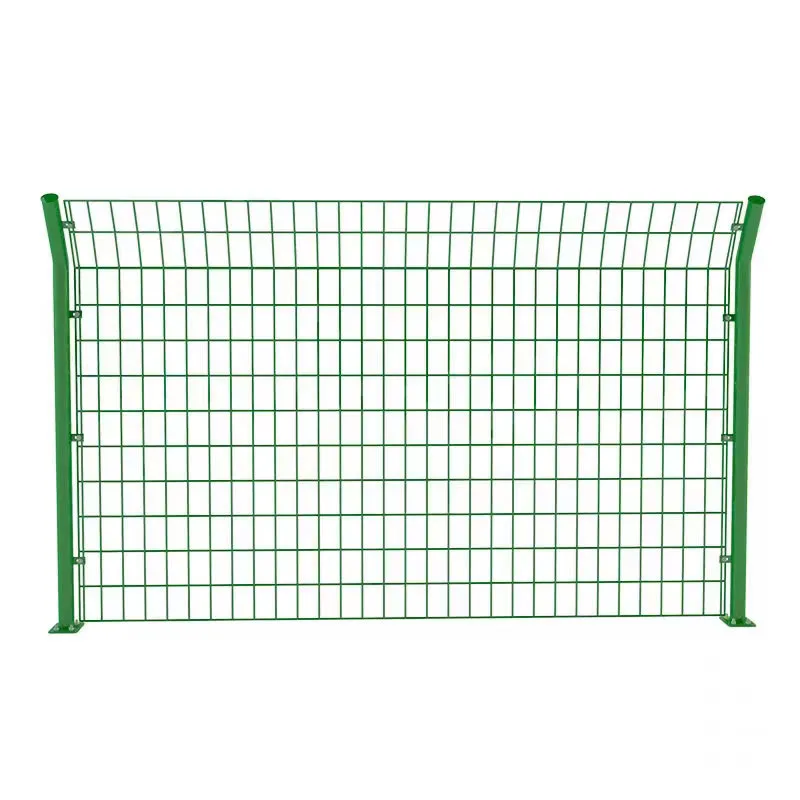
1. Welded Wire Mesh Fencing
Constructed by welding intersecting wires at each contact point, creating a rigid, grid-like panel. Ideal for secure perimeters, machine guards, and animal enclosures.
- Common Specifications: Wire gauges from 3mm to 6mm, mesh openings from 25mm x 25mm to 100mm x 100mm.
- Typical Coatings: Electro-galvanized, hot-dip galvanized, PVC coated (green, black, other RAL colors).
- B2B Applications: Warehouse security partitions, industrial site fencing, horticultural fencing, retail storage areas.
2. Chain Link Fencing
A versatile, diamond-pattern mesh made from galvanized or coated steel wire, woven on a loom. Known for its strength, transparency, and cost-effectiveness.
- Common Specifications: Gauge 9-11, mesh size 50mm, height 1m-4m. Available with or without a top/ bottom wire.
- Compliance Note: Can be manufactured to meet standards like ASTM A392 for zinc-coated steel chain-link fabric.
- B2B Applications: Public utility perimeters (substations, water plants), sports field enclosures, temporary construction site fencing, residential community boundaries.
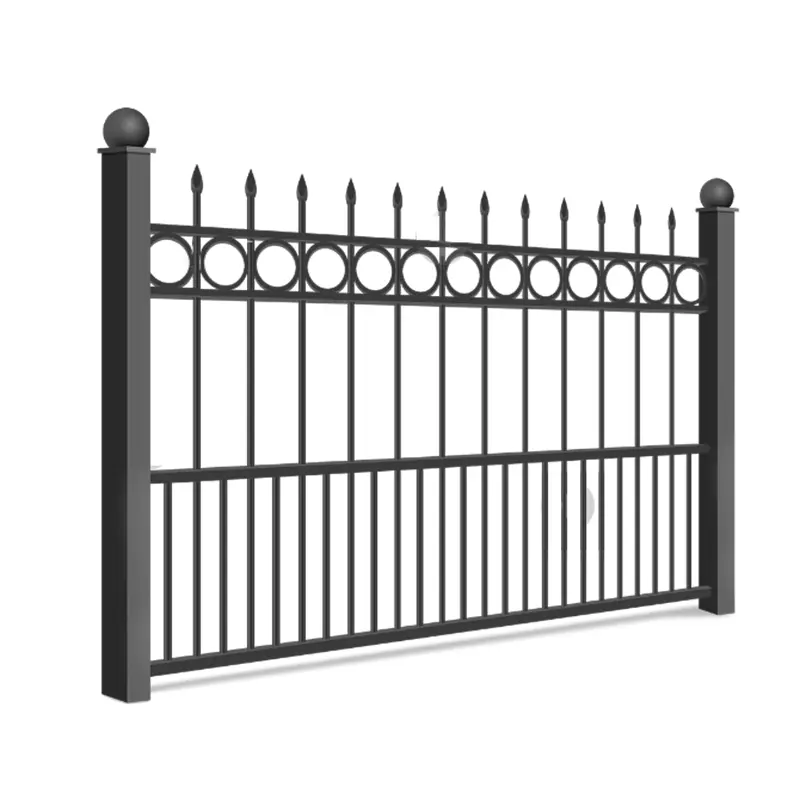
3. Ornamental / Wrought Iron Style Fencing
Features elegant, often custom-designed patterns using steel bars and pickets. Offers security while enhancing aesthetic appeal.
- Manufacturing Process: Typically involves bending, forging, and welding of steel components, followed by powder coating.
- OEM/ODM Strength: This category heavily relies on custom design capability. We work from client sketches, CAD files, or samples to produce unique patterns.
- B2B Applications: High-end residential estates, commercial property boundaries (hotels, corporate parks), public gardens, and historical site restoration.
4. Palisade Fencing
A robust security fencing style characterized by vertical steel pales (pickets) with pointed tops, mounted on horizontal rails.
- Key Feature: High deterrence value due to its formidable appearance and difficulty to climb.
- Standard Configurations: Pale heights from 1.8m to 2.4m, various pale profiles (flat top, arrowhead).
- B2B Applications: Critical infrastructure protection (airports, prisons, power stations), industrial compound perimeters, high-security storage yards.
5. PVC/ Vinyl Coated Welded Mesh Fencing
Essentially a welded mesh panel with a thick layer of PVC or vinyl extruded or bonded onto the wire. Combines the strength of steel with enhanced corrosion resistance and color options.
- Material Advantage: The coating provides a barrier against moisture, chemicals, and salt spray, ideal for coastal or harsh environments.
- Color & Aesthetics: Available in standard colors (green, black, grey) and can be matched to custom RAL codes upon request, important for brand owners.
- B2B Applications: Swimming pool enclosures, marine environments, decorative residential fencing, animal husbandry where corrosion resistance is key.
| Fencing Style | Primary Use Case | Key Advantage | Common Customization |
|---|---|---|---|
| Welded Mesh | Security & Industrial Partitioning | Structural Rigidity, Clean Appearance | Mesh Size, Wire Gauge, Coating Type/Color |
| Chain Link | Utility & Public Area Enclosure | Cost-Effective, Transparent, Durable | Coating (Galv, PVC), Height, Mesh Gauge |
| Ornamental Steel | Aesthetic Security for Premium Sites | High Design Flexibility, Curb Appeal | Full Custom Design, Powder Coat Color |
modern fence styles ideal fencing fencing wire types
*Table provides a generalized overview. Specific parameters and capabilities should be confirmed per project.
Building Trust Through Process & Verification
Trust in B2B transactions is built on transparency and verification. Our operations are structured to provide both.
Quality Assurance & Compliance Framework
- In-House Production Control: Controlling the process from wire drawing to final packaging allows for real-time quality intervention.
- Material Traceability: Use of certified raw materials from reputable mills. Documentation can be provided upon request.
- Testing & Certification Support: While specific product certifications (like CE marking for construction products) depend on the final application and destination, our manufacturing processes and quality management system are geared to support required testing protocols for ISO 9001, ASTM, and other regional standards. Buyers are advised to specify certification requirements during inquiry.
Transparent Commercial Terms
Clear terms prevent misunderstandings and build long-term partnerships.
- MOQ (Minimum Order Quantity): Varies by product complexity. Standard catalog items may have a 1x20ft container MOQ, while custom OEM/ODM projects are negotiable based on design and tooling requirements.
- Lead Time: Typically 15-30 days for standard items after deposit confirmation. Custom projects require additional time for sample approval. Our high-speed delivery commitment is backed by dedicated production line scheduling for repeat clients.
- Customization Capability: Full support for OEM/ODM. Process includes: 1) Concept discussion, 2) Technical drawing/ sample confirmation, 3) Prototype/sample production, 4) Bulk manufacturing.
- Packaging & Logistics: Standard export packaging (bundled, palletized, or in containers) to prevent transit damage. We handle FOB terms efficiently and can coordinate CIF/CNF shipments with partner freight forwarders.
- Payment Terms: Common terms include 30% T/T deposit, 70% balance against copy of B/L, or negotiable L/C for established relationships.
Disclaimer: All technical parameters, MOQ, lead times, and pricing mentioned are for reference. Please refer to the official quotation and order confirmation for your specific project.
Feedback from Global Partners
"We needed a specific powder coat color to match a branded residential community development. Jinzehong not only matched the RAL code perfectly but their OEM/ODM design team helped refine our gate design for better durability. The consistency across 5 container loads was impressive."
- Michael T., Procurement Director for a Property Development Firm, Florida, USA

"As a wholesaler, my reputation depends on reliable quality and delivery. For three years, Jinzehong has been our source for chain link and welded panels. Their quality assurance process means fewer customer complaints, and their logistics updates are always accurate."
- Sarah L., Owner of a Building Materials Wholesale Company, Ontario, Canada
"Sourcing for a large security fencing project in the Middle East was challenging until we partnered with Jinzehong. Their technical team understood the need for enhanced corrosion protection. The PVC-coated mesh delivered performed excellently in the coastal environment. A reliable powerful factory partner."
- David R., Project Sourcing Agent, UAE
Ready to Specify Your Fencing Project?
Move beyond simply comparing different styles of fencing. Engage with a supplier that offers integrated solutions—from collaborative design and certified manufacturing to managed logistics.
Next Step for B2B Buyers: Send us your project specifications, sketches, or sample photos. We will provide detailed technical drawings, a competitive quotation with clear INCOTERMS, and a production timeline.
Contact Jinzehong Wire Mesh Products Co., Ltd.
Tel: +86 15383785666 | Email: ada@jinzehongwiremesh.com
Add: South Road, 500 meters North of Houzhangzhuang, Anping County, Hengshui City, Hebei Province, China
Visit our Contact Page for more details.

About the Author: Alex Morgan is a senior technical advisor and procurement specialist with over 12 years of experience in the global construction materials and fencing industry. Having worked directly with manufacturers, importers, and large-scale project contractors, Alex provides practical insights into sourcing strategies, quality benchmarking, and supply chain optimization for B2B buyers. The views and data presented are based on industry experience and manufacturer-provided specifications.
Frequently Asked Questions (FAQ) for Fencing Buyers
Q1: What information should I provide to get an accurate quote for a custom fencing design?
A: To ensure an efficient and accurate quotation, please provide: 1) Detailed drawings (CAD, PDF, or sketches) with dimensions, 2) Material specification (e.g., steel grade, wire diameter), 3) Surface treatment requirement (e.g., galvanization type, coating color/thickness), 4) Approximate quantity, and 5) Destination port. For complex projects, sharing a reference photo or sample is highly recommended.
Q2: How do you ensure the fencing products are suitable for harsh weather conditions (e.g., coastal salt spray)?
A: We recommend and manufacture products with enhanced corrosion protection for such environments. This typically involves using hot-dip galvanized steel as a base, followed by a thick PVC or powder coating. The combination provides a dual barrier. Material specifications and coating thickness can be adjusted based on your environmental assessment.
Q3: What is your process for handling quality disputes or damaged goods upon arrival?
A: We require buyers to inspect the goods upon arrival and provide photo/video evidence of any damage or non-conformance within 7 days of container unloading. For verifiable manufacturing defects, we work to provide replacements, credit, or other fair resolutions as per our sales agreement. Clear documentation and communication are key to a swift resolution.
Q4: Can you produce fencing that meets specific regional standards like UKCA or Australian Standards?
A: While we manufacture to generic international quality benchmarks (ASTM, etc.), obtaining a specific regional mark like UKCA or AS/NZS often requires testing and certification by an accredited body in or for the target market. We can support this process by providing production data, test samples, and factory audits, but the cost and responsibility for final certification usually lie with the importer/brand owner. We advise discussing this requirement early in the project cycle.