Cantilever Pallet Racking: Maximizing Storage Efficiency for Long & Bulky Items
For import managers, brand owners, and sourcing agents seeking efficient warehouse storage, cantilever pallet racking provides a flexible solution for long, bulky, or irregularly shaped inventory. This guide explores its technical specifications, ideal applications, and key procurement factors—like load capacity, compliance certifications (CE, ANSI MH16.1), lead times, and OEM support—to help you source a robust system that integrates seamlessly with your operations and supply chain.
Industry Pain Points in Storing Non-Standard Inventory
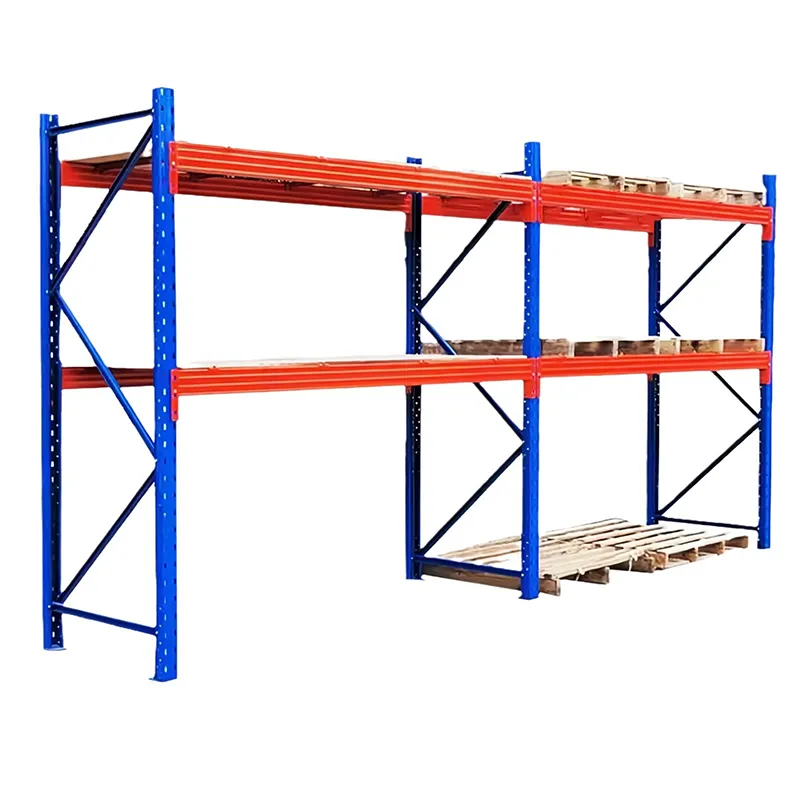
Traditional pallet racking systems often fall short when handling materials like steel pipes, timber, plastic extrusions, furniture, or rolled textiles. Common challenges include:
- Wasted Vertical Space: Upright frames with horizontal beams create fixed bays, limiting access and storage depth for long items.
- Accessibility Issues: Forklifts struggle to maneuver long loads into confined spaces, increasing handling time and accident risk.
- Damage to Goods: Improper support can lead to bending, warping, or surface damage to stored materials.
- Inflexibility: Fixed configurations cannot easily adapt to changing inventory profiles or seasonal demand shifts.
These inefficiencies directly impact warehouse throughput, operational costs, and inventory integrity.
Cantilever Racking: The Engineered Solution
Cantilever racking systems eliminate front-column obstructions by using a series of vertical columns (uprights) with arms that project horizontally. Loads are placed directly onto these arms or between two cantilever frames, offering unimpeded access along the entire length of the stored item.
Core Components & Technical Parameters
| Component | Material & Specification | Typical Capacity Range* | Key Consideration |
|---|---|---|---|
| Upright Column (Base) | High-tensile structural steel (Q235 or equivalent), hot-rolled column or tubular design. | N/A (Supports system load) | Column depth and gauge determine overall system stability and height potential. |
| Cantilever Arms | Solid steel bar or heavy-duty tubular steel, welded or bolted to column. | 1,000 lbs to 6,000 lbs per arm* | Arm length (projection) and reinforcement design are critical for load moment. |
| Column Braces & Baseplates | Steel bracing, anchored to floor with anchor bolts. | N/A | Essential for lateral stability and seismic resistance; must meet local building codes. |
* Load capacities are system-dependent. Please refer to engineering drawings and confirm all specifications with your supplier prior to order confirmation.
Primary Applications & Layout Scenarios
- Single-Sided: Placed against a wall, ideal for maximizing perimeter space.
- Double-Sided / Back-to-Back: Two rows share a common center column, creating a dense storage aisle for high-volume items.
- Freestanding: A single row accessible from both sides, perfect for dividing warehouse zones.
Common industries utilizing cantilever pallet racking include lumber yards, metal service centers, plastic distribution, furniture warehouses, and automotive parts storage.
Procurement Advantages: Sourcing from a Specialized Manufacturer
Jinzehong Wire Mesh Products Co., Ltd. applies its over two decades of metal fabrication expertise to the production of cantilever racking systems. Our approach focuses on the specific needs of B2B buyers and sourcing agents.
Manufacturing & Supply Chain Strength
- Integrated Production: Our 5000 m² facility in Anping controls the process from steel sourcing to fabrication, welding, and finishing, ensuring quality consistency.
- Quality Assurance Protocols: In-process checks for weld integrity, dimensional accuracy, and surface preparation (e.g., rust-preventative primer).
- Adaptive OEM/ODM Design: We collaborate to modify arm lengths, column heights, load capacities, and finishes to meet your specific warehouse layout and inventory profile.
- Logistics Coordination: Experienced in packing systems for optimal container load (FCL/LCL), handling FOB/CIF terms, and providing necessary export documentation (including IPPC-marked wood-free packaging if required).
cantilever pallet rack cantilever rack racking pallet
Key Terms for International Buyers
- MOQ (Minimum Order Quantity): Typically one 20' or 40' container load, but flexible for pilot projects or mixed-container arrangements. Confirm exact MOQ based on your design.
- Lead Time: Standard designs: 15-25 days after order confirmation. Customized (OEM/ODM) projects: 25-35 days. Times are subject to raw material availability and order queue.
- Customization Capability: Arm projections, column gauges, powder-coat colors (e.g., RAL codes), and specialized bracing designs are available.
- Compliance & Certification: Systems are engineered to meet recognized standards such as CE (for Europe) and ANSI MH16.1 design principles (for North America). Components are sourced from ISO 9001-certified supply chains. Final certification may require review by a local, licensed professional engineer in your country.
Reviews from Industry Professionals
Michael T., Warehouse Operations Manager (Florida, USA): "We sourced a double-sided cantilever system for our plumbing supply warehouse. The project required specific arm lengths for 20-foot PVC pipes. Jinzehong's team provided clear CAD drawings for approval. The system arrived well-packed, and the components fit together as specified. It's been operational for 18 months with zero issues. Their follow-up on installation guidelines was appreciated."
Sarah L., Sourcing Agent for a Furniture Brand (UK): "My client needed a cost-effective but sturdy storage solution for their new distribution center. We compared several suppliers. Jinzehong offered the best balance of customizable options, transparent communication on lead times, and comprehensive pre-shipment photos. The cantilever racks were a significant upgrade from their old floor stacking method."
David K., Import Manager for a Building Materials Wholesaler (Texas, USA): "The quality of the steel and the welding on the cantilever arms is solid. We ordered a batch with a custom gray powder coat. The documentation was clear for customs clearance. For the price point and the level of OEM support we received, it was a valuable procurement decision."
Your Next Step: From Inquiry to Installation
Selecting the right cantilever racking partner involves evaluating engineering capability, communication clarity, and supply chain reliability.
To proceed with Jinzehong:
- Prepare your basic requirements: maximum item length & weight, desired system height, and warehouse layout sketch.
- Contact us to discuss your project. We will initiate a preliminary design and provide a specification sheet with estimated pricing (EXW, FOB, or CIF).
- Upon agreement, we will generate detailed CAD drawings and a proforma invoice for your review and approval.
- Production begins after deposit receipt, with regular updates provided.
- We manage packing and shipping, supplying all necessary documents for smooth logistics.
Ready to Optimize Your Storage Space?
Submit your cantilever racking specifications or request a consultation to receive a tailored solution proposal. Our team is ready to support your procurement process.
Contact: Ada | Tel: +86 15383785666 | Email: ada@jinzehongwiremesh.com
Or visit our contact page for more details.
Frequently Asked Questions (FAQ)
Q1: What is the typical load capacity per arm for a standard cantilever racking system?
A: Standard arm capacities range from 1,000 to 6,000 lbs per arm, depending on arm length, column design, and steel gauge. The total system capacity is calculated based on the number of arms and their configuration. Always request and review the manufacturer's load tables and engineering data for your specific design.
Q2: Do your cantilever racks meet U.S. safety standards?
A: Our systems are designed and fabricated according to the general design principles outlined in the ANSI MH16.1 standard for industrial steel storage racks. It is the responsibility of the end-user to have the final installed system reviewed and approved by a licensed professional engineer (PE) in their local jurisdiction to ensure compliance with all applicable state and federal codes, including seismic requirements if applicable.
Q3: Can I get a sample of the cantilever arm before placing a full order?
A: Due to the size and shipping cost of a full cantilever arm, physical samples are generally not provided. However, we can provide detailed material certificates, finish samples (chips), high-resolution photos, and even video walkthroughs of similar products in our factory. For large-volume projects, a factory audit or pre-shipment inspection can be arranged.
Q4: What is your payment term for new international clients?
A: Standard terms for new clients are 30% T/T deposit with order confirmation, and 70% balance against copy of Bill of Lading. Other terms may be negotiable based on order volume and established relationship.
Q5: What information do you need to provide a quotation?
A: To provide an accurate quote, please share: 1) Desired system layout (single/double-sided, # of bays, height), 2) Required arm length(s) and estimated load per arm, 3) Preferred surface treatment (e.g., primer, powder coat), and 4) Destination port. A simple sketch or plan view is extremely helpful.

About the Author: Alex Morgan
Alex is a senior logistics and warehouse planning consultant with over 15 years of experience optimizing industrial storage solutions for North American and European markets. He has collaborated with manufacturers and distributors across the building materials, metalworking, and wholesale sectors to design efficient material handling systems. Alex focuses on translating operational needs into practical, safe, and cost-effective storage infrastructure specifications.
Disclaimer: All technical data, load capacities, lead times, and specifications mentioned in this article are for reference purposes. Final product specifications, pricing, and terms will be detailed in the official quotation and sales contract. Jinzehong Wire Mesh Products Co., Ltd. reserves the right to modify product information. It is the buyer's responsibility to ensure the selected system complies with all local safety regulations and building codes. E&OE.