Basket Cable Tray: The Flexible & Durable Solution for Modern Cable Management
For import managers, brand owners, and sourcing agents seeking reliable, high-performance cable management, the basket cable tray is a fundamental component. This guide addresses your core questions: What is a basket tray system, where is it best applied, and how do you source quality trays that meet international standards for safety, durability, and value? We'll explore the technical specifications, compliance certifications like CE and UL, and the procurement advantages of partnering with an experienced manufacturer.
Industry Pain Points in Cable Management Sourcing
Procuring cable management systems often involves navigating significant challenges that impact project timelines and total cost of ownership.
- Overheating & Signal Interference: Poorly designed trays restrict airflow, leading to heat buildup that degrades cable performance and lifespan.
- Corrosion & Premature Failure: Substandard materials or finishes fail in harsh environments, requiring costly early replacements.
- Inflexible Supply Chains: Long lead times, high MOQs, and inability to customize delay projects and inflate inventory costs.
- Compliance Risks: Products lacking verifiable certifications (CE, UL) can lead to rejected shipments, failed inspections, and liability issues.
- Complex Installation: Heavy, cumbersome trays increase labor time and costs.
The Basket Cable Tray Solution: Engineered for Performance
A basket tray, also known as a wire mesh tray or ladder cable tray, provides an open, ventilated structure for routing and supporting cables. Its design is the direct answer to the pain points above:
Superior Airflow & Heat Dissipation
The open-mesh design allows maximum air circulation around cables, preventing heat accumulation and supporting optimal data transmission and power efficiency.
Lightweight & Easy Installation
Constructed from high-tensile steel wire, basket trays are significantly lighter than solid-bottom trays, reducing support structure needs and cutting installation labor by up to 30%.
Durability Through Material Science
Options like electro-galvanized steel, hot-dip galvanized steel, and 304/316 stainless steel provide corrosion resistance for environments from commercial IT rooms to industrial plants.
Technical Specifications & Compliance: What Buyers Must Verify
For B2B procurement, technical details and compliance are non-negotiable. Below are key parameters for a standard wire mesh cable tray. Note: All specifications are subject to customization; please refer to the actual order confirmation for final details.
| Parameter | Standard Specification | Notes & Customization |
|---|---|---|
| Material | Electro-Galvanized Steel Wire (Q195/Q235) | Available in Hot-Dip Galvanized, Stainless Steel 304/316, Aluminum. |
| Wire Diameter | 4.0mm (Side Rails), 3.5mm (Cross Rods) | Customizable based on load capacity requirements. |
| Standard Width | 50mm, 100mm, 150mm, 200mm, 300mm, 450mm, 600mm | Other widths available via OEM/ODM design. |
| Surface Treatment | Zinc Coating (Electro: 8-12μm; Hot-Dip: ≥65μm) | Powder coating (RAL colors) available for aesthetic projects. |
| Compliance & Certifications | CE, ISO 9001:2015, RoHS Compliant | Manufacturing processes are audited for international standards. UL-listed options can be discussed. |
Why Source Basket Cable Trays from Jinzehong?
Anping County Jinzehong Wire Mesh Products Co., Ltd. brings over two decades of metallurgical expertise to perforated cable tray manufacturing, aligning with the efficiency of China's supply chain.
Core Operational Advantages
- Integrated Manufacturing: Operating from a 5,000 m² facility in Anping, we control production from raw material sourcing to finishing, ensuring quality assurance at every stage.
- OEM/ODM Design Focus: We adapt to your specifications—unique sizes, colors, branding, or packaging—making us a seamless extension of your supply chain.
- Scalable Capacity: With substantial in-house production capacity, we handle large-volume orders for wholesalers while maintaining flexibility for smaller, custom projects.
- High-Speed Delivery: Streamlined logistics and extensive experience in global export (FOB, CIF) enable reliable lead times. Standard product lead time is typically 15-25 days post-deposit, subject to order volume and customization.
Procurement Terms for B2B Buyers
- MOQ (Minimum Order Quantity): Flexible MOQ is offered, with more competitive pricing for container-load (FCL) orders. Discuss your volume for a tailored quote.
- Packaging: Standard export packaging includes plastic wrap and wooden pallets/crates to prevent corrosion and damage during ocean freight.
- Sample Policy: Samples of standard items are available for quality verification. Custom sample production is available with associated costs, often credited against future bulk orders.
- After-Sales Support: Detailed installation guides, material certificates, and responsive communication for any logistical or technical inquiries.
Feedback from the Field: What Buyers Are Saying
These testimonials reflect common feedback from international clients regarding their procurement experience for cable management solutions.
Michael T., Electrical Contractor (Florida, USA): "We needed a specific hot-dip galvanized basket tray for a coastal data center project. Jinzehong's engineering team provided clear data sheets and a compliant sample quickly. The shipment arrived on schedule, and the quality was consistent with the sample. Their focus on specs over just price is what we need."
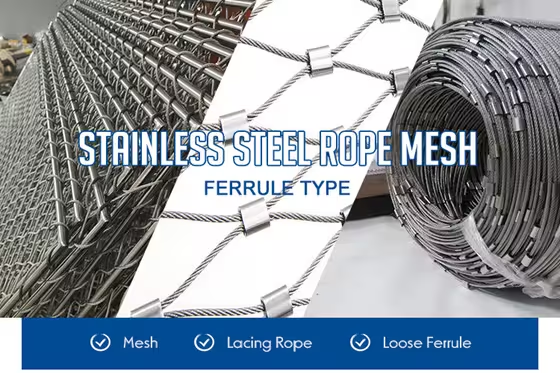
wire metal basket perforated cable tray ladder type cable trays
"TechSource" Brand Owner (UK): "As a brand owner, private labeling is key. Their ODM service allowed us to create our own line of cable trays with our branding. The communication was professional, and they navigated the CE certification documentation smoothly. A reliable partner for building a branded inventory."
Sarah L., Import Manager for an MRO Distributor (Australia): "We've sourced various wire mesh products from China. What sets Jinzehong apart is their transparency on lead times and proactive updates. The basket cable tray order was packed well—no rust issues upon arrival. Their flexibility on MOQ for a mixed container helped us optimize our buy."
Ready to Streamline Your Cable Management Supply Chain?
Get a detailed quotation, discuss custom OEM/ODM design for your basket tray needs, or request sample specifications.
Contact: Ada | Tel: +86 15383785666 | Email: ada@jinzehongwiremesh.com
Frequently Asked Questions (FAQ) for Basket Cable Tray Buyers
Q1: What is the main advantage of a basket tray over a solid-bottom cable tray?
A: The primary advantage is superior ventilation, which prevents heat buildup—a critical factor for power and data cable longevity. Basket trays are also lighter, easier to install, and allow for easier cable access and modifications post-installation.
Q2: Can you provide cable trays compliant with UL Standard 797?
A: We manufacture products that meet core mechanical and material standards. While our standard offerings are CE and ISO certified, specific UL listing requires audit and labeling by a UL-certified body. We can discuss the manufacturing of trays to meet the requisite material and performance specifications for the UL evaluation process.
Q3: What is your typical lead time for a 40-foot container of standard basket trays?
A: For a standard, non-customized FCL order, production and domestic logistics typically take 15-20 working days after deposit receipt. Final shipping time depends on the destination port and chosen Incoterm (e.g., FOB Tianjin, CIF Los Angeles). A detailed schedule is provided with each formal quotation.
Q4: Do you offer different types of rungs or mesh patterns?
A: Yes. Beyond standard ladder-type rungs, we manufacture various wire mesh tray patterns (like a continuous mesh bottom) for different load and aesthetic requirements. Discuss your application, and our team can recommend the most suitable design.
Q5: How do you ensure quality control before shipment?
A: Our in-house QC team performs multiple checks: raw material inspection, in-process checks on welding and coating thickness, and a final pre-shipment inspection for dimensions, finish, and packaging. Third-party inspections (SGS, BV, etc.) are welcome and can be arranged at the buyer's cost.

About the Author: David Chen is a technical sourcing consultant with over 12 years of experience in global procurement of construction and industrial materials. Having worked with manufacturers and buyers across North America and Asia, he specializes in translating technical product specifications into viable, cost-effective supply chain strategies. His insights are based on direct industry engagement and a focus on compliance-driven manufacturing.