15 Oct 2026
Choosing the right BBQ net can make outdoor cooking easier, safer, and more consistent. Different grilling tasks require different mesh structures, materials, and shapes. A net designed for grilling fish may not work as well for large cuts of meat or delicate vegetables. For restaurants, food processing businesses, camping equipment brands, and barbecue accessory wholesalers, understanding these differences is essential when selecting products for retail or commercial use.
BBQ nets, also known as barbecue grills, BBQ mesh grids, or grilling nets, are available in several designs to suit different cooking methods. Common options include stainless steel BBQ nets, round barbecue nets, folding grill nets, and disposable mesh grills. Each type offers specific advantages in terms of durability, portability, cleaning, and cooking performance.
This guide explores the main types of BBQ nets, their materials, common applications, and the key factors buyers should consider before placing an order.

Stainless steel BBQ nets are among the most popular choices for outdoor grilling because they combine durability, corrosion resistance, and ease of maintenance. They are widely used for grilling meat, seafood, vegetables, and other foods over charcoal or gas heat.
Food-contact applications commonly use stainless steel grades such as 304, although the appropriate grade depends on the operating environment, cleaning requirements, and product specifications. Stainless steel mesh provides a sturdy cooking surface while allowing heat to circulate around food. This helps create an even grilling result when the net is properly designed and positioned.
Another advantage is reusability. Unlike disposable grill meshes, stainless steel BBQ nets can be cleaned and reused repeatedly when properly maintained. This makes them suitable for household barbecues, restaurants, camping equipment, and commercial grilling accessories.
For buyers sourcing stainless steel BBQ nets, several specifications deserve attention:
Material grade: Confirm the stainless steel grade and its suitability for the intended food-contact environment.
Wire diameter: Thicker wire can improve rigidity, while thinner wire may reduce product weight.
Mesh spacing: The opening size affects food support, heat exposure, and the risk of smaller ingredients falling through.
Surface finish: Smooth, well-finished surfaces can make cleaning easier and improve the overall appearance.
Construction quality: Secure joints and consistent welding help improve structural stability.
For wholesalers and distributors, stainless steel BBQ nets are a practical option for building a reusable barbecue product range.

Round BBQ nets are designed for circular grills and portable barbecue stoves. Their shape makes them suitable for traditional charcoal grills, outdoor cooking stations, and compact barbecue equipment.
Available in different diameters, round BBQ nets can accommodate different cooking capacities. Smaller models are useful for camping, picnics, and personal grilling, while larger versions provide more cooking space for families, restaurants, and group gatherings.
The mesh structure is an important consideration. Closely spaced wires can help support smaller pieces of food, while more open designs may provide greater exposure to direct heat. Buyers should select the appropriate configuration based on the foods commonly prepared and the grill's heating characteristics.
Round BBQ nets may feature fixed frames, reinforced edges, or detachable handles, depending on the intended application. Reinforced rims help maintain the shape of the cooking surface, particularly when the net is frequently handled or exposed to high temperatures.
For barbecue equipment manufacturers and retailers, diameter, rim design, wire spacing, and handle configuration are important product specifications. Offering several sizes can help meet different customer needs without requiring a completely different product structure for every market.
Custom round BBQ nets may also be developed for specific grill dimensions or private-label product lines.

Folding BBQ nets are designed for portability and convenient storage. They are particularly useful for camping, hiking, fishing trips, picnics, and other outdoor activities where carrying bulky cooking equipment is inconvenient.
Many folding designs use a hinged structure that allows the mesh to open and close. Some models also include a locking mechanism or handle to hold food in place and make turning it easier. These features can be useful when grilling fish, sliced vegetables, shrimp, or other foods that may break apart when handled with standard tongs.
A well-designed folding BBQ net should balance lightweight construction with sufficient rigidity. If the frame is too flexible, the net may bend under the weight of food. If the hinge or locking mechanism is poorly constructed, the product may become difficult to operate after repeated use.
When evaluating folding BBQ nets, buyers should examine the following factors:
Hinge strength: The joint should open and close smoothly without excessive looseness.
Locking performance: A secure closure helps keep food in place during turning.
Handle design: An appropriately sized handle can improve control and reduce direct contact with hot surfaces.
Storage dimensions: A compact folded profile makes the product easier to transport and package.
Cleaning access: Food residue should be removable from hinges, corners, and mesh intersections.
Folding BBQ nets are attractive options for outdoor recreation brands, camping equipment suppliers, and retailers looking for space-saving barbecue accessories.

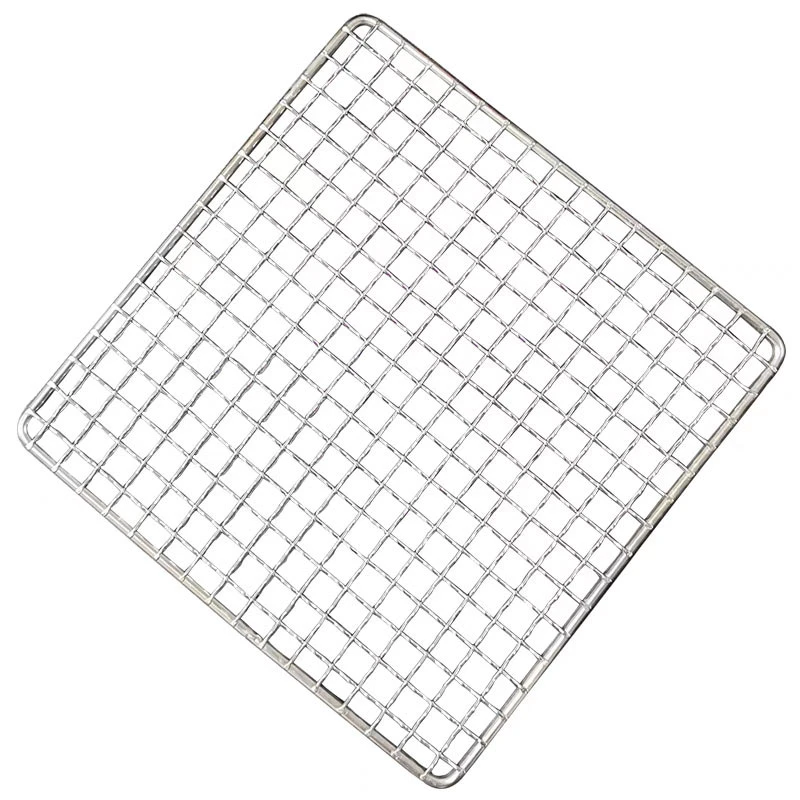
Rectangular BBQ nets are widely used on traditional barbecue grills because their shape provides a practical cooking area for different types of food. They are suitable for grilling steaks, sausages, chicken pieces, fish fillets, corn, and assorted vegetables.
Their straight edges make rectangular nets easy to position on compatible grill frames. They can also be arranged side by side to increase cooking capacity on larger barbecue stations.
Rectangular BBQ nets are available in different mesh configurations. A tighter mesh can provide better support for small or delicate ingredients, while a more open grid may suit larger cuts of meat. The choice depends on food size, cooking technique, and the distance between the net and the heat source.
Frame rigidity is especially important for larger rectangular models. A reinforced perimeter can reduce bending during loading, carrying, and cleaning. Consistent mesh spacing also helps ensure a more uniform cooking surface.
For commercial buyers, rectangular BBQ nets can be specified according to length, width, wire diameter, mesh opening, frame thickness, and material. Standard dimensions may suit general retail demand, while custom sizes can be developed for restaurant equipment or branded barbecue sets.
Before purchasing, buyers should verify that the net dimensions match the grill and that the frame can support the expected food load under normal operating conditions.

Disposable BBQ mesh nets are intended for situations where quick setup and minimal cleanup are priorities. They may be made from thin metal mesh or other heat-resistant materials, depending on the product design and intended use.
These products are often marketed for camping, picnics, festivals, and large outdoor gatherings. Their lightweight construction makes them convenient to carry, and some versions are designed for single-use applications.
However, not all disposable BBQ nets are interchangeable. Material composition, coating, maximum operating temperature, and instructions for direct-food contact vary by product. Buyers should confirm that the selected item is specifically designed for its intended grilling method.
Disposable nets may appeal to event organizers, outdoor supply retailers, and businesses purchasing barbecue accessories in volume. They can also complement reusable grill products in a broader product catalog.
From a sourcing perspective, buyers should compare packaging quantities, mesh dimensions, heat resistance, and product consistency. They should also assess applicable food-contact and product safety requirements in the destination market.
Where repeated use is expected, reusable stainless steel alternatives may provide better long-term value and reduce the need for frequent replacement.

Selecting a suitable BBQ net requires more than comparing prices. Material, dimensions, construction, and intended use all influence product performance and customer satisfaction.
| Selection Factor | What to Consider | Recommended Approach |
|---|---|---|
| Material | Corrosion resistance, heat resistance, and food-contact suitability | Confirm the material grade and applicable product requirements |
| Mesh opening | Food size and risk of ingredients falling through | Choose spacing appropriate for the intended food |
| Wire diameter | Rigidity, weight, and expected loading | Balance structural strength with portability |
| Shape | Grill dimensions and cooking method | Match round, rectangular, or folding designs to the equipment |
| Surface finish | Cleaning, appearance, and edge quality | Check for burrs, loose wires, and poorly finished joints |
| Usage frequency | Occasional outdoor use or repeated commercial use | Compare disposable and reusable options |
| Customization | Branding, dimensions, and packaging | Confirm minimum order quantities and available production options |
For household users, ease of cleaning and compatibility with the existing grill are often the main priorities. Commercial buyers should also consider consistency between batches, packaging efficiency, and long-term sourcing reliability.
If the BBQ net will be used in a professional kitchen or food service environment, verify that its construction and material meet the applicable local requirements.
For importers, distributors, supermarket suppliers, and barbecue equipment brands, custom BBQ nets offer opportunities to differentiate products and meet specific market requirements.
Customization may include mesh dimensions, wire diameter, overall shape, frame design, handle configuration, surface treatment, and packaging. Depending on production capabilities, suppliers may also support branded labels, retail packaging, and OEM or private-label orders.
Before requesting a quotation, buyers should prepare a clear specification sheet. Include the required dimensions, material grade, estimated order quantity, target market, packaging preferences, and any relevant drawings or product samples.
It is also important to ask about sample availability, production lead times, quality inspection procedures, and export packaging. For stainless steel products, request confirmation of the stated material grade when material traceability is important to the project.
Comparing suppliers on these factors provides a more complete picture than evaluating the unit price alone. A product with consistent mesh spacing, secure joints, and suitable packaging may reduce quality complaints and improve the end-user experience.
Conclusion
Different types of BBQ nets serve different cooking and purchasing needs. Stainless steel BBQ nets are well suited to repeated use, round and rectangular designs accommodate different grill configurations, folding nets prioritize portability, and disposable options offer convenience for selected outdoor applications.
The best choice depends on the intended food, grill dimensions, frequency of use, material requirements, and budget. For wholesale and OEM buyers, clear specifications and careful supplier evaluation are essential to achieving consistent quality and reliable supply.
Whether you are expanding a barbecue accessory catalog or developing a custom grilling product, selecting the right BBQ net design can help improve usability, product differentiation, and customer satisfaction.
Hit enter to search or ESC to close


