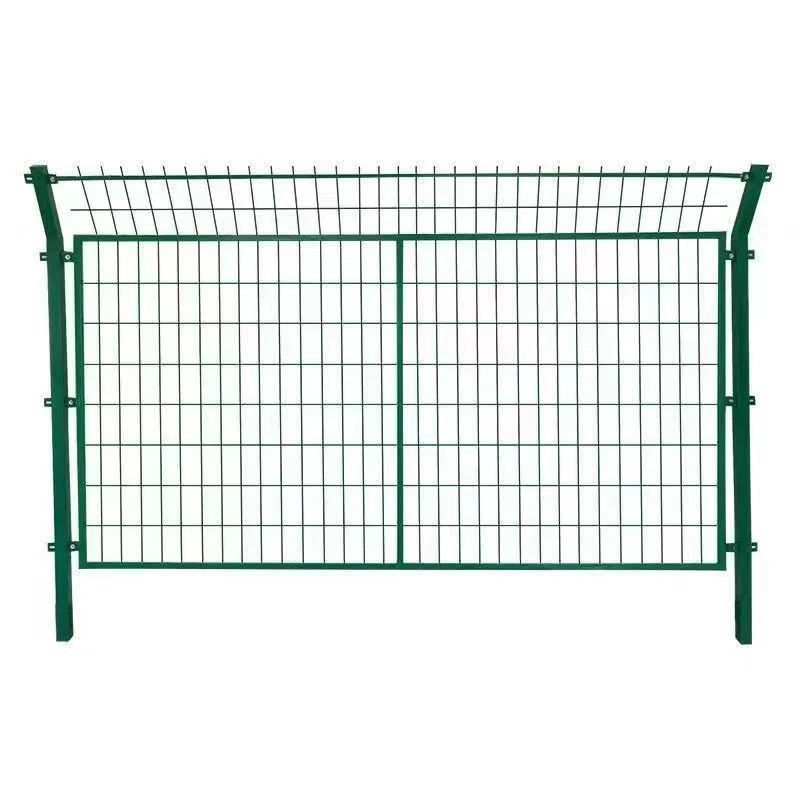
Aluminum Chain Link Fence—Rust-Proof, Lightweight, Durable
Aluminum vs. Galvanized Steel Chain Link Fence
Many buyers wonder whether to choose aluminum or galvanized steel for their chain-link fence. This comparison explains the differences clearly:
Feature | Aluminum Chain Link Fence | |
Rust Resistance | Excellent—will never rust | Good—zinc coating protects against rust but will eventually wear down. |
Weight | Lightweight—easy to handle and install | Heavier—requires more labor and stronger posts |
Corrosion Resistance | Superior—ideal for coastal, saltwater, and pool environments | Standard—suitable for most environments, but susceptible to saltwater corrosion |
Strength | Moderate—sufficient for residential and commercial use | Higher—stronger and more rigid |
Longevity | 50+ years in any environment | 30-50 years (shorter in coastal areas) |
Maintenance | Minimal — no painting or rust treatment required | Moderate—occasional inspection and touch-up |
Aesthetic Options | Multiple colors — silver, green, black, brown, and more | Primarily silver (galvanized); also available with vinyl coating |
Cost | Higher than galvanized steel | Lower—more affordable |
Verdict: If your project is in a coastal area, near saltwater, or in a high-humidity environment (like a pool enclosure), choose aluminum—it will never rust and will outlast galvanized steel in these conditions. For general residential, commercial, or industrial use in typical environments, galvanized steel offers excellent durability at a lower cost.
Specifications & Options
Available Materials
Material | Applicable Scenarios | Feature |
Aluminum 6063 | Residential, commercial, and pool enclosures | Excellent corrosion resistance, lightweight, durable |
Aluminum 5052 | Coastal, marine, high-corrosion areas | Superior corrosion resistance, ideal for saltwater environments |
Standard Specifications
Parameter | Scope/Options |
Height | 3 ft, 4 ft, 5 ft, 6 ft, 8 ft, 10 ft, 12 ft (custom available) |
Wire Gauge | 11 gauge (standard), 10 gauge (heavy-duty) |
Mesh Size | 1-3/4", 2", 2-1/4" (standard) |
Colors | Silver (mill finish), black, green, brown, white, bronze (color-coated) |
Fabric Length | 50 ft, 100 ft rolls (custom lengths available) |
Color Options for Aluminum Chain Link Fence
Color | Applicable Scenarios | Features |
Silver/Mill Finish | General use, modern aesthetics | Natural aluminum color—clean, contemporary look |
Black | Architectural, high-contrast projects | Blends with modern design, stylish appearance |
Green | Residential yards, parks, landscaping | Blends with natural surroundings |
Brown | Golf courses, country clubs, traditional settings | Warm, natural appearance |
White | Pool enclosures, beachfront properties | Clean, bright appearance—matches coastal architecture |
Bronze | Commercial perimeters, upscale developments | Rich, premium look |
Note: If you don't see your required specification above, contact us. We manufacture to your exact requirements.


Advantage | Explanation |
Never Rusts | Aluminum is inherently corrosion-resistant—no zinc coating to wear away, no rust spots to repair. |
Lightweight | Much easier to handle and install than steel; reduces labor costs and installation time |
Low Maintenance | No painting, scraping, or rust treatment required—just occasional cleaning. |
Long Service Life | With proper installation, aluminum chain-link fence lasts 50+ years. |
Aesthetic Versatility | Multiple color options and finishes available to match any project |
Environmentally Friendly | Aluminum is 100% recyclable and contains no toxic coatings. |
UV-Resistant | Color coatings are UV-stabilized to prevent fading and chalking. |
Non-Magnetic | Safe and non-magnetic—suitable for sensitive environments |
Industry/Scenario | Specific applications | Recommended specifications |
Coastal Properties | Oceanfront yards, beach houses, seaside resorts | 4-6 ft, 11 gauge, 2" mesh, color-coated |
Pool Enclosures | Residential pools, commercial pools, waterparks | 4-5 ft, 11 gauge, 1-3/4" mesh, self-latching gates |
Residential | Backyards, gardens, pet runs, front yards | 4-6 ft, 11 gauge, 2" mesh, any color |
Commercial | Retail perimeters, parking lots, school grounds | 6-8 ft, 10 gauge, 2" mesh |
Recreational | Playgrounds, tennis courts, golf courses, parks | 4-8 ft, 10 gauge, 2" mesh |
Industrial | Factory perimeters, storage yards | 8-12 ft, 10 gauge, 1-3/4" mesh |
Airport Security | Perimeter fencing, restricted areas | 10-12 ft, 10 gauge, 1-3/4" mesh + barbed wire |
Complete Chain Link Fence System
We supply everything you need for a complete aluminum chain-link fence installation:
Accessory Types | Explanation | Material |
Line Posts | Standard posts at regular intervals | Aluminum or galvanized steel (with aluminum-compatible coatings) |
Terminal Posts | Heavier posts at corners, ends, and gates | Aluminum or galvanized steel |
Post Caps | Caps for tops of posts | Aluminum or PVC |
Top Rails | Horizontal rails at top of posts | Aluminum |
Tension Bars | Metal bars that thread through fabric ends | Aluminum or galvanized |
Tension Bands | Bands that wrap around posts | Aluminum or galvanized |
Tie Wires / Clips | Small clips at line posts | Aluminum |
Gates & Hardware | Gate frames, hinges, latches, drop rods | Aluminum |


How to Order Aluminum Chain Link Fence
What colors are available?
Do you provide gate options?
What is your minimum order quantity (MOQ)?
Choosing the right aluminum chain link fence involves more than selecting a fence height. Buyers should consider the installation environment, required security level, mesh opening, wire gauge, finish, and the type of framework and accessories used throughout the fencing system.
For residential yards and general property boundaries, visibility and appearance are often important considerations. A standard mesh opening can provide clear boundary definition without creating the enclosed appearance associated with solid fencing. Commercial sites may require taller fencing, heavier wire, or smaller mesh openings depending on access-control requirements and site conditions.
The installation environment is equally important. Aluminum is particularly suitable for locations where moisture, salt air, or persistent humidity can accelerate corrosion of conventional fencing materials. Coastal properties, swimming pool areas, resorts, recreational facilities, and other exposed environments can therefore benefit from aluminum fencing.
Buyers should also evaluate the complete fence system rather than focusing only on the mesh fabric. Posts, rails, tension components, gates, fittings, and fasteners all contribute to long-term performance. Using compatible components helps create a more consistent installation and reduces maintenance concerns.
Before ordering, define the required fence height, wire gauge, mesh size, finish, roll length, gate configuration, and total project quantity. This allows manufacturers to recommend an aluminum chain link fencing specification that balances durability, appearance, installation requirements, and project budget.
A black aluminum chain link fence combines the practical open-mesh structure of chain link fencing with a darker, more architectural appearance. It is increasingly considered for residential developments, commercial properties, landscaped areas, recreational facilities, and projects where conventional metallic fencing may appear too industrial.
One advantage of black fencing is visual integration. Against landscaping, trees, buildings, or darker architectural elements, black mesh tends to attract less attention than bright metallic fencing. This allows the fence to define and secure a perimeter while maintaining relatively open sightlines.
The finish also gives designers and property owners greater flexibility when coordinating fencing with gates, building façades, outdoor furniture, lighting, or other exterior features. For projects where appearance matters alongside corrosion resistance, black aluminum can therefore provide a useful alternative to a standard mill-finish fence.
However, buyers should evaluate more than color. The durability of a black aluminum chain link fence depends on the underlying aluminum material, wire specification, coating quality, fabrication consistency, and compatibility of the complete fencing system. Outdoor finishes should also be selected with long-term weather and UV exposure in mind.
For procurement, specify the desired black finish together with fence height, mesh opening, wire gauge, roll dimensions, posts, rails, gates, and fittings. This ensures that appearance and functional requirements are considered as one complete fencing system rather than treating color as an isolated specification.
Coastal environments create demanding conditions for outdoor fencing. Salt-laden air, moisture, rainfall, and persistent humidity can accelerate corrosion, making material selection an important part of long-term fence planning. For these environments, an aluminum chain link fence can offer a practical alternative to conventional steel-based fencing.
Aluminum does not rust in the same way as carbon steel. Instead, its surface naturally develops a protective oxide layer, helping it resist atmospheric corrosion. This characteristic makes aluminum particularly attractive for beachfront properties, seaside resorts, swimming pool surroundings, marinas, humid climates, and other locations where fencing is regularly exposed to moisture.
Material selection still matters. Different aluminum alloys and finishes can perform differently depending on environmental exposure. Buyers planning coastal projects should therefore discuss factors such as distance from saltwater, expected salt exposure, fence height, wire gauge, mesh opening, coating requirements, and compatible hardware with their supplier.
The entire fencing system should also be considered. Installing corrosion-resistant mesh while using unsuitable posts, fittings, fasteners, or gate hardware can create maintenance problems elsewhere in the installation.
For projects where corrosion resistance is a priority, aluminum chain link fencing can reduce the need for repeated rust treatment and repainting. Correct material specifications and compatible components are essential for achieving reliable long-term performance in demanding coastal and humid environments.
When sourcing aluminum chain link fencing, a clear specification sheet helps manufacturers quote accurately and reduces the risk of receiving fencing that does not match the installation requirements. Several parameters should be confirmed before placing an order.
Start with fence height. Residential boundaries, pool areas, commercial perimeters, sports facilities, and industrial properties can require very different heights. Next, determine the wire gauge and mesh opening. Wire diameter influences the rigidity and strength of the fabric, while mesh size affects visibility, material usage, and the overall structure of the fence.
Finish and color should also be specified. Aluminum chain link fencing may be supplied in a natural metallic finish or with color options such as black, green, brown, white, or bronze, depending on manufacturing capabilities. For architectural projects, matching the mesh, posts, rails, and gates can create a more consistent appearance.
Roll length and total quantity are especially important for distributors, contractors, and project buyers because they influence packing, transportation, installation planning, and quotation calculations.
Finally, determine whether you require fence fabric only or a complete system. Posts, top rails, tension bars, bands, tie wires, gates, hinges, latches, and other fittings may need to be included.
Providing these details with your RFQ allows the supplier to recommend an appropriate configuration and prepare a more accurate quotation for the complete project.
For international buyers, selecting aluminum chain link fencing involves more than comparing the price of individual mesh rolls. Consistent specifications, manufacturing control, accessory compatibility, customization, and export support can all influence the success of a fencing project.
Jinzehong supplies aluminum chain-link fence for residential, commercial, recreational, coastal, and other perimeter applications. Buyers can specify different fence heights, wire gauges, mesh openings, colors, and roll dimensions according to project requirements. This flexibility is useful for distributors and contractors serving different markets as well as project buyers working with site-specific specifications.
Jinzehong can also supply components for a complete fencing system, including posts, rails, gates, fittings, tension components, and related hardware. Purchasing compatible components from one supplier can simplify procurement and help buyers avoid dimensional or installation compatibility problems between separately sourced parts.
Quality control is another important consideration. Material verification, wire and mesh dimensional inspection, finish evaluation, and final specification checks help ensure that production corresponds with confirmed order requirements. Relevant material or coating documentation can also be discussed when required for a particular project.
When requesting a quotation from Jinzehong, buyers should provide the required height, wire gauge, mesh opening, color, roll length, quantity, destination, and accessory requirements. With clear project information, Jinzehong can recommend a suitable aluminum chain link fence configuration and prepare an export-oriented quotation.
Quality Assurance
Hit enter to search or ESC to close