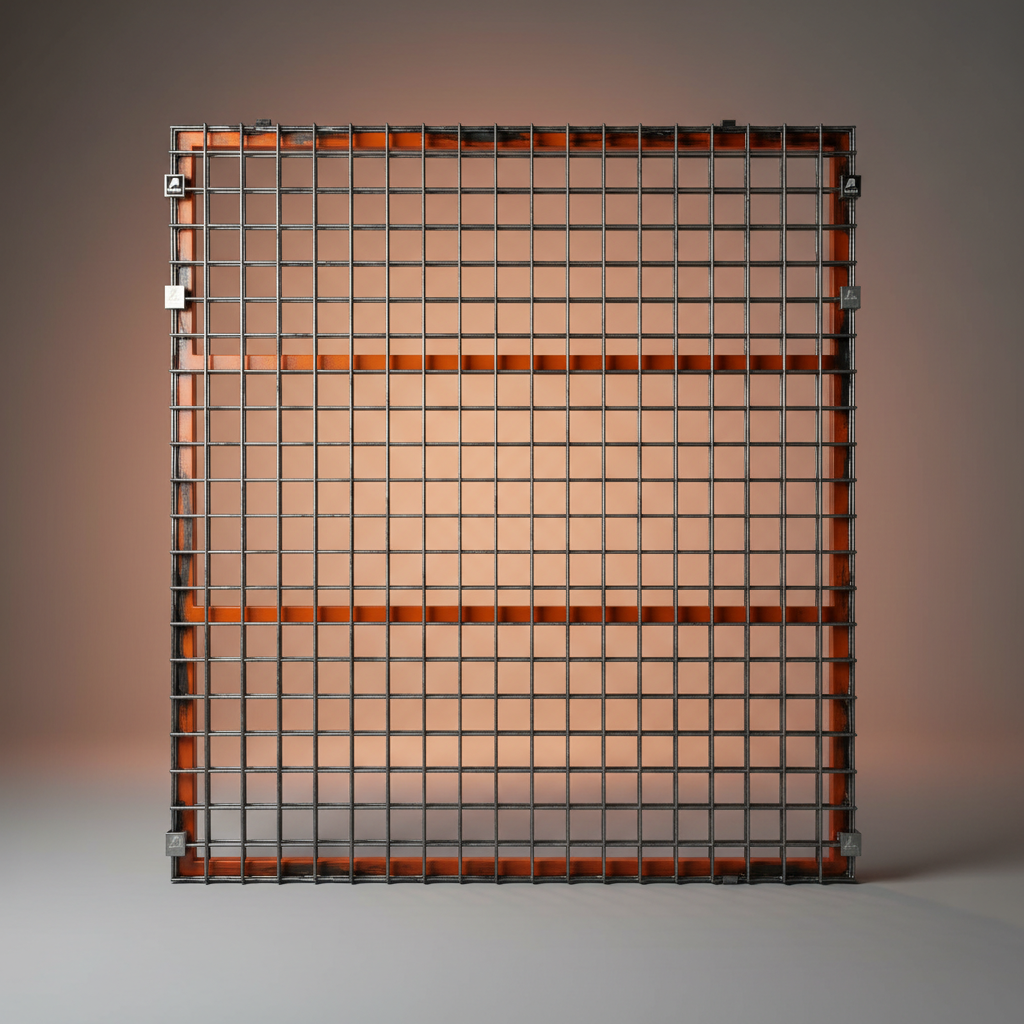
When sourcing specialized metal containers for industrial or medical use, the technical capabilities of ss wire mesh manufacturers often determine the long-term viability of the equipment. The challenge for procurement managers is not simply finding a supplier who can bend wire, but identifying one who understands the intersection of metallurgy, hygiene standards, and structural load-bearing requirements. A poorly designed basket can lead to premature corrosion or structural failure in high-temperature sterilization environments.
The critical nature of these components is evident in sectors where FDA or GMP standards are mandatory. In food processing or medical disinfection, the choice of material—such as 304 or 316L stainless steel—directly affects the risk of contamination. Understanding how different weaving methods and surface treatments, like electro-polishing, impact the ease of cleaning and chemical resistance is essential for optimizing operational efficiency and ensuring safety compliance across the production line.
This analysis explores the engineering factors and procurement criteria necessary to select high-performance custom wire mesh solutions. By examining material grades and fabrication techniques, we provide a framework for evaluating the true value of ss wire mesh manufacturers in the context of complex industrial applications.


A custom wire mesh basket is far more than a simple container; it is a precision-engineered tool designed for specific industrial functions such as filtration, sterilization, or heavy-duty storage. These units are typically fabricated from high-grade stainless steel (304, 316, or 316L) and are characterized by their ability to maintain structural rigidity while allowing for maximum airflow or fluid drainage. The design process involves calculating the exact mesh aperture and wire diameter to balance load capacity with the required transparency of the mesh.
The versatility of these products stems from their modular nature. By integrating optional accessories like casters, folding handles, and anti-slip pads, manufacturers can transform a standard mesh box into a specialized piece of equipment for pharmaceutical laboratories or automotive parts washing. This adaptability ensures that the container fits perfectly into existing equipment footprints, reducing downtime during integration.
The performance of a mesh basket is dictated by the synergy between material selection and fabrication precision. For instance, the use of 316L stainless steel is non-negotiable in environments exposed to high chloride levels or aggressive acids, as it prevents pitting corrosion. Beyond the material, the welding method—specifically argon arc welding—is crucial for ensuring that joints remain firm under cyclic loading without creating burrs that could contaminate the product or injure operators.
Structural stability is achieved through edge curling treatments and the selection of weaving methods (plain, twill, or dense), which determine the basket's resistance to deformation when subjected to maximum loading weights.
Furthermore, surface treatments play a decisive role in hygiene and aesthetics. Mirror polishing and electrolysis are used not only for visual appeal but to eliminate microscopic pores where bacteria could reside, making the baskets suitable for GMP-certified medical environments. The ability to withstand high temperatures (up to 800°C) through specialized treatments allows these baskets to be used in industrial heat-treatment tooling without losing their shape.
The primary value of high-grade stainless steel mesh lies in its operational longevity. In food processing plants, where baskets are subjected to constant washing and acidic food residues, the corrosion resistance of 304/316 stainless steel prevents the leaching of metals into the food supply, ensuring compliance with FDA standards. This durability reduces the total cost of ownership by extending the replacement cycle compared to galvanized or carbon steel alternatives.
The real efficiency gain occurs when customization minimizes product loss during drainage or drying, as optimized aperture sizes (1mm to 20mm) ensure that materials are retained while fluids are expelled rapidly.
In medical sterilization, the ability of these baskets to withstand autoclave processes without degrading is critical. The combination of high-temperature resistance and the ability to be cleaned via ultrasonic washing ensures that the equipment does not become a bottleneck in the disinfection workflow, thereby improving the overall throughput of the medical facility.
Selecting the right material requires a trade-off analysis between cost and performance. While galvanized iron offers a budget-friendly option for basic storage, it lacks the chemical resilience required for laboratory or food-grade applications. Stainless steel 304 is the industry standard for general corrosion resistance, but 316L is the definitive choice for extreme environments due to its molybdenum content.
The following data represents a relative performance index across five key metrics, demonstrating why 316L is prioritized for specialized industrial and medical applications despite a higher initial investment.
Custom mesh baskets are deployed across a spectrum of industries, each with unique requirements. In the food sector, they serve as vegetable washing and draining baskets or baking cooling racks, where airflow is paramount. In the industrial field, they are utilized as parts washing baskets and heat treatment tooling, requiring high load-bearing capacity and thermal stability to ensure the integrity of the metal components being processed.
Medical and laboratory settings utilize these containers as instrument sterilization trays and specimen storage racks. In these scenarios, the priority shifts toward absolute hygiene and compatibility with autoclave systems. Commercial uses, such as supermarket fruit and vegetable displays, leverage the aesthetic qualities of brushed or polished finishes to combine functionality with a professional presentation.
The transition from traditional hand-weaving to laser cutting and argon arc welding has revolutionized the precision of mesh basket production. Modern fabrication allows for non-standard size customization, enabling baskets to fit precisely within restricted spaces or specific machine dimensions. This precision reduces vibration during transport and improves the safety of the operation.
Advancements in surface coating, including antistatic treatments and high-temperature resistance coatings, have expanded the usable range of these products. Baskets can now be deployed in electronics manufacturing to prevent ESD (Electrostatic Discharge) or in furnaces where temperatures reach 800°C, proving that the evolution of the "warp and weft" is now driven by materials science and algorithmic design.
Today's manufacturers, such as those based in Anping, blend decades of craftsmanship with automated production lines. This combination allows for the mass production of standardized components while maintaining the flexibility to execute complex, low-volume custom orders that meet exacting international standards.
One of the most frequent challenges in implementing custom mesh baskets is the mismatch between aperture size and material flow. If the mesh is too dense, drainage is slowed; if too open, small parts may fall through. The solution lies in a detailed analysis of the material's physical properties and the selection of a tailored weaving method, such as twill for higher strength or plain for basic filtration.
Another common issue is the degradation of weld points under extreme temperature fluctuations. To resolve this, the use of laser cutting combined with precision welding ensures a flat surface with no burrs, and edge curling increases the overall structural stability, preventing the basket from warping over time.
Finally, maintenance often becomes a hurdle in high-volume environments. Implementing electro-polished surfaces reduces the effort required for cleaning and ensures that the baskets are compatible with ultrasonic cleaning systems, thereby reducing operational costs and increasing the lifespan of the equipment.
| Application | Recommended Material | Key Surface Finish | Priority Feature |
|---|---|---|---|
| Food Processing | SS 304 / 316 | Mirror Polished | FDA Compliance |
| Medical Sterilization | SS 316L | Electropolished | Autoclave Resistance |
| Industrial Washing | SS 304 / Galvanized | Brushed | Load Capacity |
| Lab Specimen Storage | SS 304 | Sandblasted | Precision Aperture |
| Heat Treatment | Specialty SS | High-Temp Coating | Thermal Stability |
| Commercial Display | SS 304 | Mirror Polished | Aesthetic Appeal |
A custom wire mesh basket is a specialized metal container fabricated from welded or woven wire mesh, designed to meet specific dimensions and functional needs. Unlike standard bins, these are engineered for tasks like industrial washing, medical sterilization, and filtered storage, allowing for precise control over aperture size and structural strength based on the user's specific material handling requirements.
Stainless steel 316L is the best choice for highly corrosive environments. While 304 is suitable for general use, 316L contains molybdenum, which provides superior resistance to pitting and crevice corrosion, especially in the presence of chlorides or acidic chemicals common in pharmaceutical and marine applications.
Yes, provided the correct material and treatment are selected. High-quality stainless steel baskets can withstand significant heat, and with specialized high-temperature resistance treatments, they can operate in environments up to 800°C, making them ideal for heat treatment tooling and industrial ovens.
Customization is extensive, covering dimensions (depth, diameter, layer height), mesh aperture (1mm-20mm), and weaving styles. Additionally, functional accessories can be added, such as casters for mobility, folding handles for space-saving, hooks for hanging, and specialized lids or anti-slip pads to fit specific equipment.
They are designed for repeated use and easy maintenance. Depending on the finish, they are compatible with high-pressure washing, ultrasonic cleaning, and autoclave sterilization. Electropolishing is recommended for medical and food-grade applications as it minimizes surface roughness, preventing bacterial buildup.
The mesh size should be determined by the smallest particle or component you need to retain. For filtration, the aperture must be smaller than the target particle; for drainage, it must be large enough to allow fluid to pass without restriction. Consulting with an experienced manufacturer to balance load-bearing capacity with aperture size is the most effective approach.
Selecting the right custom wire mesh basket requires a deep understanding of the synergy between material science and functional design. Whether the priority is FDA-compliant hygiene in food processing or extreme thermal stability in industrial heat treatment, the precision of the fabrication—from the choice of 316L steel to the application of argon arc welding—defines the equipment's reliability and lifespan.
For organizations seeking to optimize their material handling and sterilization workflows, partnering with experienced manufacturers is key to achieving a balance between cost and performance. To explore tailored solutions that meet your specific technical requirements, you are invited to visit www.jinzehongmesh.com for professional guidance and product specifications.