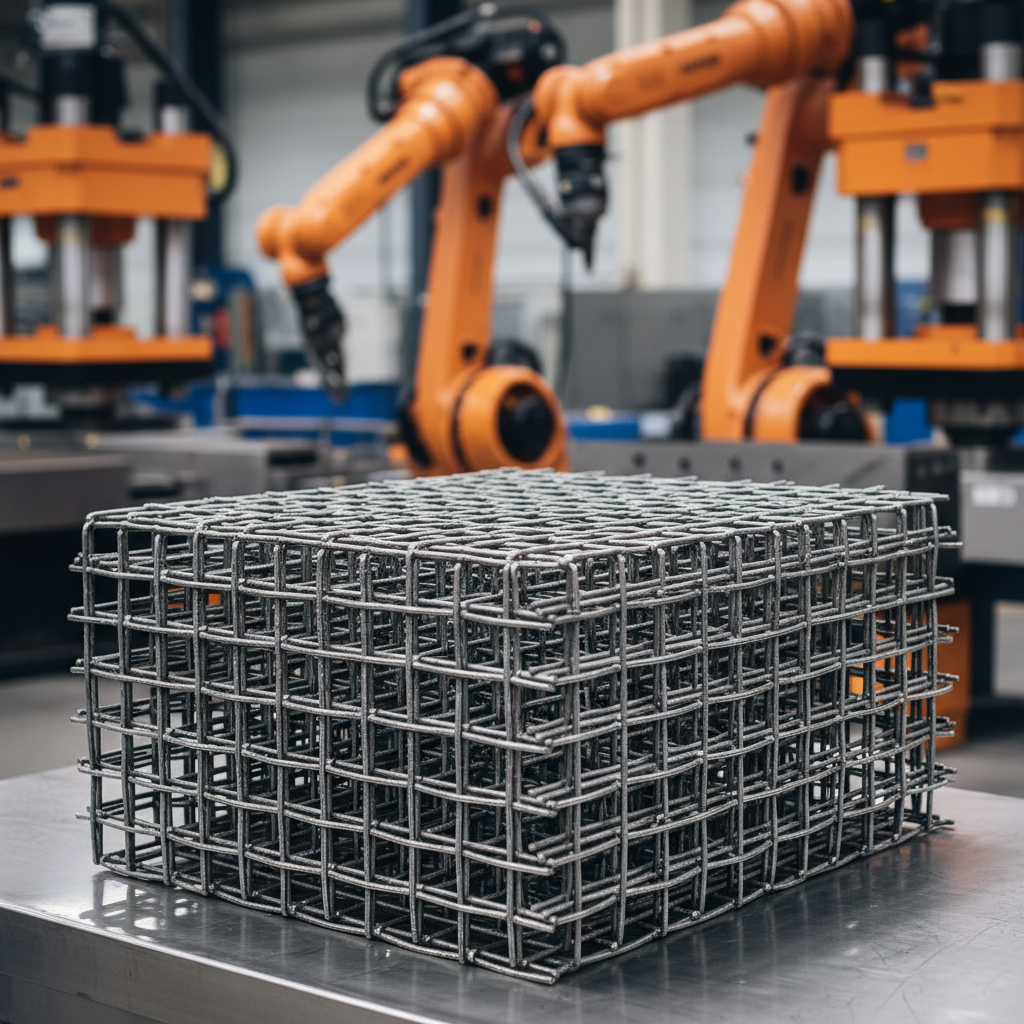
Understanding the ss 304 wire mesh price is critical for procurement managers in the metal products industry, as stainless steel 304 remains the benchmark for corrosion resistance and structural stability. In the specialized field of wire mesh manufacturing, costs are not static but fluctuate based on raw material indices, precise technical specifications, and the required protective coatings.
Buyers often struggle with the price variance between different grades of stainless steel and galvanized alternatives, leading to either over-spending on unnecessary specifications or under-specifying for harsh environments. This creates a need for a transparent breakdown of what actually drives the cost of these industrial filtration and fencing components.
This analysis provides a professional framework for evaluating costs, comparing material trade-offs, and identifying the key technical parameters that influence final quotes. By examining the relationship between wire gauge, mesh opening, and material purity, buyers can optimize their procurement strategy for better ROI.

Primary Drivers of Stainless Steel 304 Mesh Pricing

The ss 304 wire mesh price is primarily dictated by the global market price of nickel and chromium, the two essential alloys that give Grade 304 its non-magnetic and corrosion-resistant properties. Because these raw materials are traded on global exchanges, the baseline cost of the wire itself can shift weekly, impacting everything from small filter elements to large-scale industrial fencing.
Beyond raw materials, the manufacturing process—whether the mesh is woven or welded—adds a layer of labor and energy cost. High-precision weaving for filter mesh requires slower production speeds and tighter quality control, which naturally elevates the price compared to standard industrial welded grids. Anping County Jinzehong Wire Mesh Products Co., Ltd. leverages over 20 years of production experience to stabilize these costs through optimized manufacturing workflows.
Technical Specifications and Their Cost Impact
The relationship between wire diameter and mesh opening is the most direct technical influence on cost. Thicker wires (e.g., moving from 0.8mm toward 5.0mm) increase the total weight of the product, which directly raises the price per square meter. Conversely, extremely fine meshes require more complex weaving technology and higher tensile strength wire to prevent breakage during production, which also increases the price.
Customization further affects the quote. While standard widths of 1m or 2m are cost-effective due to stock availability, custom dimensions or specialized rectangular holes require machine reconfiguration and produce more scrap material. Ensuring that specifications align with standard manufacturing ranges is the most effective way for buyers to reduce unnecessary surcharges.
Comparing SS 304 with Galvanized Welded Mesh
For many industrial applications, the high cost of SS 304 can be mitigated by using galvanized welded wire mesh. Galvanized mesh utilizes a zinc coating (hot-dip or electro-galvanized) to protect a carbon steel core. Based on technical data, galvanized options can offer up to 40% lower initial costs than stainless steel mesh, making them highly attractive for large-scale construction or agricultural projects.
However, the choice depends on the environment. SS 304 is indispensable for food-grade applications, chemical filtration, or highly saline environments where zinc coatings would eventually degrade. In contrast, for poultry house fences or concrete reinforcement, the rigid support and cost-efficiency of galvanized mesh provide a more logical financial balance.
Material Volume and Manufacturing Complexity Index
To better understand the price distribution, we can analyze a relative complexity index. This index represents how different product types contribute to the final cost, balancing raw material weight against the technical difficulty of production.
As shown in the illustrative framework, fine filter meshes have the highest complexity score due to the precision required, while standard welded grids are driven more by material volume. This explains why a lightweight filter can sometimes cost more than a heavier architectural mesh.
Evaluating Long-term ROI vs. Initial Purchase Price
Focusing solely on the initial ss 304 wire mesh price often leads to hidden costs. The true value of stainless steel lies in its lifecycle cost. In humid or corrosive industrial settings, a cheaper galvanized mesh might require replacement every 5-10 years, whereas Grade 304 can last decades without structural failure. When calculating ROI, the reduction in maintenance and downtime often justifies the higher upfront investment.
For instance, in municipal facilities or drainage linings, the use of high-grade mesh prevents the frequent replacement cycles associated with oxidation. Buyers should evaluate the "cost per year of service" rather than the "cost per square meter" to determine the most economical material choice for their specific site conditions.
Common Procurement Risks and Price Pitfalls
One of the most common risks in procurement is the "grade substitution" trap, where suppliers provide lower-grade steel (such as 201) while quoting the price of 304. Grade 201 has lower nickel content and is significantly more prone to rust. Verifying the material chemistry through Mill Test Certificates (MTC) is the only way to ensure the price paid matches the material received.
Another pitfall is ignoring the impact of zinc layer thickness in galvanized alternatives. A low-cost quote for electro-galvanized mesh may seem attractive, but if the zinc layer is insufficient (below 20g/㎡), the product will fail prematurely in outdoor environments. Ensuring compliance with standards like ISO 1461 for hot-dip galvanizing is essential for protecting the investment.
Strategic Selection Framework for Industrial Buyers
Selecting the right mesh requires balancing technical requirements against budget constraints. The following framework provides a qualitative comparison to help buyers decide between SS 304 and galvanized options based on application and environmental stress.
| Material Type | Corrosion Resistance | Initial Cost | Best Use Case |
|---|---|---|---|
| SS 304 Woven | Very High | Highest | Chemical Filtration |
| SS 304 Welded | High | High | Food Processing |
| Hot-Dip Galv. | Moderate | Medium | Outdoor Fencing |
| Electro-Galv. | Low-Moderate | Low | Indoor Partitions |
| Heavy Duty Zinc | Moderate-High | Medium-High | Civil Engineering |
| Custom Alloy | Extreme | Premium | Marine Environments |
This decision matrix demonstrates that while SS 304 is the gold standard for durability, the tactical use of galvanized mesh in non-critical areas can significantly reduce overall project expenditure without compromising safety.
Frequently Asked Questions
Prices primarily fluctuate due to the market cost of nickel and chromium, raw material energy costs, and the complexity of the mesh specifications (wire gauge and opening size).
Yes, for applications like agriculture or general construction, galvanized mesh can be 40% cheaper while providing sufficient rust protection for 15-20 years if hot-dip galvanized.
Increasing the wire diameter increases the total mass of steel required per unit area, which leads to a direct increase in the material cost component of the price.
The main risk is material substitution (e.g., using Grade 201 instead of 304) or thinner zinc coatings, which can lead to premature corrosion and structural failure.
Custom widths or non-standard mesh openings require machine adjustments and create more waste, which typically adds a premium compared to stock sizes.
Buyers should request a Mill Test Certificate (MTC) or perform a chemical composition test to ensure the nickel and chromium levels meet ASTM or ISO standards.
Conclusion
Determining the correct ss 304 wire mesh price requires a shift from looking at the immediate cost to evaluating the total cost of ownership. While Grade 304 demands a higher initial investment, its longevity and resistance to corrosion provide superior value in critical industrial and chemical environments. For less demanding applications, galvanized welded mesh serves as a highly efficient, cost-effective alternative.
Procurement professionals are encouraged to define their environmental requirements strictly and verify material grades through certification. For detailed product specifications and application-specific quotes, you may explore the available solutions at www.jinzehongmesh.com.