10 Nov 2026
A highway fence for transport corridors should be specified by wire diameter, rectangular mesh opening, panel dimensions, post section, and corrosion treatment. For road and rail projects, our recommended starting point is wire diameter of at least 5.0 mm, mesh no larger than 80 × 160 mm, 60 mm posts with 2.5 mm walls, and hot-dip galvanizing plus plastic dipping.
Rectangular mesh opening, with the road and rail recommendation set at no more than 80 × 160 mm
Wire diameter, column section and wall thickness, panel dimensions, connection method, and corrosion treatment for the installation site
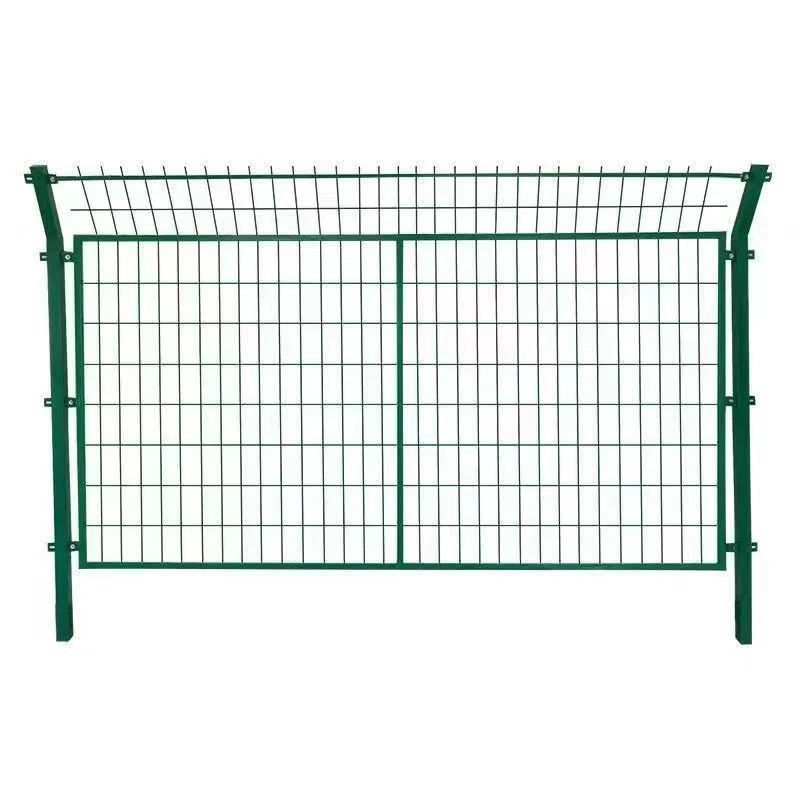
A highway fence for a road or railway project has to match the corridor, the installation surface, and the level of physical exposure. The practical specification starts with five items: wire diameter, mesh opening, panel height and length, column section, and surface treatment. Our Highway and Railway Fence brings these items together in one modular fence system for transport boundaries.
The opening controls how much of the barrier remains open while setting the size of objects that can pass through it. Our rectangular mesh sizes include 50 × 150 mm, 60 × 120 mm, 75 × 150 mm, 80 × 160 mm, 90 × 170 mm, and 50 × 200 mm. The product range also includes a 9 × 17 mm galvanized mesh option.
For road and rail applications, we recommend a mesh size no larger than 80 × 160 mm. This gives you a defined upper limit for the opening while leaving several choices below it. A smaller opening can suit a project that requires tighter separation. Measure the required clear opening on the project drawing, then compare it with the mesh size before fixing the panel order.
Wire diameter ranges from 3.5 mm to 6.0 mm. The road and rail recommendation is at least 5.0 mm. This is a suitable starting point for fencing along transport corridors, where the barrier may face contact from pedestrians, animals, maintenance activity, or small vehicles. The fence can withstand general external impact, including collisions with pedestrians and small vehicles. The specific load-bearing capacity depends on the wire diameter and column configuration.
A 5.0 mm or larger wire suits a corridor protection project that needs a stronger panel than a basic isolation fence. Consider the wire together with the post diameter, wall thickness, and spacing. Wire diameter alone does not define the whole fence capacity.
Standard fence heights are 1.2 m, 1.5 m, 1.8 m, and 2.0 m. A 2.4 m height is also available as a customizable option. Standard lengths are 2 m and 3 m, with lengths up to 6 m available for customization.
The columns can be round steel tubes with 48 mm or 60 mm diameters, or 50 × 50 mm square tubes. Wall thickness ranges from 1.0 mm to 2.5 mm, and column heights range from 1.5 m to 3.0 m to match the mesh. For the road and rail configuration, we recommend a 60 mm column with a 2.5 mm wall. Standard column spacing is 2.5 m to 3 m, adjusted according to mesh length.
Picture the installation beside a long rail boundary: panel length affects the number of joints, while column spacing affects how the fence follows the alignment. For bridge decks and cement floors, specify the flange option. The flange is installed at the bottom of the fixed column and has a thickness of at least 4 mm. A rain hat can be added to the column to prevent water accumulation inside it.
The fence is available in low carbon steel and stainless steel. Low carbon steel wire options include Q195/Q235 wire, cold drawn wire, and galvanized steel wire. Surface treatments include plastic dipping, plastic spraying, hot-dip galvanizing, and cold-dip galvanizing.
For road and rail use, we recommend hot-dip galvanizing plus plastic dipping. Plastic dipping is specified at 0.8 to 1.2 mm, and hot-dip galvanizing has a zinc layer of at least 60 μm. With this hot-dip galvanizing and plastic dipping combination, the listed service-life range is 8 to 15 years. Plastic-coated colors include grass green, dark green, white, yellow, black, and blue.
This combination suits an outdoor transport corridor where corrosion protection and a visible finish both matter. Send the site environment and color requirement with the inquiry so we can match the finish to the project.
Two connection methods are available: snap-on connection for quick installation and anti-theft bolt fixing. Select the connection method according to the installation arrangement and the fixing detail shown on the project drawing.
The fence has a modular structure with reinforcing wire on both sides of the mesh. That double-sided wire forms the frame and improves fence stability. Posts, spacing, connection method, rain hats, and flanges should be treated as one installation package. This is especially important on bridge or cement-floor sections, where a flange-mounted column may be required instead of a buried post.
Yes. The recommended road and rail configuration uses a mesh size of no more than 80 × 160 mm. Options within or below that limit include 50 × 150 mm, 60 × 120 mm, 75 × 150 mm, and 80 × 160 mm. Choose the opening from the required separation function, then keep the selected wire diameter and post configuration aligned with it.
The standard heights are 1.2 m, 1.5 m, 1.8 m, and 2.0 m, with 2.4 m available as a customizable height. Column heights range from 1.5 m to 3.0 m to match the mesh. Send the required finished height and ground condition with the order so we can match the mesh and column dimensions.
A flange is used when the fence is installed on a bridge or cement floor. It is fixed at the bottom of the column and has a thickness of at least 4 mm. This arrangement suits surface-mounted installation on a hard deck or slab. Include the surface type and column layout when requesting the flange configuration.
Choose our Highway and Railway Fence for road and rail boundaries that call for at least 5.0 mm wire, mesh no larger than 80 × 160 mm, 60 mm columns with 2.5 mm walls, and hot-dip galvanizing plus plastic dipping. Send the route type, total length, height, mesh opening, surface condition, column spacing, connection method, finish color, and quantity for a project quotation.

About the author
The company
Anping County Jinzehong Wire Mesh Products Co., Ltd. was established in 2000 and is headquartered in Anping, the hometown of wire mesh in China. Since its establishment, the company has always focused on the research and development, production and sales of high-quality wire mesh products. With the rapid development of the company, several branch factories have been established to produce different types of wire mesh products.…
About Us ↗Visit company website ↗This is the last article
Hit enter to search or ESC to close



