19 Mar 2026
Wire mesh is a versatile material used across a vast array of industries, from construction and agriculture to security and filtration. However, not all wire mesh is created equal. Different applications demand different types of mesh, each with unique properties and construction methods. This article will explore the common types of wire mesh, their characteristics, and suitable applications, helping you choose the right mesh for your specific needs. Understanding the nuances of each type ensures optimal performance and longevity.
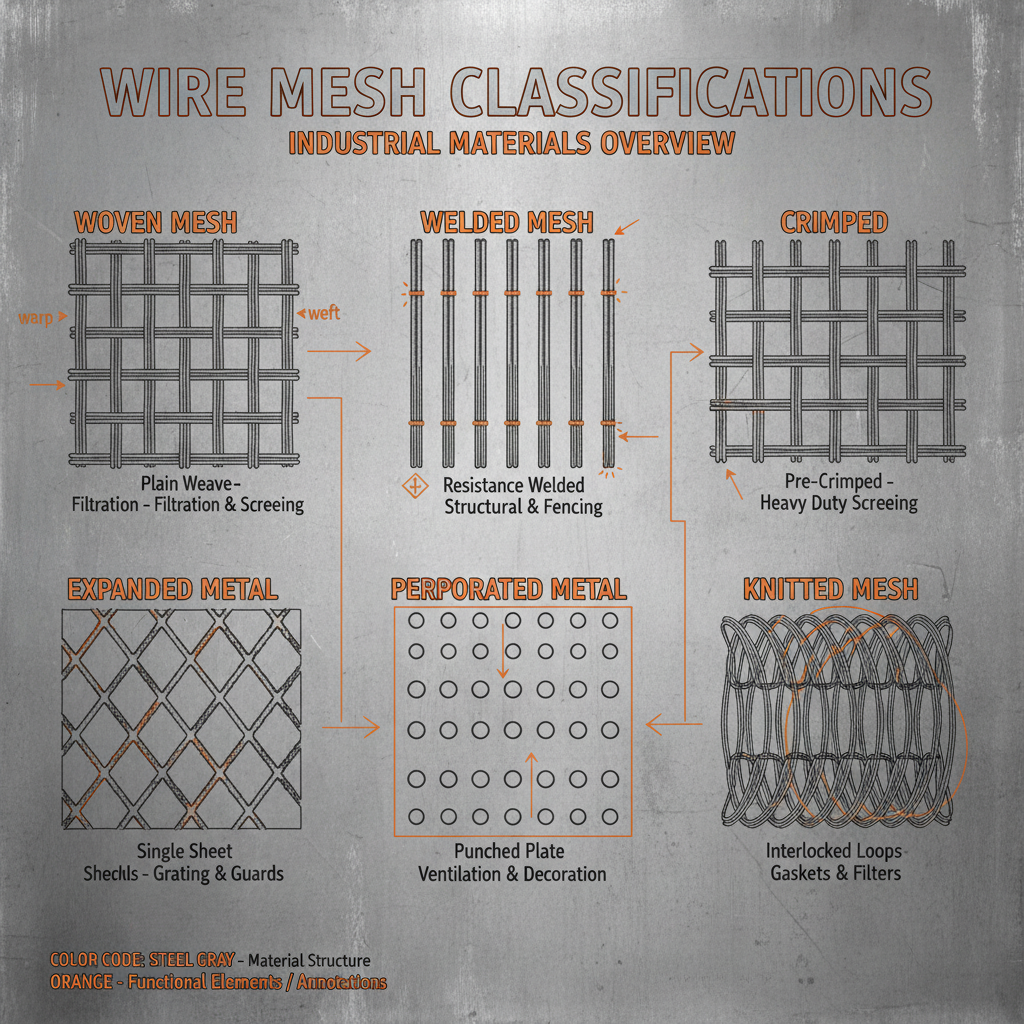
Woven wire mesh is one of the oldest and most common types. It's created by weaving wires in a simple over-under pattern, similar to fabric. This process results in a strong, durable mesh with consistent openings. Woven wire mesh is available in a variety of materials, including stainless steel, galvanized steel, and brass. It’s commonly used for fencing, insect screens, filtration, and reinforcement. The aperture size (opening) and wire gauge (thickness) can be customized to meet specific requirements. The weaving pattern determines the mesh's flexibility and strength.
Welded wire mesh is manufactured by welding wires together at their intersections, forming a grid-like structure. This method creates a particularly strong and rigid mesh, ideal for applications requiring high stability. It's commonly used in construction for reinforcement, animal enclosures, security fencing, and shelving. Welded wire mesh offers excellent dimensional stability and is less prone to unraveling than woven mesh. Different welding techniques, such as spot welding or continuous welding, are used depending on the application.
Expanded metal is produced by slitting and stretching a solid metal sheet, creating a diamond or hexagonal pattern. This process results in a single, seamless piece of metal with high strength-to-weight ratio. Expanded metal is widely used for walkways, stair treads, guarding, and ventilation systems. It offers excellent grip and allows for the passage of light and air. Unlike woven or welded mesh, expanded metal doesn't have openings that can become clogged or obstructed. The metal is never heat affected, thus retaining its original properties.
Key Characteristics of Expanded Metal: Seamless construction, high strength-to-weight ratio, excellent grip, and allows for passage of light and air.
Crimped wire mesh is created by pre-crimping the wires before weaving or welding them together. This crimping process adds rigidity and prevents the mesh from distorting or collapsing. It's particularly useful in applications requiring a three-dimensional shape or increased structural support, such as filters, screens, and animal cages. The crimping can be done in various patterns, like lock crimp or intermediate crimp, depending on the desired characteristics. Jinzehong Mesh offers a wide range of crimped mesh options.
Crimping Benefits:
• Increases rigidity and prevents distortion
• Provides three-dimensional stability
• Enhances structural support
Choosing the right wire mesh can be challenging. Here's a comparison to help you navigate the options:
Selecting the optimal wire mesh involves considering several factors, including the intended application, the required strength and durability, the desired aperture size, and the material's resistance to corrosion. For example, stainless steel mesh is ideal for corrosive environments, while galvanized steel is a cost-effective option for general-purpose applications. Consider the load-bearing requirements, exposure to the elements, and aesthetic preferences. Don't hesitate to consult with a wire mesh specialist to ensure you make the best choice for your specific needs. Contact Jinzehong Mesh today for expert advice.
From its humble beginnings to its modern-day applications, wire mesh continues to be a vital material in countless industries. Understanding the different types, their strengths, and their applications allows you to make informed decisions and select the perfect mesh for your project. Investing in quality wire mesh ensures longevity, performance, and ultimately, a successful outcome.
The most common materials include stainless steel (known for corrosion resistance), galvanized steel (cost-effective and durable), aluminum (lightweight and non-corrosive), and brass (attractive appearance and good conductivity). The choice of material depends heavily on the intended application and the environmental conditions. Stainless steel is often preferred for food processing and marine environments, while galvanized steel is sufficient for many outdoor applications. Aluminum is frequently used in insect screens and architectural applications. The specific alloy within each material type also affects its properties.
Mesh size is typically measured by the number of openings per inch. A higher mesh count indicates smaller openings. For example, a mesh size of 100 means there are 100 openings per inch. In some cases, particularly with expanded metal, the long dimension (LDO) and short dimension (SDO) of the openings are used to specify the mesh size. Accurate measurement of mesh size is critical for ensuring compatibility with specific applications, such as filtration or security.
While often used interchangeably, there is a subtle difference. Mesh size refers to the number of openings per inch, as explained above. Aperture refers to the size of the individual opening. They are related but not the same. For example, a finer mesh (higher mesh count) will have a smaller aperture. Understanding both terms is crucial when specifying wire mesh for precise applications like particle filtration or security screening.
Yes, wire mesh can be highly customized. Manufacturers like Jinzehong Mesh offer customization options including material selection, wire gauge, aperture size, mesh width, length, and finishing treatments. Customization allows you to tailor the mesh to your specific application requirements and ensures optimal performance and fit.
Hit enter to search or ESC to close


